

It’s late. You put on a video of someone whispering into a pair of microphones shaped like human ears, tapping their fingernails on a plastic case, or slowly crinkling paper — and within minutes a warm, tingling wave starts at the crown of your head and spreads down your neck and spine. Your muscles let go. Your thoughts slow. Sleep arrives without a fight.
And if you’ve ever tried to explain this to someone who doesn’t get it, you know the reaction: “What do you mean, sounds give you tingles?”
Welcome to Autonomous Sensory Meridian Response — ASMR — the gentlest mystery in neuroscience. A sensation so real it shows up on heart-rate monitors and fMRI machines, so elusive that some people’s brains simply never have it. In this article we’ll follow the tingles through the brain: what triggers them, which circuits light up, why the same whisper that soothes one person irritates another, and what the research actually says about ASMR and the brain — sleep, stress, and mental health included.
The connection between ASMR and the brain is one of the strangest discoveries in modern neuroscience: a whisper, played through two tiny speakers, can measurably slow your heart and light up your reward circuitry. Let’s turn the volume down and look inside.
What Is ASMR, Exactly — and Who Gets It?
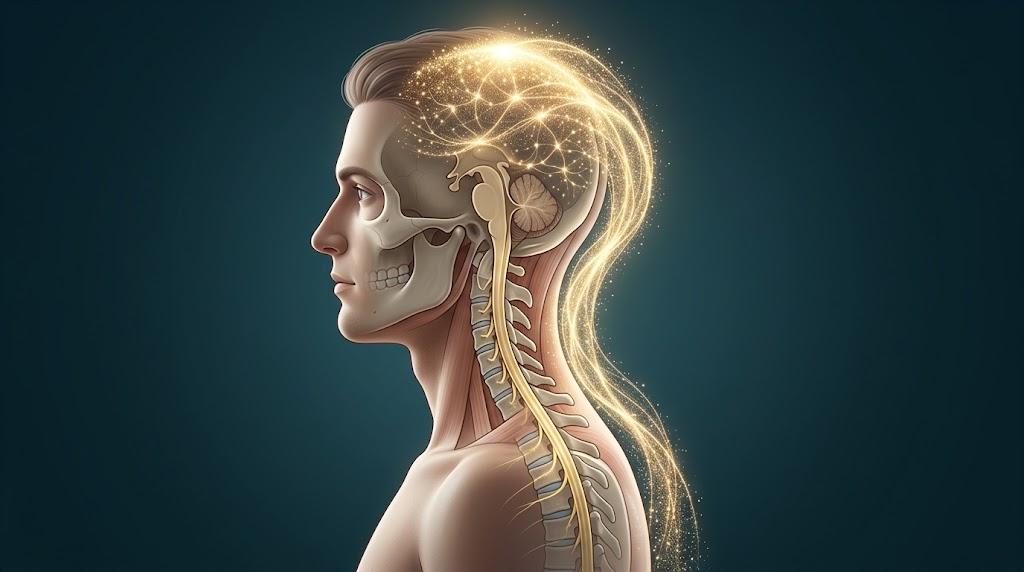
ASMR stands for Autonomous Sensory Meridian Response — a term coined in online forums around 2010 to describe a spontaneous, automatic sensation: a static-like or wave-like tingling that begins on the scalp or the crown of the head and often spreads down the back of the neck and spine, accompanied by deep relaxation and a sense of well-being.

The first scientific paper on ASMR didn’t exist until 2015. In it, researchers surveyed 475 people who experience the sensation and found they reported temporary relief from depressive feelings and chronic pain after ASMR sessions, along with a flow-like, deeply focused state. Even the triggers themselves form a characteristic set: whispering, tapping and crisp sounds, slow deliberate movements, and — crucially — personal attention, the feeling that someone is calmly attending to you. Since then, research into ASMR and the brain has grown quickly — and it keeps confirming what longtime fans already knew.
Not everyone has it. Only a minority of people experience ASMR at all, and even among experiencers the response varies enormously in intensity. If you’ve watched a whisper video and felt nothing but mild curiosity, your brain isn’t broken — it simply didn’t inherit this particular switch. That variability is exactly what makes ASMR and the brain so interesting to study.
For the people who do have it, though, the response is reliable and physiologically real — and the evidence for that begins with the heart.

Proof It’s Real: Your Heart Knows the Difference
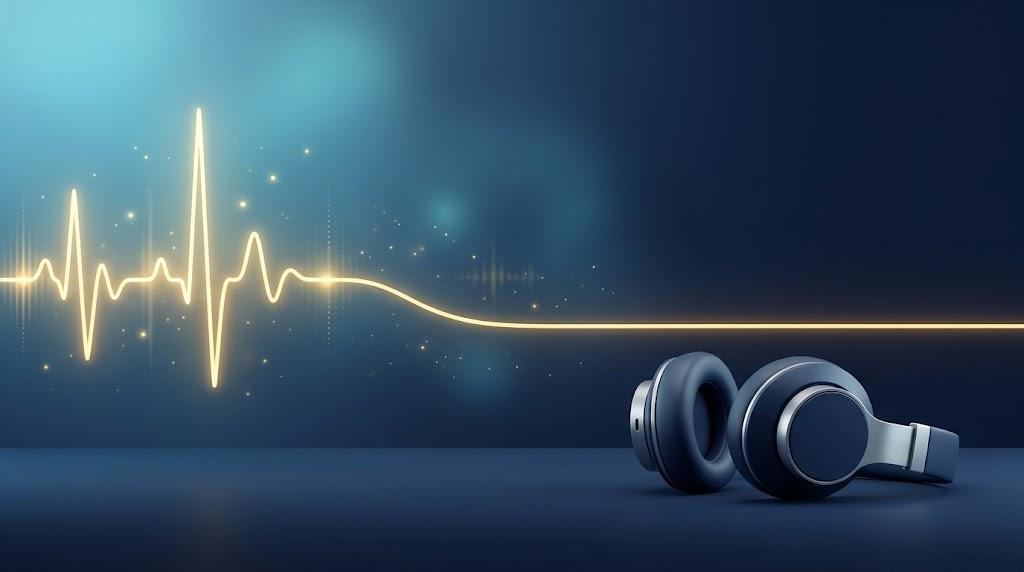
The obvious skeptical question: isn’t ASMR just ordinary relaxation dressed up in mystical language? In 2018, a team at the University of Sheffield put that to a direct test. They brought people into the lab, had them watch trigger videos (or control videos), and measured what actually happened in the body. It remains one of the most cited experiments in ASMR and the brain research.
In ASMR experiencers, the videos produced a significant decrease in heart rate — a drop of the kind associated with stress reduction and mindfulness — together with increased skin conductance, a marker of emotional arousal. In non-experiencers, nothing. The videos were identical; the bodies were not.
That combination is the physiological signature of ASMR: simultaneously calm and alert — a state researchers compare to being soothed and excited at once, like the pleasurable tension of hearing your name called by someone you’re happy to see. It also explains the common report that the experience is unlike any other feeling people can name: it genuinely doesn’t map cleanly onto “relaxation” or “excitement” — it’s a specific mixture of both. In one stroke, the study tied ASMR and the brain to hard numbers instead of anecdotes.
Feeling states, however, are the easy part. The harder question is what the brain is doing — and for that, researchers went inside the skull.
The Scalp Tingle Sensitivity Test
When listening to soft whispering, deliberate tapping, or close personal attention videos, do you feel an intense, static-like electrical tingling starting at the crown of your scalp and flowing down your spine?
Inside the Tingles: What Brain Scans Reveal About ASMR and the Brain
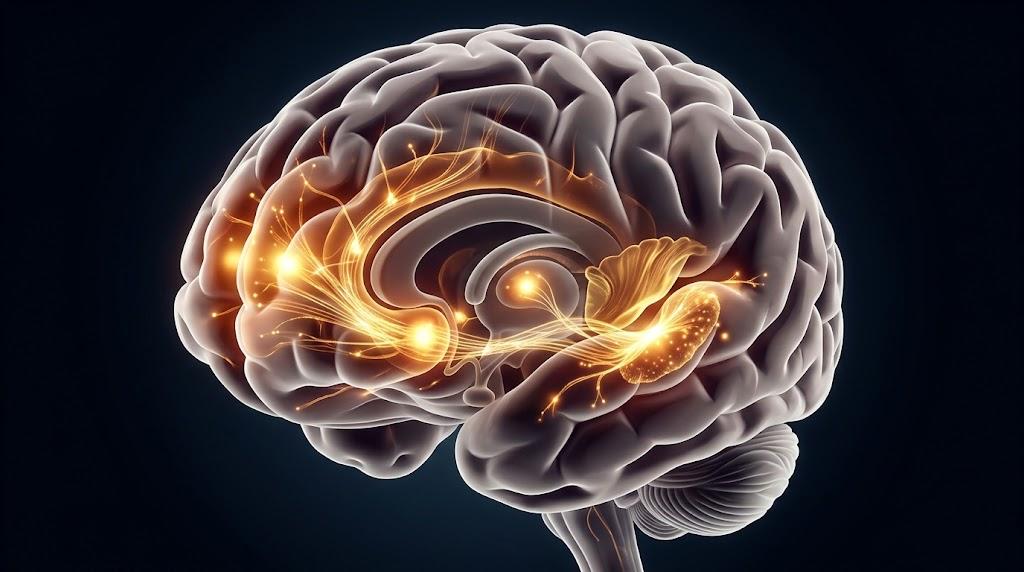
The first fMRI study of ASMR — published in 2018 — scanned ten ASMR-sensitive people while they watched videos that triggered their tingles, and compared those moments to moments without tingles. During the tingling periods, several reward and sensation regions lit up together: the nucleus accumbens (the brain’s pleasure-and-reward hub — the same structure that responds to food, music, and social approval), the medial prefrontal cortex (involved in self-reflection and social cognition), the insula (which maps internal body states), and the secondary somatosensory cortex (which processes touch — fitting, for a sensation people describe as invisible goosebumps). In that scan, ASMR and the brain were caught in the act.
Read that list again and notice something: it is essentially the brain’s reward circuit — the same machinery hijacked by cheap dopamine hits — activating from nothing more than a whisper and a folded towel. Few findings capture the link between ASMR and the brain’s reward system more directly: the circuitry that responds to music, food, and social approval also answers a whisper. The response appears to be a genuinely reward-signaling experience, which is exactly what long-time fans have always claimed.

Structural studies add another layer. People who experience the sensation show measurable differences in resting-state brain networks — including reduced functional connectivity in the default mode network, the set of regions active during self-referential thought and mind-wandering — and even differences in cortical structure. One interpretation: the ASMR brain blends its networks in a slightly different way, letting sensory input (sound, sight) flow more directly into emotional and bodily circuits. The whisper doesn’t just get heard; it gets felt.
The Trigger Cabinet: What Sets It Off
Ask a hundred fans what triggers them and you’ll get a surprisingly consistent menu. The big four from the research literature:
- Whispering — the single most iconic trigger. Soft, close, deliberate speech.
- Crisp sounds — tapping, scratching, page-turning, crinkling, brushing. High-frequency, delicate, repetitive.
- Slow, deliberate movements — unhurried hand gestures, careful arrangement of objects.
- Personal attention — role-plays where someone simulates giving you a haircut, an eye exam, or a spa treatment. This one is the emotional heart of ASMR: the fantasy of being calmly, kindly attended to.
That last trigger is a clue to the phenomenon’s deeper nature. Being attended to calmly and kindly is one of the oldest mammalian experiences there is — it’s what grooming is among primates, and what a parent’s hushed voice is to a child. Some researchers suspect the response taps into those ancient circuits of care and safety. It would explain why so many people reach for these videos precisely when they feel lonely, anxious, or unable to sleep: the videos simulate the presence of a calm, attentive other. Surveys consistently place personal attention among the top triggers — one more hint that ASMR and the brain respond to care, not just sound.
And the dark mirror of this system is misophonia — the condition in which chewing or breathing sounds trigger instant rage or disgust. The two phenomena are strange cousins: both are atypical sound-emotion reactions, both involve heightened emotional responses to specific gentle sounds, and some people report having one transformed into the other over their lifetime. The whisper that melts one nervous system is the chewing that enrages another. Your brain’s sound-emotion wiring is deeply personal — and it is also why researchers increasingly study ASMR and the brain as a gateway: a safe, repeatable way to watch emotion and sensation intertwine.

Why Whispering Works: ASMR and the Brain on Quiet Sound
Why would whispering of all things be the king trigger? A few converging reasons:
Proximity simulation. Whispering only happens close. Your brain treats soft, breathy speech as evidence that someone is within arm’s reach — and with binaural microphones, ASMR videos place that someone inches from your ear. The sensation’s signature path (scalp → neck → spine) follows the same regions that respond to being gently touched on the head and neck: the exact zones involved in social grooming. For researchers of ASMR and the brain, this scalp-to-spine path is a fingerprint: it repeats across experiencers with remarkable consistency.
Attention demands quiet. A whisper forces you to lean in. The content is engineered to be quiet enough that the world falls away — you can’t multitask through it. That forced narrowing of attention resembles the “flow” state researchers found experiencers enter, and flow is deeply calming.
The contrast effect. In a loud world, gentle sound is rare and therefore safe. There’s an old idea in neuroscience that the brain’s response to any stimulus depends heavily on contrast with the background. Small sounds seem bigger in the dark, and gentle sounds feel gentler after a day of noise. It is, in part, your auditory system getting the one thing modern life almost never gives it: softness. It is also one more example of ASMR and the brain’s love of context.
ASMR and Sleep: Why Millions Fall Asleep to Tingles
Ask the ASMR community what they use it for and one answer dominates: falling asleep. And this isn’t just anecdote — in the first survey study, the most common use of these videos was relaxation and sleep aid. It works because ASMR and the brain’s alertness system downshift together instead of fighting each other.
The biology lines up. Falling asleep requires your heart rate to drift downward, your muscles to release tension, and your attention to unclench from the day’s worries. Its verified effects — lowered heart rate, pleasant calm, narrowed attention — are precisely the on-ramp to that state. In a small trial with medical students, participants who used ASMR reported improved sleep quality and reduced insomnia scores compared to their baseline.
There’s also a quieter psychological angle. Many people struggle to fall asleep because the moment the lights go off, the brain’s volume turns up on its own thoughts — the mind, deprived of input, starts generating its own noise. A whisper video gives the brain something gentle to hold onto, occupying the exact circuits that would otherwise ruminate. It’s a benign form of the bedtime transition ritual — a bridge from the day’s noise to the night’s silence.
Is it a treatment for insomnia? Honest answer: the evidence is early and small-scale. If chronic sleeplessness is damaging your days, that deserves a real evaluation. But as a nightly wind-down tool, it has better evidence than most folk remedies — and essentially no downside for the people who respond to it. In the emerging literature on ASMR and the brain, better sleep is the most consistently reported benefit.
Not Everyone Gets Tingles — and That’s Scientifically Interesting
Roughly speaking, only a minority of people experience the response, and the internet’s most reliable community complaint is: “I tried it and felt nothing.” Far from being a boring fact, this is one of the most scientifically useful things about ASMR — a clean, natural experiment in human neural diversity. It is also the clearest reminder that ASMR and the brain’s response to sound are not universal — they are personal.
Experiencers and non-experiencers differ in measurable ways. The resting-state brain studies above found network differences between the two groups even outside of any ASMR experience — before any video started playing. Personality research adds another layer: experiencers score higher on traits like openness to experience and neuroticism on average. And within experiencers, tingle intensity varies so much that researchers talk about “tingle-prone” individuals as a distinct group.
The same sound, played in the same room, is a relaxing tingle for one person, a neutral curiosity for a second, and a mild irritation for a third. Nothing about the sound changed — only the nervous system receiving it. It is a reminder that what we call “objective” sensory experience is always a negotiation between the world and the brain it lands in — the same lesson taught by contagious yawning, another automatic response some brains catch and others don’t. ASMR and the brain’s reaction to gentle sound belong to that same family of variable, automatic reactions.
ASMR vs. Frisson: Tingles Aren’t Chills
Skeptics often ask: isn’t this just the shiver you get from a great song? The technical name for that is frisson — aesthetic chills — and the distinction matters. Comparing ASMR and the brain’s slow warmth with frisson’s quick spark shows how specific each response is. They’re different animals:
| Feature | ASMR tingles | Frisson (music chills) |
|---|---|---|
| Feeling | Static-like warmth spreading from scalp down | Brief shivers, goosebumps, “hair standing up” |
| Direction | Head → neck → spine, slow wave | Sudden whole-body surge |
| Heart rate | Decreases (calm + arousal mix) | Increases (arousal spike) |
| Duration | Minutes — sustained and lingering | Seconds — sharp and fleeting |
| Typical trigger | Whispers, tapping, personal attention | Crescendos, sudden chords, awe moments |
| Aftereffect | Deep relaxation, sleepiness | Energized, moved, sometimes tearful |
One is a dimmer switch, the other a lightning strike. Both are real, both are measurable, and both reward the brain — but through different circuits and opposite heart-rate signatures. If music chills are the brain applauding, ASMR is the brain exhaling. The contrast shows, again, that ASMR and the brain reward different experiences through different circuits.
Myth vs. Fact
⚡ Myth vs. Fact
Myth: ASMR is fake — people are just imagining it or role-playing relaxation.
Fact: Lab measurements show ASMR videos produce a real, significant drop in heart rate in experiencers (and not in non-experiencers), and fMRI shows genuine activation of reward circuitry during tingling moments. The sensation is physiologically real — even though the word for it is only a decade old.
Myth: Everyone feels ASMR if the video is good enough.
Fact: Only a minority of people experience ASMR, and brain-structure studies show experiencers’ resting networks differ measurably from non-experiencers’. If you feel nothing, that’s neuroscience, not a failure of taste or effort.
Myth: ASMR is a sexual or fetish phenomenon.
Fact: Surveys of the community consistently place relaxation and sleep at the top of the motivation list, and the response is accompanied by lowered heart rate — the opposite of sexual arousal physiology. Intimacy is central to ASMR, but the intimacy of being cared for, not the intimacy of desire.
Myth: Watching ASMR daily means you’re addicted or it’s bad for your brain.
Fact: No study has documented harm from ASMR use. It engages reward circuitry, like music and delicious food do — that’s why it feels good. The documented short-term effects are the opposite of harm: reduced heart rate, calmer mood, easier sleep onset.
Myth: ASMR and misophonia are opposites with nothing in common.
Fact: They’re surprisingly related — both are atypical, deeply personal sound-emotion reactions, and researchers study them side by side. Some individuals even report their triggers shifted from ASMR-inducing to misophonia-inducing over time. The brain’s sound-emotion wiring is a spectrum.
Myth: There is no real connection between ASMR and the brain — it’s all imagination.
Fact: Neuroimaging shows measurable activation of reward circuitry during tingling moments, and resting-network differences exist between experiencers and non-experiencers even at rest. ASMR and the brain are linked in ways machines can see.
How to Try ASMR (If You’ve Never Felt It)
If you’re curious, a few evidence-informed tips to give your brain its best shot:
- Use headphones. Non-negotiable. The binaural recording is the mechanism — a whisper from a phone speaker across the room is not the same signal to your brain as a whisper one centimeter from each ear.
- Start with the classic triggers. Whispering, tapping, and personal-attention role-plays trigger the most people. Haircut, eye-exam, and spa role-plays are the genre’s most reliably effective forms.
- Match the mood. Don’t start with loud fast content. The point is gentle: slow movements, soft voice, minimal talking.
- Give it a few sessions. Many experiencers report their first tingle wasn’t love at first listen — the response can take repeated, relaxed exposure to switch on. Try it in bed, lights low, screen dimmed.
- Notice — don’t chase. Tingles, like sleep, resist being seized directly. Set up the conditions, watch calmly, and let your nervous system decide.
And if nothing happens after a genuine try? You’re in the majority, your brain works fine, and you get to be the person at the party who says “I honestly don’t get it” with scientific backing. Every null result still teaches researchers something about ASMR and the brain’s diversity.
What ASMR and the Brain Research Still Can’t Explain
The science of ASMR and the brain has come a long way since 2015, but big questions remain: why some people feel nothing at all, why triggers are so specific, and whether years of daily use change anything in the long run. Those answers will take time. Until then, the tingles remain exactly what they have always been: a real, measurable, and still partly mysterious corner of neuroscience.
Frequently Asked Questions About ASMR and the Brain
What is the connection between ASMR and the brain?
ASMR and the brain are connected through measurable physiology: in lab studies, trigger videos significantly lower heart rate in experiencers (but not in non-experiencers), and fMRI shows activation of the nucleus accumbens, medial prefrontal cortex, insula, and secondary somatosensory cortex specifically during tingling moments.
What does ASMR feel like?
Most describers use the same words: a static-like or wave-like tingling that begins at the crown of the head or scalp and flows down the back of the neck and along the spine, paired with a deep sense of calm and well-being. Many compare it to the pleasure of having your hair played with — a touch-like pleasure generated entirely by sound and sight.
Is ASMR scientifically proven or just placebo?
It’s measurable. Controlled lab studies show trigger videos reduce heart rate significantly in experiencers but not in controls, and fMRI studies show activation of the nucleus accumbens and other reward regions specifically during tingling moments. Brain-structure differences between experiencers and non-experiencers exist even at rest. Few topics in psychology have answered their skeptics as quickly as ASMR and the brain — the effect appears when it should and in exactly whom it should.
Why does whispering trigger ASMR?
Whispering simulates closeness — soft, breathy speech is something your brain only experiences from someone within arm’s reach. Combined with binaural recording, it activates the brain’s circuits for personal attention and care. For many experiencers, “personal attention” is the true trigger; whispering is simply its most portable form. It is also the most commonly reported trigger in ASMR and the brain research.
Can ASMR help you sleep?
It can help many people. Sleep is the number one reported use of these videos, the verified physiology (lower heart rate, pleasant calm) is exactly the body’s sleep on-ramp, and a small trial in medical students found improved sleep quality with ASMR use. Used this way, ASMR and the brain’s calming response do precisely what sleep researchers would prescribe: lower arousal before bed. It remains a low-risk wind-down tool — not a treatment for chronic insomnia, which deserves proper evaluation.
Why don’t I get tingles from ASMR?
Because only a minority of people have the response — that’s the normal situation, not a defect. Resting-brain studies show experiencers and non-experiencers have measurably different network connectivity even before any video plays. If you feel nothing after several genuine tries with headphones, your brain simply routes gentle sound to a different outcome.
Is ASMR bad for your brain or addictive?
No evidence supports either worry. It engages reward circuitry the same way music and good food do, and its measured short-term effects are calming: reduced heart rate, improved mood, easier sleep onset. If watching ever cuts into sleep itself or real-world connection, that’s a scheduling habit to fix — the same advice that applies to any pleasant media.
What’s the difference between ASMR and frisson?
Frisson is the sudden shiver from music or awe — a fast, whole-body arousal spike with rising heart rate. ASMR is slow, head-to-spine warmth with a falling heart rate. One energizes, the other sedates. They even live in different brain circuits, which is why a person can have one strongly and the other not at all.
Is ASMR related to misophonia?
They’re related phenomena studied side by side: both are atypical, highly personal sound-emotion reactions. But they run in opposite emotional directions — the gentle sounds that soothe an ASMR experiencer (mouth sounds, chewing) are precisely the sounds that can enrage a person with misophonia. Some researchers treat them as two ends of one sound-emotion sensitivity spectrum.
How do researchers study ASMR and the brain?
Mainly with surveys, heart-rate and skin-conductance measurements, fMRI during tingling moments, and resting-state scans comparing experiencers with non-experiencers. Together, these methods tie ASMR and the brain’s reward, attention, and body-mapping systems to the sensation.
How new is the science of ASMR and the brain?
Very new. The first survey appeared in 2015 and the first fMRI study in 2018. What exists so far is consistent — real physiology, replicable signatures — but researchers are still working out why only some people experience the response and what role ASMR and the brain’s wiring differences play in that.
The Bottom Line: What ASMR and the Brain Reveal About Connection
For most of history, the experience was a private, slightly embarrassing secret — millions of people assuming they were weird for feeling goosebumps from a stranger folding towels. Then a Canadian coined its awkward acronym, Swansea University ran the first survey, Sheffield put it on heart-rate monitors, and Winnipeg put it in the scanner. The verdict is consistent: the tingles are real, they run on the brain’s reward and care circuitry, and they are measurably different in the people who have them.
What the science can’t yet fully explain is the strangest part: that a simulation of being calmly attended to — a whisper, a slow hand, a soft “there you go” — is enough to switch on real comfort in a real body. Maybe that’s not a mystery to solve so much as a reminder of something old: nervous systems are built for other nervous systems, and even a recorded one, whispered through two tiny speakers, is enough to tell your brain the same four words it has always wanted to hear: you’re safe, someone’s here. The study of ASMR and the brain keeps pointing in that same direction.
Tingles optional. Calm included.
References and Sources
- Barratt, E. L., & Davis, N. J. (2015). “Autonomous Sensory Meridian Response (ASMR): a flow-like mental state.” PeerJ, 3, e851. PubMed (PMID: 25834771) — verified; the first scientific study of ASMR (475 participants), source of the trigger taxonomy (whispering, crisp sounds, slow movements, personal attention), the temporary relief of depressive feelings and chronic pain, the flow-state link, and the 5.9% synaesthesia prevalence.
- Poerio, G. L., Blakey, E., Hostler, T. J., & Veltri, T. (2018). “More than a feeling: Autonomous sensory meridian response (ASMR) is characterized by reliable changes in affect and physiology.” PLoS ONE, 13(6), e0196645. PubMed (PMID: 29924796) — verified; source of the heart-rate decrease and increased skin conductance in experiencers (and nothing in non-experiencers), and the relaxation/sleep-use motivation.
- Lochte, B. C., Guillory, S. A., Richard, C. A. H., & Kelley, W. M. (2018). “An fMRI investigation of the neural correlates underlying the autonomous sensory meridian response (ASMR).” BioImpacts, 8(4), 295–304. PubMed (PMID: 30397584) — verified; source of the activation of the nucleus accumbens, medial prefrontal cortex, insula, and secondary somatosensory cortex during tingling moments (n = 10).
- Smith, S. D., Fredborg, B. K., & Kornelsen, J. (2017). “An examination of the default mode network in individuals with autonomous sensory meridian response (ASMR).” Social Neuroscience, 12(4), 361–365. PubMed (PMID: 27196787) — verified; source of the reduced default mode network connectivity in ASMR experiencers (11 vs 11 matched controls).
- Smith, S. D., Fredborg, B. K., & Kornelsen, J. (2019). “Atypical functional connectivity associated with autonomous sensory meridian response: An examination of five resting-state networks.” Brain Connectivity, 9(6), 508–515. PubMed (PMID: 30931592) — verified; source of the reduced salience- and visual-network connectivity findings.
- Kornelsen, J., Fredborg, B. K., & Smith, S. D. (2023). “Structural differences in the cortex of individuals who experience the autonomous sensory meridian response.” Brain and Behavior, 13(2), e2894. PMC9927840 (PMID: 36692975) — verified; source of the cortical structural differences between 17 experiencers and 17 matched controls.
- Mahady, A., et al. (2023). “What is autonomous sensory meridian response (ASMR)? A narrative review and comparative analysis of related phenomena.” Consciousness and Cognition, 109, 103477. doi:10.1016/j.concog.2023.103477 — verified; narrative review situating ASMR relative to misophonia, frisson, and synaesthesia.
- Hardian, H., et al. (2020). “Improvement of Sleep Quality by Autonomous Sensory Meridian Response (ASMR) Stimulation Among Medical Students.” Malaysian Journal of Medicine and Health Sciences, 16(Supp 14), 81–85 — verified via citation in the 2023 systematic review (Lohaus et al., PMC9812311); source of the improved-sleep-quality finding in students.
Disclaimer
By Aly ElDeeb — Science Writer & Literature Researcher | 📚 Fact-Checked & Sourced from Peer-Reviewed Studies
📚 You Might Also Like
Hand-picked articles for you


