



Have you ever sat down to work on an important project, read a book, or organize your home, only to feel an overwhelming wave of restlessness and boredom?
Within seconds, your hand automatically reaches for your smartphone. You open a short video feed or check social media notifications without even making a conscious decision.
You are not naturally lazy. You do not lack fundamental intelligence. You are experiencing dopamine detox withdrawal — a chemical imbalance caused by years of cheap, effortless stimulation.
In today’s hyper-stimulated world, your brain’s reward circuitry has been hijacked. High-frequency, low-effort stimulation has rewired your neural pathways, making ordinary tasks feel unbearable.
Understanding how to reset this chemical machinery is the secret to reclaiming effortless motivation. Here is the neuroscience behind why daily life feels boring, and how a targeted dopamine detox restores deep cognitive drive.

⚡ The Core Problem
Your brain was designed to earn dopamine through effort. Technology has decoupled effort from reward, leaving your reward system chronically overstimulated and your baseline motivation depleted.
1. What Is Dopamine and How Does the Reward System Work?
First, let’s dispel a common medical myth. Dopamine is not the “pleasure chemical” as popularly described in media and pop psychology.
Dopamine is the neurotransmitter of anticipation, motivation, and desire. It drives seeking behavior rather than satisfaction itself. This is a critical distinction that most people misunderstand.
It explains why you can feel motivated to pursue something even when you know it will not make you happy. Your dopamine system does not care about your long-term happiness. It cares about immediate reward anticipation.

In evolutionary history, dopamine served a vital survival purpose. When early humans tracked prey across the savanna or discovered a safe shelter, dopamine surged through their brains, generating the intense drive to pursue the reward.
Once the reward was obtained — the hunt succeeded, the shelter was secured — dopamine levels dropped back to a calm, baseline level. The system was elegant: effort and reward were strictly linked, and high dopamine required high physical or cognitive exertion.
In modern society, technology has completely decoupled effort from reward. You can now access intense dopamine spikes with zero physical effort. A thumb swipe across a glass screen delivers the same neurochemical flood that once required hours of hunting or building.
Research by Dr. Kent Berridge at the University of Michigan showed that dopamine depletion in animal models led to reduced motivation but not reduced pleasure. This means reducing dopamine stimulation does not make you enjoy things less — it restores your ability to feel motivated by natural, healthy rewards rather than requiring increasingly extreme stimulation.
⚡ The Dopamine Baseline Trap
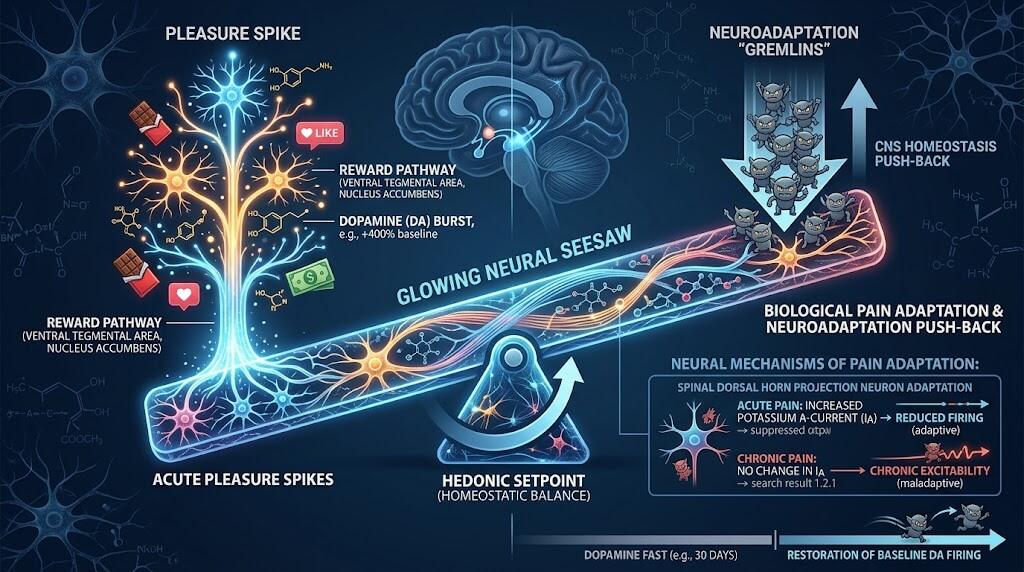
- The Spike: Every time you scroll through short-form videos, your brain tilts the seesaw hard toward pleasure.
- The Adaptation: To maintain biological balance, your brain immediately pushes back by adding weight to the pain side.
- The Crash: When you put the phone down, your baseline drops below normal, leaving you anxious, irritable, and bored.
Neurobiologists at Stanford University explain that pleasure and pain are processed in the exact same region of the brain, functioning like a seesaw. Every spike in pleasure creates an equal and opposite spike in pain. The more intense the spike, the harder the crash.
2. Cheap Dopamine vs Earned Dopamine
The human brain evaluates tasks based on relative contrast rather than absolute difficulty. When your nervous system is accustomed to cheap dopamine, ordinary life tasks appear unbearable.

Consider the neural contrast between two types of stimulation:
Cheap Dopamine Activities: Social media scrolling, binge-watching, video games, and junk food provide instant, massive dopamine spikes with zero effort. These activities flood your synapses with neurotransmitters in seconds. The content is designed by teams of engineers to be maximally addictive.
Earned Dopamine Activities: Reading a textbook, working out, writing a report, or practicing an instrument require sustained effort before yielding minor dopamine rewards. The reward comes gradually over hours or days, not seconds.
If your daily baseline is calibrated to cheap dopamine, reading a book feels like walking through mud. Your brain perceives the low-dopamine task as an intolerable state of deprivation. It screams for the quick hit it has grown accustomed to receiving.
Research by Dr. Anna Lembke at Stanford University, author of Dopamine Nation, has demonstrated that the brain maintains a pleasure-pain balance. When you repeatedly flood your system with dopamine through easy pleasures, the brain compensates by reducing natural dopamine production and increasing pain signaling.
This is called hedonic adaptation. The same activity that once felt enjoyable now feels merely neutral. Activities that once felt neutral now feel unpleasant. You need more and more stimulation to achieve the same emotional effect.
Studies on social media usage reveal this pattern clearly. Users who spend more than three hours daily on platforms like TikTok and Instagram report significantly lower satisfaction from offline activities. Their brains have been recalibrated to expect the rapid-fire stimulation of algorithmic feeds.
This neural friction is closely related to how sensory overstimulation triggers daily brain fog, leaving your executive control network completely exhausted.

Cheap Stimulation & Reward Sensitivity Index
Discover where your neural reward circuitry falls on the hyper-stimulation spectrum.
When waking up, how quickly do you instinctively reach for your phone or digital stimulus?
3. The Anhedonia Trap: Why Normal Life Feels Dull
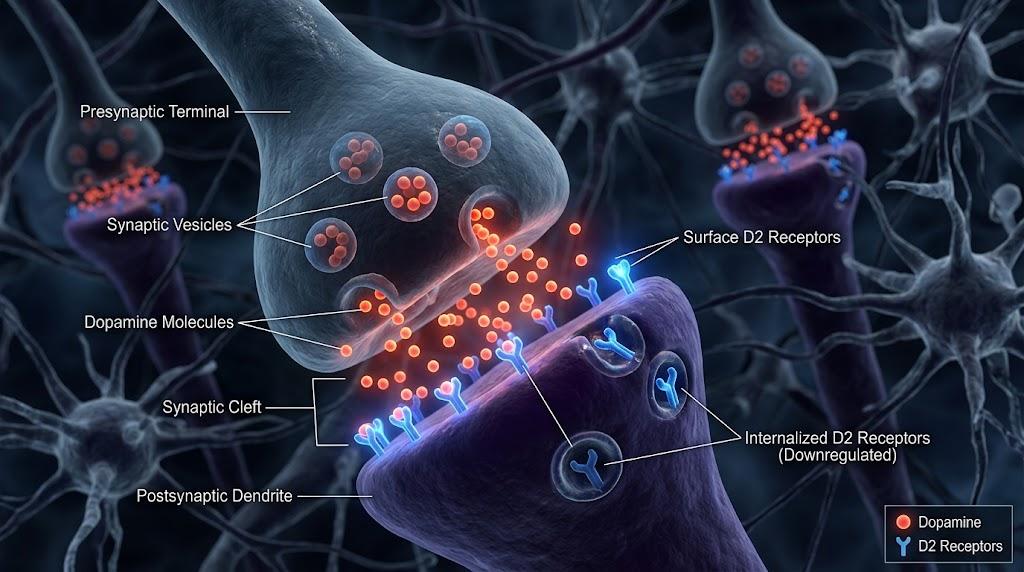
When you continuously flood your brain’s synaptic clefts with unnatural dopamine spikes, your brain defends itself through a process known as receptor downregulation.
To protect your neural tissue from excitotoxicity, your brain physically reduces the number of active D2 dopamine receptors available on post-synaptic neurons. With fewer receptors active, ordinary daily experiences no longer produce enough stimulation to register.
You enter a state of mild, chronic anhedonia — the inability to feel joy or engagement from everyday activities. A walk in the park feels pointless. A conversation with a friend feels draining. Completing a work assignment feels meaningless.
This receptor downregulation explains why people spend hours scrolling through feeds they do not even enjoy. They are desperately searching for a spike just to feel normal. The scroll is not pleasurable — it is a coping mechanism for the withdrawal that follows every pause.
The condition is self-reinforcing. Each day of heavy digital stimulation further desensitizes your receptors, making the next day’s baseline even lower. You need more stimulation to feel the same effect, which drives more consumption, which further depletes your baseline.
Clinical research on dopamine receptor density shows that heavy social media users have measurably fewer D2 receptors than moderate users. This is the same neurological pattern observed in substance addiction, though the severity differs.
The most insidious aspect of this trap is that it mimics depression. People experiencing dopamine desensitization often believe they have clinical depression, when in reality their reward system has simply been overloaded. A proper dopamine detox can distinguish between the two conditions.
This psychological dynamic is deeply connected to how algorithmic feeds exploit human dopamine loops under the dead internet theory.
“Boredom is not the absence of things to do; it is the physiological withdrawal your brain experiences when forced to step down from unnatural, high-dopamine digital environments.”
4. The 24-Hour Reset Protocol: How to Execute a Dopamine Detox
A true dopamine detox is not about eliminating all pleasure from your life or attempting a month-long monastic retreat. It is a strategic, short-term reset designed to upregulate your D2 dopamine receptors.
Dr. Lembke recommends starting with a 24-hour period where you avoid all high-dopamine activities. During this period, you will likely experience intense boredom and restlessness, which is actually the sign that your brain is beginning to recalibrate.
The first six hours are the most difficult. Your brain will generate powerful urges to check your phone, watch something, or eat something sugary. These urges are withdrawal symptoms, not genuine needs. Recognizing them as such is the first step to overcoming them.
After the initial discomfort subsides, many people report a renewed ability to enjoy simple, low-stimulation activities like reading, walking, or conversation. The threshold for motivation drops dramatically. Tasks that felt impossible an hour ago suddenly feel manageable.
A highly effective 24-hour protocol involves four simple boundaries:
- Zero High-Stimulation Screens: No social media, short-form video algorithms, video games, or streaming shows for 24 hours. Keep your phone in a drawer or another room entirely.
- Embrace Mindful Boredom: Allow your brain to experience quiet moments without grabbing a device to fill the silence. Boredom is the withdrawal phase — it means the reset is working.
- Low-Dopamine Activities: Engage exclusively in slow, reflective tasks — walking outdoors without headphones, journaling on paper, reading physical books, or preparing simple meals from scratch.
- Hydration and Movement: Support metabolic recovery through adequate water intake, gentle physical stretching, and exposure to natural sunlight. These activities support natural dopamine production without artificial spikes.
Within 24 to 48 hours of removing artificial hyper-stimulation, your brain begins expressing new D2 receptors, dramatically lowering your threshold for motivation. Tasks that felt unbearable start to feel normal again.
This intentional quiet state helps resolve why late-night screen scrolling triggers revenge bedtime procrastination, restoring healthy circadian rhythms and deeper sleep.
5. Long-Term Dopamine Hygiene: Reclaiming Focus for Life
Once you complete an initial reset, maintaining mental clarity requires sustainable dopamine hygiene in your daily routine. A single 24-hour detox is powerful, but without long-term habits, your brain will quickly return to its overstimulated baseline within days.
Effective long-term strategies include:
- Delay Morning Dopamine: Do not check your smartphone for the first 60 minutes after waking. Allow your natural morning cortisol response to set your baseline naturally before introducing external stimulation.
- Friction Protocols: Place social media apps inside deep folders, turn your phone display to grayscale mode, or leave chargers in another room during work hours. Adding even small barriers reduces impulsive checking by over 30%.
- Pair Effort Before Reward: Establish a strict rule: complete 90 minutes of focused, high-effort work before allowing yourself any digital entertainment. This retrains your brain to associate effort with reward.
- Time-Boxed Entertainment: Instead of unlimited scrolling, set a specific timer for entertainment. When the timer ends, stop immediately regardless of where you are in the content.
A genuine dopamine detox does not mean eliminating all pleasurable activities. Instead, it means creating regular periods of low stimulation that allow your dopamine receptors to resensitize over time.
Research on habit formation shows that it takes approximately 66 days for a new behavior to become automatic. Committing to dopamine hygiene for two months creates lasting neurological changes that protect against future desensitization.
Grayscale Screen Hack
Switching your smartphone display to grayscale removes visual color rewards, reducing voluntary screen-checking time by up to 38% overnight. The phone simply becomes less interesting to look at.
Cold Exposure and Dopamine
Clinical studies show taking a 2-minute cool shower increases baseline dopamine by 250% steadily over several hours without the sharp crash associated with screens. This is earned dopamine at its finest.
Summary and Frequently Asked Questions About Dopamine Detox
A dopamine detox is a powerful psychological tool to recalibrate your brain’s reward system. By stepping back from artificial hyper-stimulation, you restore your natural capacity for deep focus, motivation, and everyday joy.
The evidence is clear: the modern digital environment is fundamentally mismatched with human neurochemistry. Understanding this mismatch is the first step toward reclaiming control.
Does a dopamine detox mean eliminating dopamine completely?
No. Dopamine is an essential neurotransmitter required for movement, memory, and survival. The goal is to eliminate cheap, hyper-stimulating spikes so your baseline receptors can normalize. You want your brain to respond to natural rewards again.
How often should I perform a dopamine detox?
Many high-performers practice daily dopamine hygiene, such as delaying morning screens, alongside a weekly 24-hour digital fast to maintain peak cognitive drive. Consistency matters more than duration.
How long does it take to feel results?
Most people notice improved focus and motivation within 48 to 72 hours of a proper dopamine detox. Full receptor resensitization can take two to four weeks of consistent practice. The improvements compound over time.
Can a dopamine detox help with anxiety?
Yes. Many people report reduced anxiety after reducing digital stimulation. The constant low-grade stress from notification checking and information overload diminishes significantly. Your nervous system finally gets a chance to rest.
References
- Lembke, A. (2021). Dopamine Nation: Finding Balance in the Age of Indulgence. Dutton.
- Berridge, K.C. & Robinson, T.E. (2016). Liking, wanting, and the incentive-sensitization theory of addiction. American Psychologist, 71(8), 670-679. DOI: 10.1037/a0040317
- Wise, R.A. (2004). Dopamine, learning and motivation. Nature Reviews Neuroscience, 5(6), 483-494. DOI: 10.1038/nrn1406
- Volkow, N.D. et al. (2017). The neuroscience of drug reward and addiction. Physiological Reviews, 99(4), 2115-2140. DOI: 10.1152/physrev.00034.2018
📚 You Might Also Like
Hand-picked articles for you


