


The 10 percent brain myth is one of the few neuromyths with a documented birthday. In 1936, the broadcaster Lowell Thomas wrote a preface for a new edition of Dale Carnegie’s How to Win Friends and Influence People, assuring readers that “the average man develops only ten percent of his latent mental ability.” Carnegie had made no such claim. Thomas attributed the figure to unnamed “scientists,” and the sentence stuck. Within a generation, a line of motivational padding from a sales manual had hardened into what millions of educated adults treat as settled neuroscience.
William James did supply the raw material. In his 1907 essay The Energies of Men, the Harvard psychologist argued that we habitually use only “a small part of our possible mental and physical resources” — a claim about fatigue and motivation, not a census of neurons. Lowell Thomas compressed that careful sentence into a number, and cinema did the rest: in Lucy (2014) and Limitless (2011), unlocking the unused 90 percent produces superpowers, which is exactly how the 10 percent brain myth likes to be imagined. The evidence points the opposite way. What follows is what the metabolic budget, the imaging record, and cellular anatomy actually show — and why the myth is not merely inaccurate but biologically impossible.
“Humans only use 10% of their brains; the remaining 90% is dormant potential waiting to be unlocked.”
fMRI and PET scans show nearly 100% of the brain is continuously active across 24 hours. The brain consumes 20% of the body energy while weighing only 2%—evolution would never sustain 90% useless tissue!
Where the 10 Percent Brain Myth Came From
The 10 percent brain myth was never a finding; it was a compression error made twice. First, James’s 1907 observation about untapped motivation — people under extreme danger or emotion sometimes perform far beyond their habits — was quietly converted into a claim about untapped tissue. James wrote about latent energy in the same way an economist writes about spare capacity; he never fixed a percentage to it, and he certainly never scanned a brain. The gap between what he said and what posterity heard is the founding distortion of the 10 percent brain myth.
Second, Lowell Thomas’s 1936 preface gave the folk figure a distribution channel. Carnegie’s book sold tens of millions of copies, and the preface traveled with every printing. From there the number absorbed an aura of laboratory authority it never earned, surfacing in self-help courses, advertising copy, and eventually in films where a nootropic pill or telekinetic accident “activates” the dormant remainder. This is the transmission mechanism of the 10 percent brain myth: never a journal, always a preface, a poster, a movie.
The most troubling part is persistence among people who should know better. In a 2012 survey of primary and secondary school teachers in the United Kingdom and the Netherlands, roughly half endorsed the 10 percent brain myth as true — along with the idea that teaching to “left-brained” or “right-brained” learners is meaningful [Dekker et al., 2012]. The myth shares a biography with the left brain right brain myth: a genuine scientific observation, mangled into a slogan, kept alive by its entertainment value. Correcting it requires more than repeating that it is false; it requires showing why a mostly idle brain could not function at all.

The 20 Percent Tax: A Brain That Cannot Afford to Idle
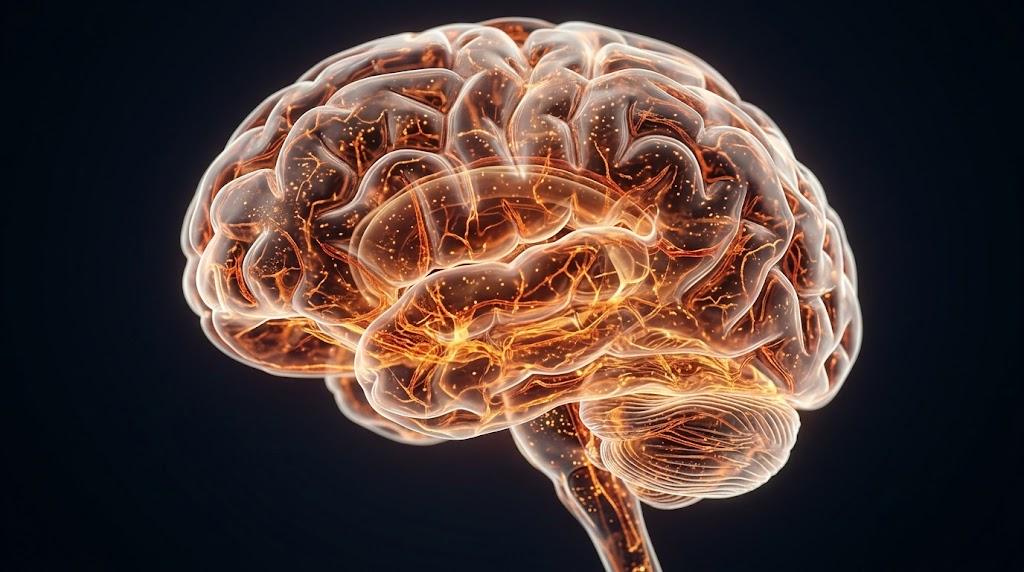
Start with the accounting, because it is the shortest route to a contradiction — the 10 percent brain myth is, at bottom, a claim about energy. The human brain weighs about 1.4 kilograms — roughly 2 percent of body mass — yet it consumes close to 20 percent of the body’s resting oxygen and glucose. In absolute terms, that is on the order of 20 watts of continuous power, night and day, whether you are solving equations or watching paint dry. The 10 percent brain myth asks you to believe that most of this furnace sits permanently idle; cerebral metabolic rate says otherwise in every documented condition short of anesthesia and deep hypothermia.
Where does that fuel go? Largely into keeping trillions of molecular pumps running. Every neuron maintains steep sodium and potassium gradients across its membrane using Na⁺/K⁺-ATPase, an enzyme that hydrolyzes ATP relentlessly just to keep the cell ready to fire. Computations — action potentials, synaptic vesicle recycling, transmitter uptake — are real costs stacked on top of that readiness baseline. When Attwell and Laughlin built the first quantitative energy budget for grey matter, they found that even vigorous signaling is a minority shareholder; most of the bill is housekeeping that never switches off [Attwell & Laughlin, 2001].
Reviewing the constraints this imposes on nervous systems, Laughlin argued that energy is a first-order design pressure on neural coding itself, not a footnote [Laughlin, 2001].

That arithmetic dooms the 10 percent brain myth on its own terms. If 90 percent of neurons were persistently idle, they would still run their pumps — maintaining resting potentials, trafficking proteins, surviving — while contributing no computation. A brain that budgeted a fifth of the body’s energy for permanently unemployed tissue would be an evolutionary scandal. Modern cellular metabolism research shows how tightly fuel delivery, glial support, and neural work are coupled, region by region, second by second [Magistretti & Allaman, 2015]. Tissue this expensive earns its keep or gets pruned. The 10 percent brain myth survives only where the arithmetic is ignored.
Imaging Sees the Whole Brain Working — Even Asleep
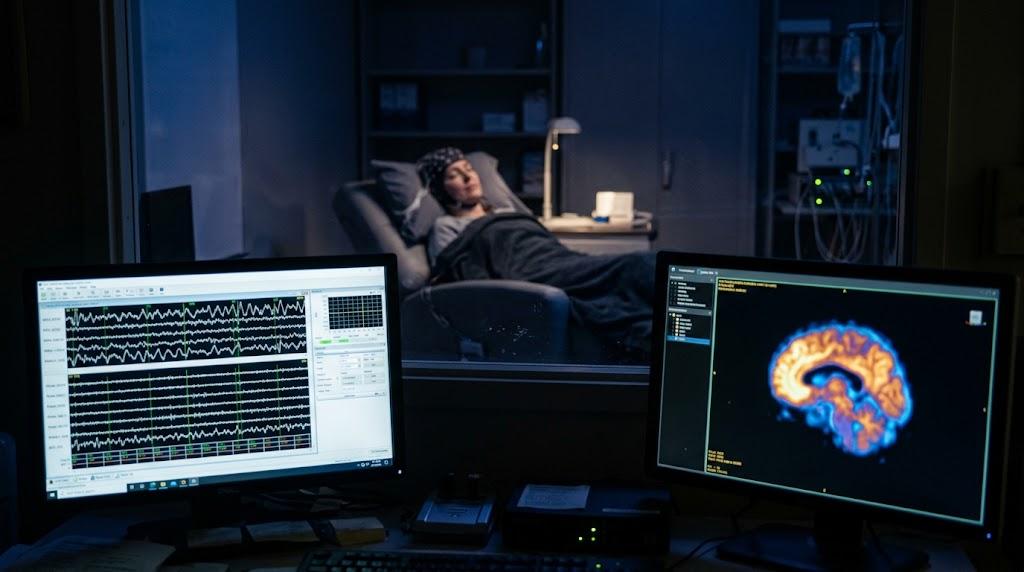
If the idle tissue that the 10 percent brain myth requires existed, functional imaging would find it. It has had five decades of chances. Positron emission tomography with FDG, which maps glucose uptake directly, shows metabolic activity distributed across every examined region of the cerebrum, cerebellum, and brainstem. There is no dark territory.
Regional differences exist — a visual task lifts occipital cortex a few percent above baseline, for instance — but those task effects ride on a uniformly high background consumption. The baseline is the story: as Raichle and Mintun put it in their review of brain work and brain imaging, the brain’s activity during so-called rest is enormous, and task-induced changes are modest perturbations on top of it [Raichle & Mintun, 2006].
The “lights up in scans” trope — the load-bearing image of the 10 percent brain myth — confuses the color map with the measurement. An fMRI image highlights where activity changed relative to baseline, because that contrast is what the statistics are built to detect. It does not show the roughly full-throttle housekeeping underneath, any more than a weather map showing one thunderstorm implies the rest of the country has no air. Read the raw numbers instead: at rest — eyes closed, mind wandering — the brain already accounts for about a fifth of bodily energy use, a budget Raichle and Gusnard showed is dominated by intrinsic, ongoing signaling rather than externally driven responses [Raichle & Gusnard, 2002].
Sleep, the strongest available test, closes the case. Cerebral metabolism does decline during slow-wave sleep, but moderately, and dreaming sleep runs close to waking levels. The brain uses its night shift for consolidation, glymphatic clearance, and synaptic homeostasis — active processes, not idle time. Anyone who has felt the cognitive cost of a short night already knows this viscerally. Even the dullest afternoon places the whole organ near full power, which is why your brain hates boredom: an understimulated cortex is not a resting cortex but an uncomfortable one. At no point in a 24-hour cycle does imaging locate the fabled dormant mass at the center of the 10 percent brain myth.
If 100 Percent Fired at Once, You Would Seize
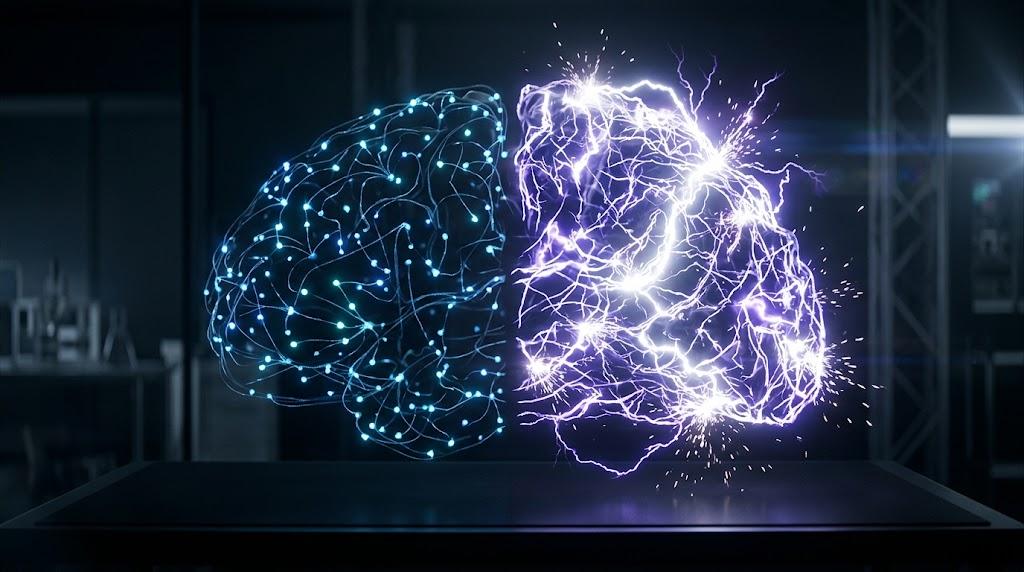
The 10 percent brain myth reserves its most seductive variant for last: the claim that dormant neurons are there, just switched off, waiting to be unlocked. Neurology gives that sentence a clinical name. When large populations of neurons shed their normal decorrelation and fire together in massive synchrony, the result is an epileptic seizure — and when it does not stop, status epilepticus, a medical emergency with real mortality. The fantasy of “using 100 percent of your brain” describes, with eerie precision, a grand mal convulsion: every region recruited at once, no resource left for perception, memory, or movement. Genius is the opposite of that state.

What healthy brains do instead is sparse coding. Individual cortical neurons are stingy: they fire brief, irregular bursts, often milliseconds apart, and most are silent at any given instant relative to their maximum rate. Far from being wasteful idleness, this sparseness is the efficiency solution. As Olshausen and Field argue, sparse representations carry maximal information per spike while minimizing the metabolic bill — the exact opposite trade-off the 10 percent brain myth assumes [Olshausen & Field, 2004]. Inhibition is the sculptor: GABAergic interneurons actively suppress the majority of competing activity so that a small, sharply informative ensemble can represent each percept, thought, or plan.
This is why “awakening dormant neurons” — the promise at the heart of the 10 percent brain myth — is incoherent as biology. The recruitment pattern that distinguishes expert perception is not more neurons firing more of the time; it is better-timed, better-gated activity in the circuits that need it. Elevated synchronous recruitment is what anesthesia suppresses and what seizures impose. The brain’s unused capacity, in the firing sense, is not locked inventory — it is the safety margin that keeps you out of status epilepticus.
The Glial Accounting Error: From 10:1 to 1:1
A cousin of the 10 percent brain myth claims the “unused 90 percent” is not neurons but glial cells — the idea that only one in ten brain cells does thinking while the rest merely support. This version rests on a genuine twentieth-century estimate that glia outnumber neurons about ten to one, repeated textbook to textbook for decades. It failed the first direct count.
Suzana Herculano-Houzel’s isotropic fractionator dissolved post-mortem brains into free nuclei, labeled them, and simply counted. The result reversed the ratio: the human brain holds on the order of 86 billion neurons and roughly 85 billion non-neuronal cells — close to one to one, not one to ten [Herculano-Houzel, 2009]. The same quantitative program showed that the human brain is built on the same scaling rules as other primate brains — larger, and more expensive than a rodent’s, but not built from special spare parts [Herculano-Houzel, 2012].
And even under the old ratio, the 10 percent brain myth was never valid: glial cells are not dormant anything. Astrocytes regulate blood flow and fuel supply, oligodendrocytes insulate axons, and microglia patrol tissue — support work that the 10 percent brain myth misreads as idleness.
10 Percent Brain Myth vs. Reality: The Evidence Matrix
The table below compresses the case. Each row pairs a core claim of the 10 percent brain myth with the clinical or empirical reality, the mechanism that explains the gap, and the primary literature behind it. Read row by row, the 10 percent brain myth fails six independent ways.
| Domain | Myth Claim | Clinical / Empirical Reality | Mechanism | Citation |
|---|---|---|---|---|
| Metabolic Budget | 90 percent of the brain idles, so most of its fuel goes unused. | 2 percent of body mass consumes ~20 percent of resting glucose and oxygen, continuously. | Na⁺/K⁺-ATPase runs in every neuron even at “rest”; signaling is an added cost, not the baseline. | Attwell & Laughlin, 2001 (PMID 11598490) |
| Neuroimaging | Scans “light up” only the 10 percent in use. | PET and fMRI show high baseline activity in all regions across the 24-hour cycle, including sleep. | Task effects are small increments over a uniformly active baseline; color maps show change, not total activity. | Raichle & Mintun, 2006 (PMID 16776593) |
| Lesions / Stroke | We could lose 90 percent and still function. | Even small focal lesions produce specific, lasting deficits; massive loss is fatal. | No dormant reserve exists; each region performs operations its neighbors cannot substitute. | Raichle & Gusnard, 2002 (PMID 12149485) |
| Cellular Composition | Nine of ten brain cells are unused cells. | ~86 billion neurons coexist with ~85 billion glial cells — about 1:1. | The 10:1 glia-to-neuron ratio came from crude estimates; isotropic fractionator counts reversed it. | Herculano-Houzel, 2009 (PMID 19915731) |
| Neural Coding | Dormant neurons could be awakened for super-abilities. | Sparse, decorrelated firing is optimal; total synchronous firing is epilepsy. | GABAergic inhibition sculpts sparse codes; global synchrony collapses into grand mal or status epilepticus. | Olshausen & Field, 2004 (PMID 15321069) |
| Evolutionary Pressure | Evolution kept 90 percent of the brain in reserve. | Metabolically expensive tissue is pruned, never stockpiled idle. | Energy is a primary constraint on neural coding; idle tissue would be selected against within generations. | Laughlin, 2001 (PMID 11502395) |
No row of this table is controversial, and the 10 percent brain myth contradicts every one of them simultaneously. That is the signature of a folk belief rather than a scientific error: it survives not because evidence is thin but because the story is flattering — everyone is secretly a genius running at one-tenth power.
What Real Brain Potential Looks Like
Discarding the 10 percent brain myth does not mean the brain is fixed at its current output. It means the genuine levers of improvement are structural, and they have nothing to do with waking dormant tissue. The first lever is synaptic plasticity: learning strengthens some synapses and weakens others through long-term potentiation and depression, redistributing computational resources to the circuits you actually use. The second is structural growth — dendritic spines form, extend, and retract over hours to days in response to experience, physically rewiring local computation. The third is myelination, which continues into adulthood and can double or more the conduction speed of heavily practiced circuits, a mechanism visible in the white matter of people who train complex skills.
None of this is mysterious, none of it requires a pill, and none of it resembles the 10 percent brain myth’s promise of instant genius. Sustained attention, spaced practice, physical exercise, and sleep are the interventions with the strongest mechanistic backing, because each one supplies what plasticity consumes: metabolic energy, consolidation time, and neuromodulatory signal. The dopamine system plays a central role in that last requirement — it gates when circuits are eligible for strengthening, which is why chasing cheap stimulation degrades the motivation to build skills, as explained in the dopamine detox guide to the brain’s reward system.
The limits you notice — forgetting a name, losing your keys when crossing a threshold — are not dormant capacity either, whatever the 10 percent brain myth implies. They are the predictable costs of an attention system that must filter aggressively to stay within budget, a trade-off explored in the doorway effect. Real potential in neuroscience terms means a better-tuned allocation of a fully employed organ, not the discovery of hidden real estate. The 10 percent brain myth sells the only commodity the brain has never had: spare neurons going cheap.
The Whole-Brain Reality: Why Every Neuron Counts
You use all of your brain, every day, including while you sleep — and the 10 percent brain myth fails against every instrument that has ever looked. The brain’s 2 percent mass commands 20 percent of the body’s fuel; imaging shows no idle regions; wholesale activation is a seizure, not a superpower; and the cell census leaves nothing unaccounted for. What feels like “unused potential” is untrained circuitry — and it is developed the slow, structural way, through practice, sleep, and sustained attention, not by unlocking dormant tissue that never existed.
Frequently Asked Questions
Do we really use only 10 percent of our brains?
No. The 10 percent brain myth is contradicted by every relevant line of evidence: the brain consumes about 20 percent of resting energy despite being 2 percent of body mass, neuroimaging shows baseline activity in all regions across the day and night, focal damage anywhere produces deficits, and cell counts show no large inert population. Global, simultaneous activation would be an epileptic seizure, not enhanced cognition.
Where did the 10 percent brain myth come from?
From a double compression. William James’s 1907 essay The Energies of Men said people use a small part of their possible mental resources — a statement about motivation. Lowell Thomas’s 1936 preface to How to Win Friends and Influence People converted that into “ten percent of his latent mental ability,” and popular culture, including the films Lucy and Limitless, kept the figure alive as entertainment.
How much of the brain do we actually use?
Essentially all of it, though not all neurons fire simultaneously — that is a feature, not waste, and it is the detail the 10 percent brain myth always misses. Healthy coding is sparse and information-efficient, with inhibition selecting the most informative ensembles at each moment. Improvement comes from plasticity: strengthening practiced synapses, growing dendritic spines, and myelinating trained pathways, all of which require energy and sleep rather than “unlocking” anything.
This article is for educational purposes only and does not constitute medical advice. If you have concerns about seizures, memory, or any neurological symptom, consult a licensed physician or neurologist.
References
- Attwell, D. & Laughlin, S.B. (2001). An energy budget for signaling in the grey matter of the brain. Journal of Cerebral Blood Flow & Metabolism, 21(10), 1133-1145. PMID: 11598490
- Laughlin, S.B. (2001). Energy as a constraint on the coding and processing of sensory information. Current Opinion in Neurobiology, 11(4), 475-480. PMID: 11502395
- Raichle, M.E. & Gusnard, D.A. (2002). Appraising the brain’s energy budget. Proceedings of the National Academy of Sciences, 99(16), 10237-10239. PMID: 12149485
- Raichle, M.E. & Mintun, M.A. (2006). Brain work and brain imaging. Annual Review of Neuroscience, 29, 449-476. PMID: 16776593
- Olshausen, B.A. & Field, D.J. (2004). Sparse coding of sensory inputs. Current Opinion in Neurobiology, 14(4), 481-487. PMID: 15321069
- Herculano-Houzel, S. (2009). The human brain in numbers: a linearly scaled-up primate brain. Frontiers in Human Neuroscience, 3, 31. PMID: 19915731
- Herculano-Houzel, S. (2012). The remarkable, yet not extraordinary, human brain as a scaled-up primate brain and its associated cost. Proceedings of the National Academy of Sciences, 109(Suppl. 1), 10661-10668. PMID: 22723358
- Magistretti, P.J. & Allaman, I. (2015). A cellular perspective on brain energy metabolism and functional imaging. Neuron, 86(4), 883-901. PMID: 25996133
- Dekker, S., Lee, N.C., Howard-Jones, P. & Jolles, J. (2012). Neuromyths in education: Prevalence and predictors of misconceptions among teachers. Frontiers in Psychology, 3, 429. PMID: 23087664
📚 You Might Also Like
Hand-picked articles for you


