


By Aly ElDeeb — Science Writer & Literature Researcher | 📚 Fact-Checked & Sourced from Peer-Reviewed Studies
In 1978, a dental surgeon at the University of California, San Francisco, published a two-page paper in The Lancet that rewired how medicine understands its own tools — and provided pioneering experimental evidence linking placebo analgesia to endogenous neurochemistry. Jon Levine, Howard Fields, and Newton Gordon gave post-operative dental pain patients an injection presented as a painkiller. It was salt water. Some reported genuine relief. The researchers then injected those responders with naloxone — a drug whose only property is evicting opioids from their receptors — and the relief evaporated within minutes. Nothing had entered the bloodstream except an antagonist; the analgesia it cancelled had to be the patients’ own.
That conclusion collapsed a century of comfortable assumption. The placebo effect was not imagination or measurement noise; it was endogenous opioid analgesia, synthesized on demand by expectation and reversible like any drug. Four decades of neuroscience have since mapped the machinery — endorphins and enkephalins onto mu-opioid receptors, dopamine surging through the striatum, dose-response curves and blocking agents. What follows is an anatomy of that machinery: the learning systems that arm it, the circuit that fires it, the toxic twin that runs it in reverse, and the honest sugar pill that triggers it anyway.
Belief with a dose-response curve: expectation recruits the same opioid machinery as analgesic drugs.
The Naloxone Experiment: An Early Demonstration of Endogenous Opioid Pathways
This landmark 1978 study provided an early experimental demonstration supporting an endogenous opioid mechanism in placebo analgesia. Levine and Fields treated post-surgical dental pain with a placebo analgesic; when responders received naloxone, their reported pain relief diminished, providing evidence consistent with the proposed opioid-mediated mechanism. A control group given naloxone without a prior placebo reported heightened pain, reflecting the antagonist blockade of baseline endogenous opioid tone.

These findings provided strong experimental support for the hypothesis that expectation-driven analgesia is mediated, in significant part, by endogenous opioid signaling — endorphins and enkephalins acting upon mu-opioid receptors. While subsequent research demonstrated that non-opioid mechanisms (such as endocannabinoids and dopamine) also contribute, naloxone antagonism demonstrated that psychological expectation recruits measurable biological pathways. Twenty-seven years later, Jon-Kar Zubieta’s laboratory made the invisible visible: PET scans showed expectation of relief measurably activating the endogenous opioid system in the prefrontal cortex, the anterior cingulate, and deep nuclei feeding the brainstem’s pain-control circuitry. The placebo effect had been photographed at its receptor.
Two Engines: Pavlovian Conditioning and Conscious Expectation
What arms the placebo effect? Neuroscience distinguishes two engines.
The first is conditioning — the associative engine Ivan Pavlov described a century ago. Pair a bell with food often enough and the bell alone provokes salivation; pair a capsule with relief often enough and the capsule alone begins to mobilize physiology. Crucially, this half of the placebo effect operates below consciousness and reaches systems expectation struggles to touch: immune suppression, hormone secretion, bronchoconstriction and its reversal.

Switching patients silently from a repeated drug to a placebo, for instance, partially reproduces the drug’s physiological signature: the body has learned the routine. The white coat and the injector are the bell.
The second engine is expectation: a conscious, top-down prediction about what the treatment will do, generated in the prefrontal cortex — the same predictive machinery that lets the nervous system anticipate the body’s needs, from the reflexes that wrinkle your fingers in water to the forecasts that guide healing.
Neuroimaging work by Tor Wager and colleagues showed that placebo instructions increase activity in the dorsolateral prefrontal cortex (dlPFC) and the rostral anterior cingulate cortex (rACC) — regions that hold expectations online — and that the strength of this engagement predicts how much relief each person reports. The engines are also separable: expectation dominates conscious outcomes such as pain and nausea, while conditioning governs autonomic and immunological parameters.
🔬 Scientific Distinction: Established Neurobiology vs. Clinical Boundaries
What Is Scientifically Established: Expectation and Pavlovian conditioning recruit measurable central pathways, including endogenous mu-opioid and striatal dopaminergic signaling. This directly modulates subjective symptom perception, including pain intensity, nausea, fatigue, and autonomic arousal.
What Remains a Limitation / Hypothesis: Placebos modulate subjective experience and central symptom processing; they do not eradicate pathogens, shrink malignant tumors, or reverse structural organ degeneration. Clinical outcomes often diverge sharply between subjective self-report and objective pathophysiology.
If a physician openly tells you 'these pills contain pure inert sugar and zero medication', can they still relieve your symptoms?
The Descending Circuit: How the Brain Closes the Gate on Pain
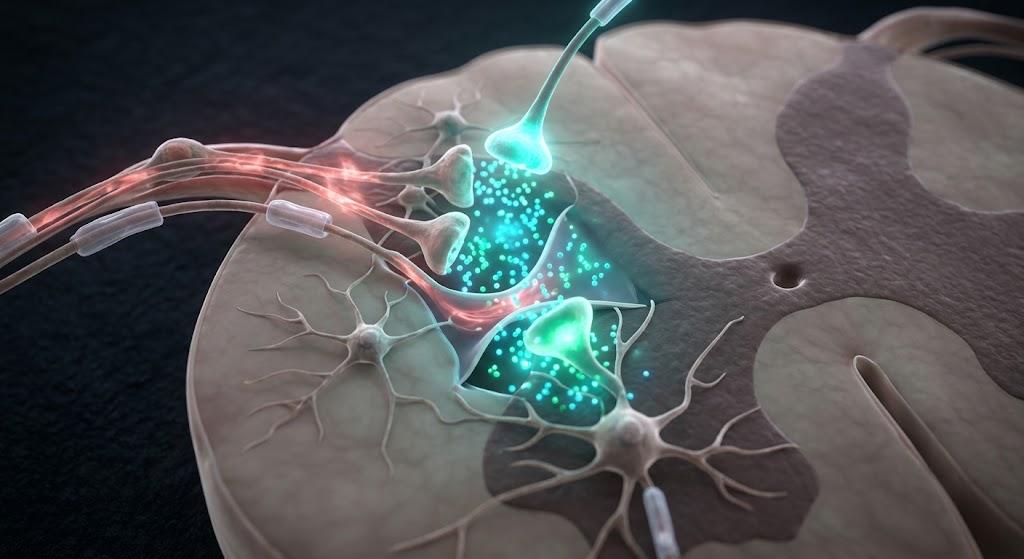
How does the placebo effect reach a wound in the toe from a thought in the head? The answer is the descending pain modulatory pathway — a dedicated neural highway that adjusts the intensity of spinal pain traffic.
The chain reads like a relay race. Expectation-related activity in the rACC projects to the periaqueductal gray (PAG), a midbrain hub densely packed with opioid receptors. The PAG then drives the rostral ventromedial medulla (RVM) — brainstem territory that also runs the autonomic surprises of sleep onset, including the jerks that wake you as you drift off — whose neurons descend to the dorsal horn, the landing zone where nociceptive fibers first synapse before any signal ascends toward consciousness.
From this descending terminal, serotonin and norepinephrine release onto inhibitory interneurons in the dorsal horn, and the gate on nociceptive traffic physically narrows. Pain signals do not get weaker at the wound; they get filtered before the brain finishes reading them.

In 2009, Falk Eippert and colleagues imaged the entire circuit under placebo analgesia and showed that naloxone undid it — collapsing both the behavioral relief and the coupling along rACC, PAG, and RVM. The descending pain modulatory pathway is the physical infrastructure of the placebo effect: a prediction from the cortex, implemented as spinal pharmacology.
And the placebo effect has a currency of its own. Placebo anticipation releases dopamine in the ventral striatum and nucleus accumbens — the reward infrastructure that also fires for food, money, and music — tying analgesia to reward anticipation.
The Nocebo Effect: When Expectation Turns Toxic
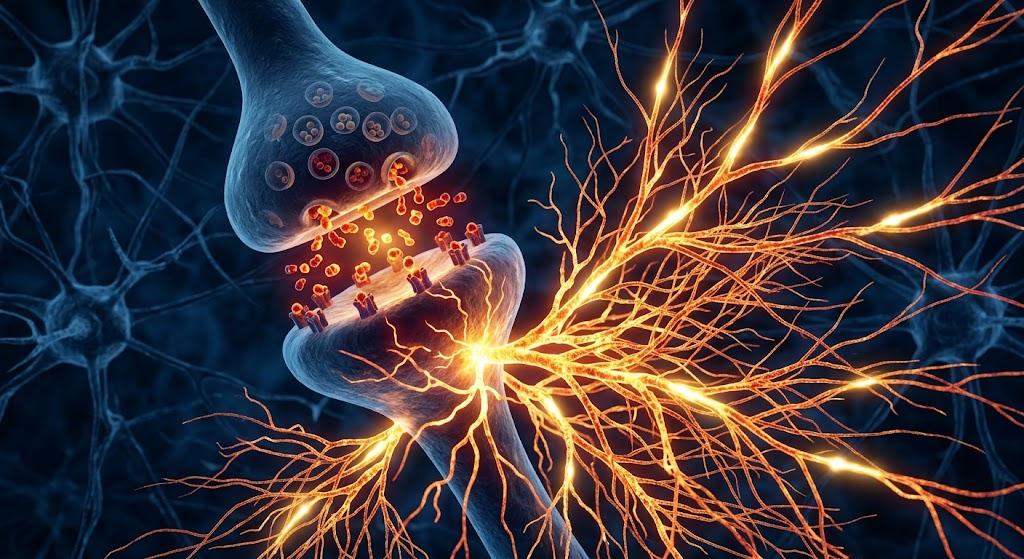
The machinery has an evil twin. If the brain can synthesize analgesia on the strength of a prediction, it can synthesize the opposite — the nocebo effect, the placebo effect run in reverse: negative expectation producing measurable hyperalgesia, nausea, and symptom amplification from suggestion alone.
In Fabrizio Benedetti’s Turin laboratory, a nocebo suggestion — telling hospitalized patients that a painful stimulus would intensify — reliably amplified their reported pain and anxiety. Blocking the HPA axis with diazepam abolished the effect, implicating anticipatory anxiety; more striking still, the cholecystokinin (CCK) antagonist proglumide blocked the nocebo hyperalgesia entirely. CCK is an anxiety-related neuropeptide that potentiates pain — the nocebo’s transmitter of choice. Negative expectation is not the absence of relief but an actively manufactured opposite.
No villainy is required; ordinary clinical language suffices. Reading a drug’s side-effect leaflet measurably increases the rate of those exact side effects, and so does a clinician’s tone; nocebo suggestions even raise heart rate and cortisol as part of the anticipatory stress response. The circuitry that lets a warm word blunt a headache lets a warning label manufacture one.
The Open-Label Paradox: Honest Placebos That Still Work
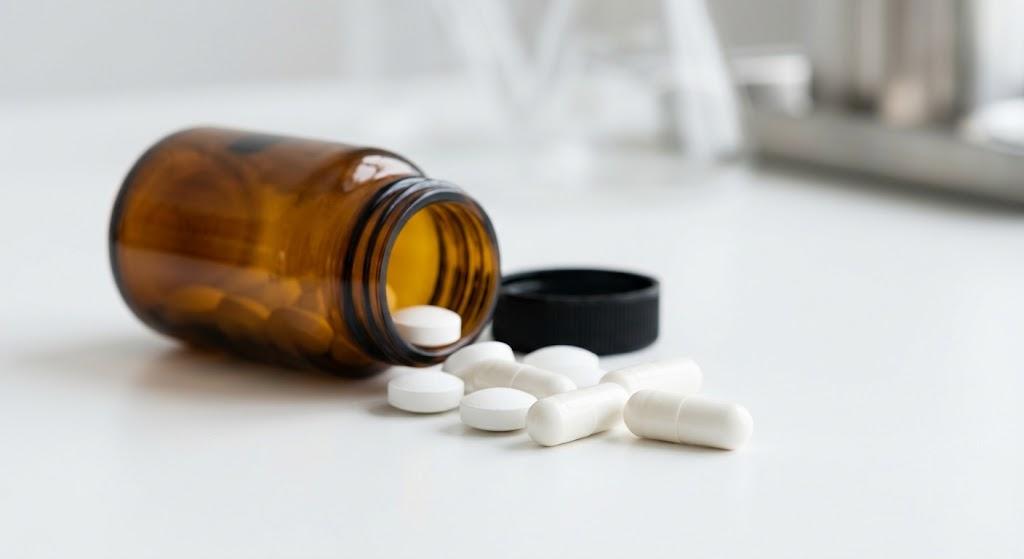
Here the story turns on its head. If expectation requires belief, the honest prescription should be self-defeating: tell patients plainly that the pills contain no medicine, and the placebo effect should go silent. Ted Kaptchuk’s program at Harvard Medical School tested that assumption — and the assumption lost.
In a 2010 randomized controlled trial, patients with irritable bowel syndrome (IBS) received pill bottles labeled, in print, “Placebo Pills” — sugar pills with no active pharmacological agents — plus a frank explanation that placebos can work through mind-body self-healing processes. Three weeks later, the open-label group reported significantly greater global improvement and symptom relief than no-treatment controls. The result replicated in chronic low back pain, where an open-label placebo arm outperformed standard anti-inflammatory treatment on both pain and disability, and pilot studies report early signals in migraine. Honesty, it turns out, is not a contraindication.
The leading interpretation dissolves the paradox: the active ingredient is not belief in the pill but the embodied ritual of treatment — taking the capsule, performing the act of being treated, embedded in a warm clinical relationship. Conditioning supplies the physiology; the ceremony supplies the cue. Conscious conviction is optional equipment: the body learns by association, and the ritual is the teacher.
The open-label paradox: “Placebo Pills” on the label, real symptom relief in the data.
When Surgery Itself Was the Placebo
The most uncomfortable experiments involved scalpels. In 2002, J. Bruce Moseley and colleagues reported in the New England Journal of Medicine that 180 patients with knee osteoarthritis, randomized to arthroscopic debridement, arthroscopic lavage — or a sham procedure in which surgeons made real incisions, simulated the arthroscopy, and sewed the patient back up — improved equally. Over two years, the sham surgery group matched the patients who received the actual repair on pain and function; the placebo effect had matched the scalpel, point for point.
A decade and a half later, cardiology ran its own version. In the ORBITA trial, 200 patients with stable angina were randomized to a stent — or to a sham procedure: real catheterization, a stent placed and then withdrawn, six weeks of blinded follow-up. The comparison found no significant difference between stent and sham in exercise time or angina frequency; the placebo effect reproduced most of the symptom benefit on its own.
Neither trial says surgery is theater. They say something more precise: the procedural ritual engages the same expectation circuitry as any capsule, and the placebo effect can be large enough to mimic hardware — which is why placebo-controlled surgical designs are now considered ethically achievable.
The Biological Boundaries: What Placebos Cannot Do
Every powerful idea invites overreach, so the line must be drawn. The placebo effect is a modulator of subjective and autonomic outcomes — and its influence has hard biological limits.
Placebos powerfully modulate how the mind reads the body — pain, nausea, fatigue, cough, bronchoconstriction, tremor, depressive symptoms. They do not kill tumor cells, clear bacterial infections, or regenerate cartilage.
That boundary is the mechanism read in reverse. Everything on the “can” list routes through the nervous system’s control rooms — pain through the descending pain modulatory pathway, nausea through brainstem vomiting centers, airway tone through autonomic outflow, and the deep fatigue the body raises before collapse, as we covered in how your body signals fatigue before you collapse. The placebo effect reaches exactly those control rooms; everything on the “cannot” list is a problem of tissue or pathogen.
The boundary explains a subtler truth: placebos change the experience of illness more than its course — and relief that lets a patient sleep, move, and eat is not an imaginary benefit. The honest position is precision about the territory the placebo effect can reach.
The Predictive Brain: How Expectations Shape Physiological Responses
Zoom out, and the placebo effect becomes a statement about what kind of organ a brain is. The classical view treats perception as passive reception. A growing body of neuroscience argues for the opposite architecture: the brain is a prediction machine that generates a model of the body’s state in advance, then uses incoming signals mainly to correct it — the principle we examined in what neuroscience reveals about human adaptation. Pain, in this framework, is not a measurement but a conclusion.
Seen through that lens, the placebo effect is not an anomaly but the prediction machine operating as designed. A credible prediction of safety recruits the endogenous opioid system, tilts the dorsal horn’s gate, quietens nociceptive traffic — and the analgesia engages measurable descending inhibitory circuitry within the central nervous system. The nocebo effect is the same machinery running on catastrophic priors. What medicine calls context — the white coat, the reassurance, the ritual — is, to a predictive brain, evidence about what comes next.
The discovery refuses to stay a laboratory curiosity. Open-label placebos are entering pilot protocols; trial designers now weigh placebo-controlled procedures; clinicians are learning that words are dosed like drugs. If expectation is a dose, the ritual of care is a prescription anyone can write: the nurse who explains instead of dismisses, the clinician whose tone carries the treatment as surely as the tablet.
The 1978 naloxone findings initiated a fundamental shift in medical understanding, illustrating how expectation and conditioning alter physiological symptom perception. Fake medicine works because nothing about it is fake — the pill is inert, but the brain it enters is not, and the brain has a pharmacopoeia of its own.
Frequently Asked Questions About the Placebo Effect
Does the placebo effect mean my symptoms were fake?
No — and the naloxone experiments provide strong evidence supporting the mechanism. If placebo analgesia can be reversed by an opioid antagonist, it was built from real neurochemistry, not imagination. The placebo effect changes measurable physiology: endogenous opioids release, dopamine rises in the striatum, spinal nociceptive processing dampens. Only the trigger was inert; the relief was not. Self-limiting illness can also mislead — which is why the last question matters.
Why do two fake pills work better than one, and injections better than pills?
Because placebos are dosed by symbolism, not milligrams. The placebo effect scales with the perceived intensity of the ritual: capsules outperform tablets, two capsules outperform one, injections outperform capsules, and sham surgery produces the largest responses of all. Price works the same way — placebos presented as expensive brand-name tablets relieved pain more than identical pills presented as discounted generics. The effect tracks what the ritual teaches the body to expect.
Can someone develop tolerance or addiction to a placebo?
Tolerance, yes in a limited sense: the placebo effect can wane with repetition as the ritual’s novelty fades — and in one study of postoperative patients, reducing opioid strength while keeping pill-taking behavior intact let the placebo response substantially replace the drug dose. Addiction, no: placebo responses involve no external substance, no receptor-level dependence, and no withdrawal syndrome when they stop — placebo conditioning is even being studied to ease opioid tapering.
How do scientists separate the placebo effect from natural disease remission?
With control groups, not intuition. Regression to the mean, natural remission, and symptom fluctuation affect untreated groups too, so a proper trial compares a placebo arm against a no-treatment arm in parallel. The difference isolates the placebo effect; everything both arms share is regression, remission, or attention. When placebo and no-treatment arms genuinely diverge — as in the IBS and open-label back-pain trials — the gap is the effect, not the disease’s own timeline.
Is taking a placebo dishonest medicine?
The open-label trials answer this directly: placebos disclosed as placebos still outperformed no treatment in IBS and chronic low back pain. The placebo effect there ran on the embodied ritual plus the clinical relationship, not deception. What remains ethically charged is the covert use of placebos while claiming they are real drugs; the idea that a placebo must be a lie no longer is.
Disclaimer
Medical Disclaimer: This article is for educational purposes only and does not diagnose or treat any condition. Persistent pain, nausea, fatigue, or other symptoms deserve evaluation by qualified healthcare professionals — the placebo effect is fascinating neuroscience, not a reason to forgo real medical care.
References
- Levine JD, Gordon NC, Fields HL. The mechanism of placebo analgesia. Lancet. 1978;2(8091):654–657. PMID 80579
- Zubieta JK, Bueller JA, Jackson LR, et al. Placebo effects mediated by endogenous opioid activity on mu-opioid receptors. J Neurosci. 2005;25(34):7754–7762. PMID 16120776
- Wager TD, Rilling JK, Smith EE, et al. Placebo-induced changes in fMRI in the anticipation and experience of pain. Science. 2004;303(5661):1162–1167. PMID 14976306
- Eippert F, Bingel U, Schoell ED, et al. Activation of the opioidergic descending pain control system underlies placebo analgesia. Neuron. 2009;63(4):533–543. PMID 19709634
- Scott DJ, Stohler CS, Egnatuk CM, et al. Placebo and nocebo effects are defined by opposite opioid and dopaminergic responses. Arch Gen Psychiatry. 2008;65(2):220–231. PMID 18250260
- Benedetti F, Amanzio M, Casadio C, Oliaro A, Maggi G. Blockade of nocebo hyperalgesia by the cholecystokinin antagonist proglumide. Pain. 1997;71(2):135–140. PMID 9211474
- Kaptchuk TJ, Friedlander E, Kelley JM, et al. Placebos without deception: a randomized controlled trial in irritable bowel syndrome. PLoS One. 2010;5(12):e15591. PMID 21203519
- Carvalho C, Caetano JM, Cunha L, Rebouta P, Kaptchuk TJ, Kirsch I. Open-label placebo treatment in chronic low back pain: a randomized controlled trial. Pain. 2016;157(12):2766–2772. PMID 27755279
- Moseley JB, O’Malley K, Petersen NJ, et al. A controlled trial of arthroscopic surgery for osteoarthritis of the knee. N Engl J Med. 2002;347(2):81–88. PMID 12110735
- Al-Lamee R, Thompson D, Malik N, et al. Percutaneous coronary intervention in stable angina (ORBITA): a double-blind, randomised controlled trial. Lancet. 2018;389(10074):31–40. PMID 29103656
- Waber RL, Shiv B, Carmon Z, Ariely D. Commercial features of placebo and therapeutic efficacy. JAMA. 2008;299(9):1016–1017. PMID 18319411
- Benedetti F, Carlino E, Pollo A. How placebos change the patient’s brain. Neuropsychopharmacology. 2011;36(1):339–354. PMID 20592717
📚 You Might Also Like
Hand-picked articles for you


