


- United States & Canada: Call or text 988 to reach the Suicide & Crisis Lifeline, or text
HOMEto 741741 (Crisis Text Line). - United Kingdom: Call 111 (NHS Mental Health Services) or 116 123 (Samaritans).
- International: Access global confidential helplines through Find A Helpline & Befrienders Worldwide.
This publication is strictly educational and does not replace individualized psychiatric evaluation or clinical medical care.
Dopamine is not the pleasure molecule. The correction is three decades old, it remains the most ignored sentence in popular neuroscience, and it is the only honest place to begin an account of anhedonia. In 1998, the cognitive neuroscientist Kent Berridge and Terry Robinson, then at the University of Michigan, published a formal demolition of the myth: dopamine does not transmit the sensation of pleasure. It transmits pursuit. The molecule fires for wanting — craving, seeking, mobilizing toward a reward — while the experienced delight of consumption is manufactured elsewhere, by microscopic circuitry running on entirely different chemistry.
Anhedonia is what happens when that other circuitry fails. The condition is not sadness and not melancholy; it is a biophysical failure of hedonic valuation, in which the world stops transmitting reward value — music arrives as air pressure, food as texture, a friend’s voice as information. The DSM-5-TR lists it as a core criterion of major depression, but the state cuts across diagnoses: schizophrenia, Parkinson’s disease, substance withdrawal, chronic inflammation, and ordinary burnout all produce it in varying grades. This article dissects the engine behind the silence.
The concert is playing. The speakers are fine. The wire to the amplifier is cut.
The Great Dopamine Misconception: Wanting Without Liking
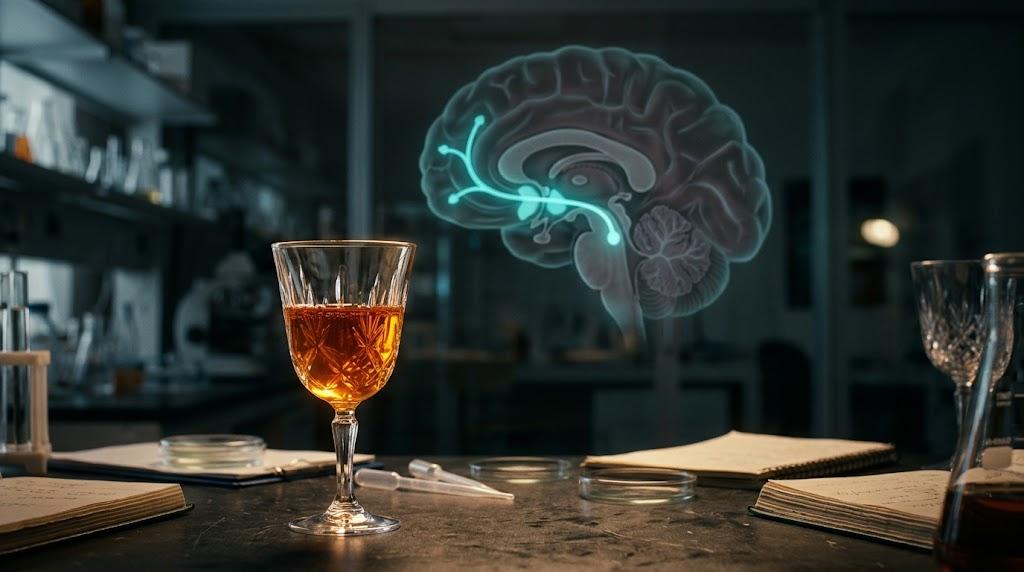
The Michigan experiments sealed the distinction. Rats depleted of virtually all striatal dopamine still produced the characteristic hedonic lick-and-grimace pattern for sweet tastes: they liked sucrose exactly as much as before, they simply stopped working for it. Wanting and liking are double-dissociable systems — a mesolimbic wanting engine centered on dopamine projections from the ventral tegmental area to the nucleus accumbens, and a separate liking module built on opioid and endocannabinoid signaling. Berridge named the motivational product incentive salience: dopamine does not make an experience pleasant; it makes cues about that experience seize attention and command pursuit — the wanting that anhedonia extinguishes.
The internet’s dopamine-detox industry monetizes half of this finding and discards the other half; our examination of dopamine detox and the brain’s reward system separates the marketing from the mechanism. The clinically important corollary is stark: a person can lose all pleasure without losing dopamine, or lose dopamine without losing pleasure. Anhedonia is a failure of the liking pathway and of its coupling to anticipation — a wiring and chemistry problem, not a deficit of willpower or gratitude.

Anhedonia: A Valuation Failure, Not a Mood
Clinicians split the syndrome into anticipatory anhedonia — the collapse of craving and drive before a reward arrives — and consummatory anhedonia, the failure to enjoy the reward on contact. The dissociation is diagnostic gold: Husain and Roiser’s transdiagnostic synthesis shows the two facets travel on partly separable neural machinery, which is why some patients still enjoy a meal placed in front of them yet cannot summon an ounce of motivation to obtain one, while others crave relentlessly and taste nothing.
Pizzagalli’s integrated model adds the developmental dimension: accumulated stress sensitizes reward circuitry toward blunted responsiveness, converting transient loss of pleasure into a trait-like foreground of depression. Anhedonia, in this account, is less a symptom than a learned valuation posture — the configuration the brain falls back on when prediction itself starts to feel expensive.
The Neurobiological Dissociation: Wanting vs. Liking
The Dopaminergic Engine (Wanting)
Primary Function: Incentive Salience: Drives anticipation, craving, energy expenditure, and pursuit.
Neural Substrate: Ventral Tegmental Area (VTA) to Nucleus Accumbens & Striatum pathways.
The Hedonic Hotspots (Liking)
Primary Function: Consummatory Delight: Generates conscious pleasure upon sensory contact.
Neural Substrate: Microscopic mu-opioid & endocannabinoid hotspots in Nucleus Accumbens shell & Ventral Pallidum.
What neurological breakdown is the true biological culprit behind anhedonia (the loss of pleasure)?
The Microscopic Islands of Joy: Hedonic Hotspots vs. the Mesolimbic Engine
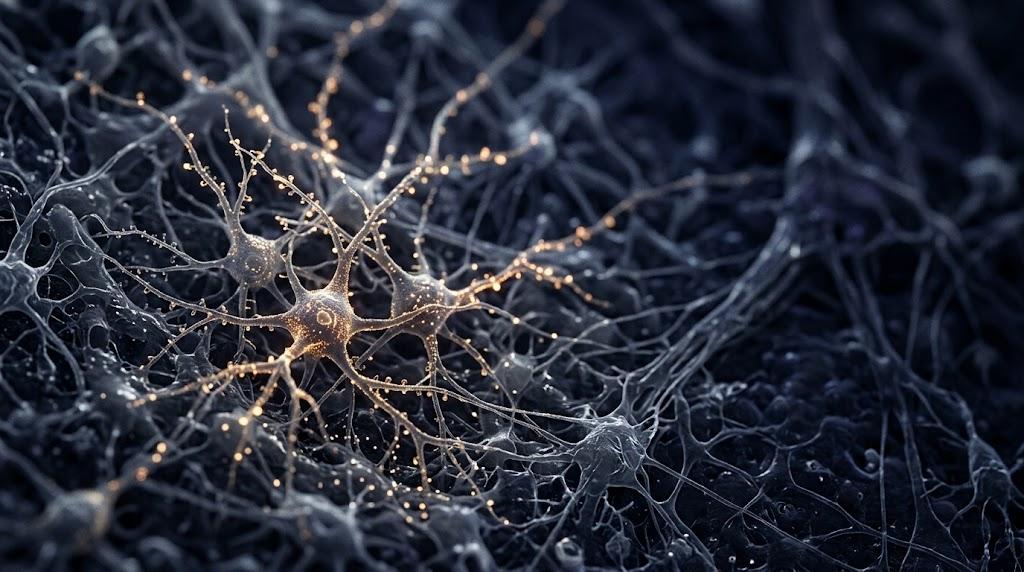
The liking circuitry is remarkably localized. Berridge and Kringelbach’s seminal mapping in rodent models identified hedonic hotspots — micro-anatomical clusters (measuring approximately one cubic millimeter in rodents, with homologous scalable regions in the human brain) in the rostrodorsal nucleus accumbens shell and posterior ventral pallidum — where mu-opioid and endocannabinoid signals amplify sensory pleasure into conscious delight. These islands do not generate pleasure on their own; they amplify it, tethered to the vast dopaminergic pathways surrounding them. The anatomy explains the vulnerability: a system built from microscopic molecular islands, wired to a large-scale motivational grid, offers many points of decoupling — and anhedonia is decoupling as a lived experience.

30-Second Cost-Benefit Valuation Check
Notice how when exhausted or anhedonic, simple everyday tasks like replying to a message or getting off the couch feel priced at an unbearable metabolic cost.
Did you realize this sensation is driven by the dorsal anterior cingulate cortex artificially inflating the perceived energetic price of action?
The Metabolic Calculator: Why Getting Off the Couch Feels Impossible
In 2009, Michael Treadway and David Zald’s laboratory introduced the Effort-Expenditure for Rewards Task (EEfRT): volunteers repeatedly choose between a small reward for trivial effort and a larger reward for demanding effort, under varying probability and magnitude. The proportion of hard-task choices becomes a laboratory index of motivation — and it collapses, specifically and measurably, in people with high anhedonia scores.

The calculator running that choice lives in the dorsal anterior cingulate cortex and the anterior insula, which continuously runs a cost-benefit valuation, pricing every action in metabolic currency against expected payout, with striatal dopamine as the exchange rate. Treadway’s PET work showed that individual differences in dopamine function predict how much hard effort people will buy. When the signal blunts, the algorithm answers no to everything: watching a film, opening a book, meeting a friend — each priced as a loss. Prefrontal depletion compounds the bias, the mechanism our analysis of why decision fatigue ruins your night details; the audit drifts toward refusal as the day degrades.
The couch, in other words, is not laziness. It is arithmetic. A brain that has devalued reward computes rest as the only profitable move — and the subjective texture of that arithmetic is precisely what patients describe: not sadness, but the impossibility of beginning.
The Cytokine Heist: How Inflammation Sabotages the Dopamine Supply
Systemic inflammation is the second thief. Chronic stress, gut dysbiosis, obesity, and ordinary illness elevate circulating cytokines — interleukin-6 (IL-6), TNF-alpha, IFN-alpha — which signal into the brain through circumventricular gates, the vagus, and active transport, activating microglia, the brain’s resident immune cells. The translational program led by Miller, Haroon, and Felger established that this neuroinflammatory state reliably suppresses striatal dopamine and bends motivation toward the anhedonia profile.
The sabotage is biochemical and precise. Cytokine-driven oxidative stress oxidizes BH4 (tetrahydrobiopterin), the essential cofactor of tyrosine hydroxylase — the rate-limiting enzyme that converts tyrosine to L-DOPA. Oxidize the cofactor and the assembly line stops: the brain physically cannot synthesize dopamine at its usual rate, and the striatum starves. Interferon-alpha therapy supplies the brutal natural experiment — a substantial fraction of treated patients develop depressive syndromes carrying the anhedonia signature, in proportion to the dopamine dip.
The gut is a major supply route in this war: microbial metabolites and barrier permeability — the territory of our examination of the gut-brain axis — tune the inflammatory tone the brain receives daily. The same signaling explains an observation patients report long before any diagnosis: the body signaling fatigue long before collapse, which we examined separately, is partly cytokine speech — an interoceptive broadcast our examination of the body’s fatigue signals before collapse traced in detail — an engine being throttled.

The Pharmacological Paradox: When the Medicine Flattens the Music
The uncomfortable clinical reality is that frontline antidepressants can deepen the very syndrome they treat. In a dedicated survey of treated patients published in the Journal of Affective Disorders, Goodwin and colleagues documented emotional blunting as a prevalent and distressing complaint: patients unable to cry at funerals or laugh at jokes, describing life behind glass. The Oxford Depression Questionnaire was subsequently developed to measure what patients had been reporting for decades.
The leading pharmacological hypothesis for this blunting centers on 5-HT2C receptor-mediated inhibition. As preclinical neuropharmacological research indicates, sustained stimulation of 5-HT2C receptors on GABAergic interneurons within the ventral tegmental area can exert an inhibitory braking effect on mesolimbic dopamine firing — providing a plausible biological mirror for drug-induced hedonic blunting. Neuroimaging adds frontostriatal hypoconnectivity: the dialogue between prefrontal control regions and the striatum thins. The result is a synthetic flatline, distinguishable from the illness by its iatrogenic timing and its reversibility on dose adjustment or switching — decisions belonging to the prescriber, never to self-titration.
The Differential Diagnosis
The matrix below separates the conditions that overlap with anhedonia most dangerously in the clinic.
| Dimension | Anticipatory anhedonia | Consummatory anhedonia | Major depression (baseline) | Clinical apathy | Severe burnout | SSRI-induced blunting |
|---|---|---|---|---|---|---|
| Core neuropathology | Dopaminergic anticipation failure, VTA-to-striatum | Hedonic hotspot decoupling, opioid/cannabinoid | Reward-network dysfunction under stress load | Mesocortical motivational deficit | HPA-axis exhaustion with dopamine downregulation | 5-HT2C–driven dopamine suppression |
| Consummatory pleasure status | Partially preserved | Severely impaired | Reduced | Preserved but unused | Reduced, effort-dependent | Blunted across domains |
| Anticipatory drive | Severely impaired | Relatively preserved | Impaired | Severely impaired at initiation | Impaired toward demand cues | Preserved but hollow |
| Response to positive stimuli | Muted anticipation, muted enjoyment | Enjoyment fails at contact | Globally blunted | Capacity intact, unused | Relief only when demands lift | Flattened peaks and tears |
| Volitional initiative | Collapses for rewards | Preserved | Collapses broadly | Core deficit | Collapses under demands | Intact but joyless |
| Dominant subjective state | “I want nothing” | “Nothing feels good” | Numbness with sadness | “I can’t be bothered” | Depletion and cynicism | “I feel nothing, good or bad” |
The primary diagnostic divergence centers on consummatory pleasure capacity and dominant subjective reporting. Consummatory pleasure status separates the two anhedonia facets from each other and from apathy, where the capacity to enjoy survives but initiation dies. Dominant subjective state separates treatment side effect from illness: SSRI-induced blunting arrives on a drug timeline, flattens peaks and troughs alike, and reverses with adjustment — the signature that distinguishes iatrogenic flattening from the disease it was prescribed to treat.
Measuring the Flatline: The Snaith-Hamilton Pleasure Scale
For decades anhedonia hid inside depression questionnaires, inseparable from sadness scores. The Snaith-Hamilton Pleasure Scale (SHAPS), introduced in 1995, isolated hedonic tone itself: fourteen statements about everyday pleasures — a hot bath, the smell of rain, a favorite broadcast — rated for agreement, yielding a clean index of the capacity for pleasure uncontaminated by mood. It remains the field’s standard instrument and the reason anticipatory and consummatory subtypes can now be quantified separately.
Frontiers of Neural Recalibration
No intervention is validated for anhedonia as a standalone diagnosis; it is treated through the condition carrying it. But three converging frontiers are changing what recovery can look like.
Rapid-acting agents lead. Ketamine and its S-enantiomer esketamine block NMDA receptors, trigger a glutamate surge, and activate mTOR-dependent synaptogenesis in prefrontal microcircuits — structural reconnection measurable within twenty-four hours in preclinical rodent models, as Li and colleagues demonstrated in Science (and subsequently observed across translational human trials). For a syndrome defined by blunted valuation, restoring synaptic substrate may reopen the learning window in which reward prediction can be rebuilt.
Micro-graded behavioral activation rebuilds the calculator from below. The Cochrane synthesis of behavioral activation therapy confirms efficacy comparable to other front-line psychotherapies; the mechanistic version prescribes the smallest possible rewarded actions — one song, one block of walking — to force sensory prediction error through a valuation engine that has stopped believing the world pays out. Action precedes motivation; the audit updates.
The third frontier is metabolic. Exercise activates PGC-1α in muscle, releasing the myokine irisin, which crosses the blood-brain barrier and supports hippocampal neurogenesis and dopamine transporter integrity — a mechanism mapped in the FNDC5/irisin research program (PMID 28480165). Add the anti-inflammatory profile of regular exertion — lowering the very IL-6 and TNF-alpha signaling that raids BH4 — and exercise represents one of the few evidence-based non-pharmacological interventions demonstrated to concurrently support both neuroinflammatory reduction and dopaminergic reward pathway integrity.
Emerging Research Directions: What the Science Suggests
Because anhedonia is an intricate valuation and motivational deficit rather than a standalone clinical diagnosis, no single or universal medical cure has been established. Ongoing translational neuroscience and experimental psychiatry continue to investigate several complementary biological mechanisms that may inform clinical recovery:
1. Investigating Neuroinflammatory Pathways
Preclinical models and translational studies (such as research led by Andrew Miller and Jennifer Felger) suggest that elevated systemic cytokines can oxidize tetrahydrobiopterin (BH4), a critical cofactor for tyrosine hydroxylase in dopamine synthesis. In clinical trials, researchers have investigated dietary patterns and adjunctive omega-3 polyunsaturated fatty acids to evaluate their potential anti-inflammatory influence on neurocircuitry. However, trial outcomes in humans remain heterogeneous, and nutritional interventions are considered exploratory adjuncts rather than definitive monotherapies.
2. Graded Behavioral Activation
Within evidence-based psychotherapy, structured behavioral activation (supported by systematic Cochrane reviews) focuses on systematically decoupling action from subjective anticipatory drive. When neurocircuits overestimate the metabolic cost of effort, executing small, manageable activities regardless of initial hedonic motivation introduces sensory prediction errors—gradually updating the valuation engine through experiential feedback rather than passive waiting.
3. Physical Activity and Neuroplasticity
In exercise neuroscience, aerobic physical activity stimulates neurotrophic signaling (including BDNF) and supports dopaminergic pathway resilience. While sustained exercise protocols demonstrate changes in receptor sensitivity and hedonic responding in preclinical rodent paradigms, the magnitude and timeline of these effects in clinical human populations vary widely based on individual health status and underlying etiology.
The Dimmer Switch: An Evolutionary Synthesis
The neurobiological architecture of reward deficit: an evolutionary energy-conservation mechanism trapped in a prolonged operational freeze. Wanting and liking are separable. The liking islands are molecularly fragile. Every action is priced in metabolic currency. Inflammation can raid the dopamine supply at its enzymatic source. Serotonergic braking can overshoot into numbness. Valuation fails before sensation does. And the whole architecture exists because energy discipline kept ancestors alive. Anhedonia is the dimmer switch of that architecture — an emergency economy that lowers illumination when the brain concludes reward no longer justifies expenditure. As a short-term adaptation it is flawless; held permanently, it is the pathology.
That is also the practical sentence of this article: the darkness is a computation, not a verdict — anhedonia is a mechanism, not a personality. Computations have inputs. Feed them better inputs — quieter inflammation, smaller rewarded actions, reconnected synapses — and the dimmer switch turns.
Frequently Asked Questions About Anhedonia
Is anhedonia the same thing as depression?
No. Anhedonia is one criterion of major depression in the DSM-5-TR, but it also appears in schizophrenia, Parkinson’s disease, bipolar disorder, substance withdrawal, and inflammatory illness, and it can exist in people who have never met criteria for a mood disorder. Depression is a syndrome; anhedonia is a specific failure of reward processing that syndromes borrow. That transdiagnostic reach is why the field now studies it as a construct in its own right.
Can you have anhedonia without feeling sad?
Yes — and it is among the most misread presentations in medicine. Many patients report no sadness at all: the mood is flat, the world is gray, and the chief complaint is not sorrow but the absence of response. Because screening conversations default to sadness questions, patients whose anhedonia arrives without melancholy are frequently missed, or mislabeled as apathetic temperament, until a pleasure-specific instrument such as the SHAPS asks the right questions.
How long does anhedonia last?
It follows its cause. Inflammatory or medication-induced episodes often resolve within weeks of treating the trigger; withdrawal-related blunting recovers on a dopamine-receptor timeline of months; depression-linked anhedonia persists until the underlying illness remits, though behavioral activation and effective treatment shorten the arc. There is no fixed clock, and the trajectory is rarely static — which is why repeated measurement matters more than prediction.
What is the most effective treatment for anhedonia?
The most effective approach depends directly on which hedonic subtype is impaired. For anticipatory anhedonia (the dopamine-driven loss of motivation and wanting), Behavioral Activation (BA) is the best-tested direct approach, systematically rebuilding reward prediction errors through graded contact with actual rewards. However, for pure consummatory anhedonia (where in-the-moment pleasure and opioid/endocannabinoid hedonic hotspots are blunted), behavioral activation alone often proves insufficient or frustrating. In those cases, recovery requires targeted biological stabilization—addressing systemic neuroinflammation, treating the primary carrying condition first, or escalating to dopaminergic and glutamatergic augmentation under specialized medical care.
Disclaimer
Medical Disclaimer: This article is for educational purposes only and does not diagnose or treat any condition. A persistent loss of pleasure, or any persistent mental health symptom, deserves evaluation by qualified healthcare professionals.
References
- Snaith RP, Hamilton M, Morley S, Humayan A, Hargreaves D, Trigwell P. A scale for the assessment of hedonic tone: the Snaith-Hamilton Pleasure Scale. Br J Psychiatry. 1995;167(1):99–103. PMID 7551619
- Berridge KC, Robinson TE. What is the role of dopamine in reward: hedonic impact, reward learning, or incentive salience? Brain Res Brain Res Rev. 1998;28(3):309–369. PMID 9858756
- Treadway MT, Buckholtz JW, Schwartzman AN, Lambert WE, Zald DH. Worth the ‘EEfRT’? The effort expenditure for rewards task as an objective measure of motivation and anhedonia. PLoS One. 2009;4(8):e6598. PMID 19672310
- Haroon E, Raison CL, Miller AH. Psychoneuroimmunology meets neuropsychopharmacology: translational implications of the impact of inflammation on behavior. Neuropsychopharmacology. 2012;37(1):137–162. PMID 21918508
- Treadway MT, Buckholtz JW, Cowan RL, Woodward ND, Li R, Ansari MS, et al. Dopaminergic mechanisms of individual differences in human effort-based decision-making. J Neurosci. 2012;32(18):6170–6176. PMID 22553023
- Pizzagalli DA. Depression, stress, and anhedonia: toward a synthesis and integrated model. Annu Rev Clin Psychol. 2014;10:393–423. PMID 24471371
- Goodwin GM, Price J, De Bodinat C, Laredo J. Emotional blunting with antidepressant treatments: a survey among depressed patients. J Affect Disord. 2017;221:31–35. PMID 28628765
- Husain M, Roiser JP. Neuroscience of apathy and anhedonia: a transdiagnostic approach. Nat Rev Neurosci. 2018;19(8):470–484. PMID 29946157
- Li N, Lee B, Liu RJ, Banasr M, Dwyer JM, Iwata M, et al. mTOR-dependent synapse formation underlies the rapid antidepressant effects of NMDA antagonists. Science. 2010;329(5994):959–964. PMID 20724638
- Uphoff E, Ekers D, Robertson L, Dawson S, Sanger E, South E, et al. Behavioural activation therapy for depression in adults. Cochrane Database Syst Rev. 2020;7:CD013305. PMID 32628293
- Berridge KC, Kringelbach ML. Pleasure systems in the brain. Neuron. 2015;86(3):646–664. PMID 25950633


Very good summary, and I applaud you referencing the researchers who have provided the groundwork that brought us to this level of understanding.
Thank you so much, William! Acknowledging pioneers like Kent Berridge, Terry Robinson, and Michael Treadway is absolutely essential—their groundwork completely reshaped how modern neuroscience differentiates wanting from liking.
Too often popular science reduces dopamine to a lazy catch-all buzzword, so keeping the rigorous clinical citations front and center was a core priority for this piece. Really glad it resonated with you, and appreciate you taking the time to share your feedback!