


Picture this: you are twelve years old, standing in your grandmother’s kitchen, watching her stir a pot of soup. The steam rises. The window rattles in its frame. And with total, physical certainty, you think: I have dreamed this — the pot, the window, the soup, all of it. Decades later, that moment still sits in your memory wearing a label no other memory carries.
If something like this has ever happened to you, you already know deja reve — the eerie conviction that a waking moment was dreamed before it happened. It is French for “already dreamed” (déjà rêvé), and unlike deja vu, which points vaguely at the past, deja reve points at something specific: a dream you cannot quite retrieve.
For most of the twentieth century, this experience was filed under deja vu and forgotten. That changed in 2018, when French neurologists published the first systematic study of deja reve and concluded it is a distinct phenomenon — one they could sometimes switch on with an electrode, like flipping a switch on a dream you never remembered having.
This article walks through that landmark study, the three clinical subtypes of deja reve it identified, and the memory science that explains the feeling without a single spark of prophecy. Claim by claim, evidence by evidence, limitation by limitation.
What Is Deja Reve, Exactly?

Deja reve is the experience of feeling that you have already dreamed your present situation. The key word is dreamed. In deja vu, the world feels familiar and the search for a source comes up empty. In deja reve, the search does not come up empty — it comes up pointing at a dream. You may recall the dream itself, or you may simply know, with strange confidence, that it arrived from sleep.

Psychology has a whole family of these flipped-label experiences — including jamais vu, where the familiar suddenly feels strange — but deja reve is the rarest and, arguably, the most unsettling member. People report it in degrees. Some moments are literal: you watched this kitchen, this conversation, this sunlit street play out while you slept. Others are weaker: the scene is new, but it is soaked in dream-familiarity, like a place you have only ever visited asleep.
Neurologists now think these are not variations of one thing, but three different things wearing one name. The distinction matters because deja reve and deja vu behave differently in the clinic: they surface in different conditions, respond to different stimulation sites, and fail in beautifully different ways. Treating them as a single glitch cost the field decades of progress — which is exactly what the 2018 study set out to fix.
The Landmark Study: Switching On a Dream With an Electrode
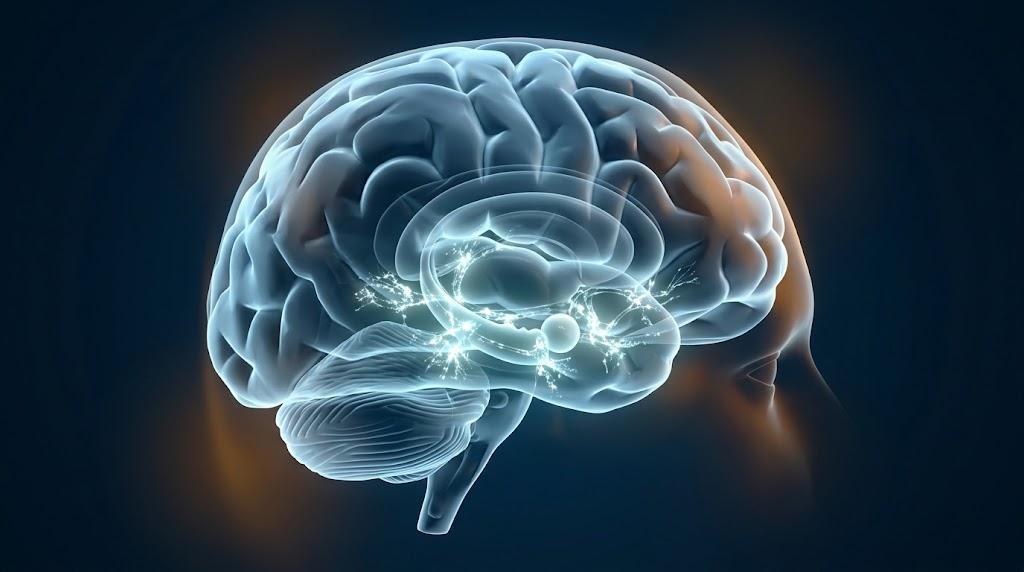
The study that put deja reve on the scientific map came from Jonathan Curot and colleagues, published in Brain Stimulation in 2018. Their subjects were people with drug-resistant epilepsy who had electrodes implanted deep in the brain to map where their seizures begin — a standard, life-saving procedure that happens to double as the most precise memory experiment in neuroscience.

During the mapping, doctors deliver tiny bursts of electrical current to specific sites and simply ask the patient what they notice. Most sites do nothing. Some trigger movements, tingles, or emotions. And in a handful of cases, spread across twelve years of procedures, the stimulation produced something astonishing: the patient abruptly reported experiencing a moment they had already dreamed.
The team collected 7 such cases from their own patients and 35 more from the published literature — 42 in total, which tells you how rare the event is even inside the one setting built to find it. Most of the sites that produced deja reve sat in the medial temporal lobes, the inner edge of the brain where the hippocampus and its neighbors build new memories.
Stated carefully: the claim is that electrical stimulation of memory-forming regions can produce the feeling that the present moment was previously dreamed. The evidence is those 42 documented cases. The limitation is equally clear: every case involved an epileptic brain being probed with electrodes, so the study proves the phenomenon is real and mappable — it does not tell us how often it happens in everyday life, or precisely why.
In 2025, the same group pushed the finding further. When stimulation produced these sudden reminiscences, intracranial EEG recordings showed that complex memories recruit complex, widely distributed networks — the richer the recollection, the more of the brain joined in. Deja reve was not a switch in one spot; it was a circuit lighting up in stages.
Cognitive Glitch Contrast: Déjà Vu vs. Déjà Rêvé
- Core Focus: Mechanism: Mismatch between memory retrieval (hippocampus) and current sensory processing.
- Neurochemistry: Neurobiology: Parahippocampal gyrus misfires a false sense of familiarity without episodic recall.
- Dynamic: Subjective Feeling: An uncanny conviction that you have lived this exact wakeful second before.
The Three Faces of Deja Reve

The 2018 study’s most durable contribution is a taxonomy. Deja reve, Curot and colleagues concluded, is a generic term for three distinct entities — and lumping them together is like filing headaches, hunger, and heartburn under one word. Each subtype has its own flavor and its own likely mechanism.
1. Episodic-like deja reve. This is the full-detail version: the recollection of a specific dream. You do not just feel that you dreamed this; you remember the dream — its plot, its people, sometimes the impossible details that only dreams contain. It resembles ordinary episodic memory, the kind that stores a birthday party, except the event being remembered never happened awake.

2. Familiarity-like deja reve. Here there is no dream to recall — only the feeling. The present scene carries a vague, dreamy familiarity, a sense of “I have dreamed this” with nothing to show for it. It mirrors the recognition that lets you know a face is familiar without remembering where you know it from. These cases, like the episodic ones, clustered in the medial temporal lobes.
3. Dreamy-state deja reve. The strangest of the three: the person feels, literally, that they are dreaming right now — as if waking life had turned into a dream while running. Neurologists have described such “dreamy states” at seizure onset since the nineteenth century, and it is the mirror image of what happens in the brain during a lucid dream. In the 2018 analysis, these were induced from a wider range of sites, though still mostly within the temporal lobes.
Why does the taxonomy matter outside the clinic? Because the three subtypes likely fail in different places. An episodic deja reve is a memory-retrieval event. A familiarity deja reve is a recognition-signal event. A dreamy state may be a reality-monitoring event. One label for all three hides the mechanisms this article is about to unpack — and inflates the temptation to call the experience paranormal.
Why Your Brain Misfiles a Dream Into Your Morning
To see how deja reve happens, start with what sleep is for. Far from shutting memory down, the sleeping brain works the night shift: it replays, reorganizes, and consolidates what the day deposited, moving fragile traces into long-term storage. That is the settled picture from decades of memory research — a shift so active it can even make people talk in their sleep.
Dreams sit close to that machinery. In one famous experiment, people played hours of the block-stacking game Tetris and then reported what they experienced at sleep onset. Even amnesic patients — people who could not remember having played the game at all — reported ghostly images of it as they drifted off. The game had reached their dreams while their waking memory lost the address.
That dissociation is the key to deja reve. A dream can be processed, filtered, and stored in fragments without a conscious, retrievable memory of “having dreamed.” What survives the night can be the feeling without the file. Modern dream science agrees dreams are genuine brain events, tied to specific patterns of activity that can even be detected from outside the skull.
Now add the last ingredient: source monitoring — the brain system that tags every memory with where it came from. Did I see it, imagine it, hear about it, or dream it? That tagging is automatic and imperfect. When a fragment of a dream surfaces while you stand in a matching real scene, the retrieval succeeds but the source tag fails, and the memory gets filed as real.
Put the pieces together. Your brain stored a scene, or its emotional outline, from a dream you do not remember having. Days later, the real world delivers a near-identical cue. The stored trace lights up — vivid, familiar, emotionally charged — and the missing source tag lets it masquerade as memory. You are not remembering the future. You are misreading the past.
The Dream-Lag Effect: Why the Delay Makes It Feel Prophetic
There is a wrinkle that makes deja reve feel supernatural: people often report that the dream happened days or weeks before the matching moment — too long for a simple “last night’s dream” explanation. Memory research has a name for that wrinkle: the dream-lag effect.
The effect was first documented in 1989: events from waking life tend to reappear in dreams not just the following night, but again after a delay of about 5 to 7 days. A 2015 study sharpened the picture: the delayed incorporations involve personally significant events, and they show up in REM sleep — the stage tied to emotional memory — but not in slow-wave sleep.
Experiments can even seed the delay on purpose. In 2022, researchers associated specific sounds with learning tasks, replayed those sounds during sleep, and found the sounds’ influence leaked into dream content days later, in a sleep-stage-specific pattern. The dream that “predicted” your grandmother’s kitchen may simply have been processed on a delay — and you never logged the original showing.
Claim: delayed dream incorporation can make a dream appear to precede an event it actually followed. Evidence: the dream-lag literature across four decades. Limitation: effect sizes are modest, the studies rely on self-reported dream diaries, and the lag explains only the cases where a real prior event matches — it does not apply to details that were never experienced at all.
Deja Vu vs. Deja Reve vs. Precognitive Dream Belief
With the mechanisms on the table, the three experiences can finally be told apart. They feel similar from the inside, which is why they get conflated — but they point in different directions, and the evidence for each sits on a very different footing.
| Experience | What it feels like | Where the feeling points | What the evidence says |
|---|---|---|---|
| Deja vu | “I have been here — done this before.” | The present scene feels familiar; the source is missing. | Extremely common and well studied: a recognition signal misfiring on a novel scene. |
| Deja reve | “I have dreamed this before.” | A past dream — specific, vague, or a full dreamy state. | Rare; inducible by brain stimulation; three clinical subtypes. |
| Precognitive dream belief | “My dream foretold this event.” | The future. | Belief is common; controlled prospective evidence for prediction is lacking. |
The third row deserves its honesty. Surveys do find people convinced that a dream warned them of a real event — one study of 18 women with breast cancer found 94% reported a strong sense of conviction in their warning dreams. But that evidence is retrospective and uncontrolled: it surveys the hits, after the fact, with no count of the misses. Nobody in that study reported the thousands of alarming dreams that matched nothing.
That asymmetry — remembered confirmations, forgotten misses — plus the dream-lag delay and a failed source tag, adds up to a complete explanation of precognitive dream beliefs without a single exception slipping through to the future. The feeling is real. The prophecy is a filing error.
When Deja Reve Deserves a Doctor’s Attention
For healthy brains, an occasional deja reve is a harmless — arguably delightful — byproduct of a memory system that never fully clocks out. But the clinical literature gives the phenomenon a practical edge: deja reve and its cousins have been documented as seizure-related experiences.
Claim: recurrent deja-reve-type experiences can accompany temporal lobe epilepsy. Evidence: the stimulation cases were, by definition, elicited in epilepsy patients, and dreamy states have been described at seizure onset for over a century. Limitation: rarity runs both ways — the overwhelming majority of people who experience deja reve never have a seizure, and using one rare event to predict another would be poor medicine.
The sensible rule is the same one neurologists apply to deja vu: an isolated episode is noise, not signal. What deserves a medical conversation is a pattern — deja-reve-like episodes that cluster, come with fear rising from the stomach, chewing or smacking movements, gaps in time, or a strange taste or smell. Those combinations, not the feeling alone, are what a neurologist wants to hear about.
Questions You Were Going to Ask Anyway
What causes deja reve?
Deja reve is caused by a momentary glitch in the brain’s recognition circuitry, centered in the medial temporal lobe and hippocampus. When a waking scene triggers an involuntary familiarity signal, the brain’s source-monitoring system misattributes that feeling to a past nocturnal dream instead of filing it as a real-time sensory event.
Is deja reve rare?
Yes, deja reve is significantly rarer than classic déjà vu. While roughly 60% to 70% of people experience déjà vu at least once, deja reve is much less common and occurs predominantly in frequent dream recallers, young adults between 15 and 25, and during periods of fatigue or emotional stress.
Is deja reve proof of precognition?
No — and the reasons are specific rather than dismissive. Delayed incorporation can place a dream’s apparent “origin” days before its real-world match, and source-monitoring failures make dream fragments feel like waking memories. Meanwhile, no controlled, prospective study has shown dreams predicting events, while the belief’s engine — remembering hits, forgetting misses — is well documented.
Why can’t I ever recall the actual dream?
Because dreams are encoded poorly to begin with — most evaporate within minutes of waking, a problem big enough that science has studied why we forget dreams so instantly. In deja reve, what survived the night was a fragment or a feeling, not a replayable episode. The Tetris-amnesic experiments show that can be literally true: dream content without waking memory of its source.
Is deja reve the same as deja vu?
No. Deja vu says this is familiar and finds no source; deja reve says I dreamed this and points at sleep. In the stimulation studies they even behave differently, which is the 2018 study’s core point. For the full picture of its better-known cousin, start with why you experience deja vu.
Does dreaming about something make it more likely to happen?
Only in the boring sense: you dream about what already occupies your mind. Sleep prioritizes emotionally significant material, and personally significant events are exactly the ones that reappear on the dream-lag delay. The dream follows your life’s agenda — it does not set it. (Why the brain stages these nightly replays at all — why we dream — remains one of neuroscience’s open questions.)
Can I make deja reve happen more often?
You can raise the odds of noticing it. Keeping a dream journal strengthens dream recall, which gives your brain more dream material to compare against waking life — and a better-tagged memory is more likely to catch the overlap. The journal does not create deja reve; it makes the collisions easier to see.
When Memory Reconstructs What the Subconscious Anticipates
Deja reve is what happens when a dream outlives its own label. Your brain files the scene at night, loses the “this was a dream” tag, and days later the real world walks in wearing the same clothes — so the file opens, and the feeling is stunning: I dreamed this.
Electrodes can recreate it, dream diaries make it easier to notice, and in rare clinical contexts it is worth a doctor’s ear. But the receipt was always written in the past. The only thing deja reve predicts is how well your memory was built: well enough to recognize a scene twice, and imperfectly enough to forget it was you who filed it the first time.
References
- Curot J, Valton L, Denuelle M, Vignal JP, Maillard L, Pariente J, Trébuchon A, Bartolomei F, Barbeau EJ. Déjà-rêvé: Prior dreams induced by direct electrical brain stimulation. Brain Stimul. 2018;11(4):875-885. PMID: 29530448
- Curot J, Dornier V, Valton L, Denuelle M, Robin A, Rulquin F, Sol JC, De Barros A, Trébuchon A, Bénar C, Bartolomei F, Barbeau EJ. Complex memories induced by intracranial electrical brain stimulation are related to complex networks. Cortex. 2025;183:349-372. PMID: 39741056
- Johnson MK, Hashtroudi S, Lindsay DS. Source monitoring. Psychol Bull. 1993;114(1):3-28. PMID: 8346328
- Rasch B, Born J. About sleep’s role in memory. Physiol Rev. 2013;93(2):681-766. PMID: 23589831
- Stickgold R, Malia A, Maguire D, Roddenberry D, O’Connor M. Replaying the game: hypnagogic images in normals and amnesics. Science. 2000;290(5490):350-353. PMID: 11030656
- Siclari F, Baird B, Perogamvros L, Bernardi G, LaRocque JJ, Riedner B, Boly M, Postle BR, Tononi G. The neural correlates of dreaming. Nat Neurosci. 2017;20(6):872-878. PMID: 28394322
- Nielsen TA, Powell RA. The ‘dream-lag’ effect: a 6-day temporal delay in dream content incorporation. Psychiatr J Univ Ott. 1989;14(4):561-5. PMID: 2813638
- van Rijn E, Eichenlaub JB, Lewis PA, Walker MP, Gaskell MG, Malinowski JE, Blagrove M. The dream-lag effect: Selective processing of personally significant events during Rapid Eye Movement sleep, but not during Slow Wave Sleep. Neurobiol Learn Mem. 2015;122:98-109. PMID: 25683202
- Picard-Deland C, Nielsen T. Targeted memory reactivation has a sleep stage-specific delayed effect on dream content. J Sleep Res. 2022;31(1):e13391. PMID: 34018262
- Burk L. Warning dreams preceding the diagnosis of breast cancer: a survey of the most important characteristics. Explore (NY). 2015;11(3):193-8. PMID: 25777292
Medical Disclaimer: This article is for informational purposes only and is not a substitute for professional medical advice, diagnosis, or treatment. Always seek the advice of a physician or other qualified health provider with any questions regarding a medical condition.
📚 You Might Also Like
Hand-picked articles for you


