


The concepts of aphantasia vs hyperphantasia represent one of the most profound and fascinating discoveries in modern cognitive neuroscience. Take a moment right now to close your eyes and imagine a bright red apple resting on a wooden table.
Can you visualize the crisp red skin, the green stem, and the subtle light reflection on its surface as if watching a 4K movie inside your head? Or do you experience absolute pitch-black darkness, knowing the conceptual idea of an apple without actually seeing a visual image? This simple test reveals a profound truth about human consciousness: we do not all share the same internal reality.
If you see a vivid, movie-like picture, you possess hyperphantasia. But if your mind’s eye is completely blind, you are among the estimated 2% to 4% of the global population living with aphantasia.
The debate and exploration of aphantasia vs hyperphantasia uncovers how diverse human memory, imagination, and cognitive architecture truly are. Remarkably, most people live their entire lives assuming that everyone else experiences imagination the exact same way they do. This comprehensive guide will explore the mind-blowing science behind the human mind’s eye, how your visual cortex constructs internal reality, and what it means to live at either extreme of the imagination spectrum.
Phantasia is the standard psychological ability to visualize imagery, memories, and concepts in the “mind’s eye.” Aphantasia is the complete inability to voluntarily visualize mental imagery; individuals process memories through factual data, concepts, and spatial awareness rather than pictures. Hyperphantasia is the opposite extreme: mental imagery so vivid it rivals physical sight. Neither is a medical disorder; they are natural variations in human neurological wiring.
1. What Exactly Is Aphantasia? A Deep Dive into the Blind Mind’s Eye
The term aphantasia (coined by neurologist Adam Zeman at the University of Exeter in 2015) describes the inability to voluntarily create mental imagery. While the phenomenon was first noted by Sir Francis Galton in 1880 during a study on mental imagery, it was largely ignored by mainstream psychology for over a century until Zeman’s landmark paper brought it into the modern scientific spotlight.

People with aphantasia often do not realize their experience is unusual until adulthood. This is because the phrases “visualize this,” “picture this,” or “imagine a scene” are used so commonly in everyday language that aphantasics assume everyone interprets these instructions as abstract thought exercises rather than literal mental imagery tasks. This delayed recognition can lead to significant confusion about why certain memory techniques (like the memory palace), meditation practices, or visualization-based therapies (like guided imagery) do not work for them.
Research led by Dr. Julia Simner at the University of Sussex and other cognitive scientists indicates that aphantasia affects approximately 2% to 5% of the population. The condition appears to be present from birth (congenital aphantasia) rather than acquired through brain injury, though acquired aphantasia can occur following a stroke or psychological trauma. Furthermore, studies show it runs in families, heavily suggesting a genetic component that dictates how our neural pathways develop in utero.
People with this cognitive variation cannot picture the faces of their loved ones, visualize past vacation memories, or construct mental maps of familiar streets in a visual format. Instead, their brains rely on an incredibly efficient filing system of facts, data, spatial awareness, and semantic memory.

- Not a Medical Deficit: It is crucial to understand that aphantasia is not a brain injury, mental illness, or disability. It is simply a natural variation in human cognitive processing, much like being left-handed or having a specific personality trait.
- Conceptual Thinking: Individuals with a blind mind’s eye store memories as facts, words, and relational concepts rather than visual sensory files. They know what an apple looks like, they can draw it, and they can describe it, but they do not *see* it internally.
- The Dream Imagery Paradox: One of the most fascinating aspects of aphantasia is that many people with a completely blind mind’s eye during waking hours can still experience highly vivid, involuntary visual imagery while sleeping in REM dream states. This suggests that the “graphics card” of the brain works perfectly, but the conscious “keyboard” cannot access it voluntarily.
2. Hyperphantasia: The 4K Mind’s Eye Superpower
On the opposite end of the neurological spectrum in the aphantasia vs hyperphantasia debate lies hyperphantasia—an extraordinary condition affecting roughly 10% to 15% of the population. People with hyperphantasia experience mental imagery so vivid, textured, and colorful that it can sometimes be indistinguishable from actual physical perception.
Individuals with hyperphantasia experience internal imagination with intense clarity:
- They can mentally rotate complex 3D engineering blueprints, inspect microscopic textures, and alter lighting angles in real-time.
- When recalling a memory, they do not just remember facts; they re-experience the event visually, often bringing back the exact lighting, colors, and spatial arrangements of the room.
- Famous authors, visual artists, filmmakers, and software architects often possess hyperphantasia, allowing them to construct entire fictional worlds visually before writing a single word or drawing a single line.
However, hyperphantasia carries a significant psychological downside. Because their imagery is so vivid, recalling traumatic memories, embarrassing moments, or watching scary horror movies can result in terrifying, photo-realistic visual clarity. This sensory amplification is deeply tied to why hyper-vivid minds struggle with nighttime overthinking and anxiety. When a hyperphantasic worries about a future event, they don’t just think about it; they watch a high-definition movie of it going wrong, which triggers a very real physiological stress response in the body.
Research has shown that hyperphantasics often score higher on creativity tests, particularly those involving visual arts and design. Yet, they are also statistically more susceptible to conditions like Post-Traumatic Stress Disorder (PTSD), as their vivid mental imagery can make traumatic memories feel overwhelmingly real and present.
The 30-Second Red Apple Visualization Test
Close your eyes for 10 seconds. Imagine a bright red apple resting on a table. Notice whether you perceive actual vivid color, shape, and lighting, or only abstract conceptual awareness.
Could you genuinely see visual red pigment and shadow behind your closed eyelids?
3. The VVIQ and The Red Apple Test: Where Do You Rank?
To measure the spectrum of human imagination, psychologists rely on a tool created by British psychologist David Marks in 1973 called the Vividness of Visual Imagery Questionnaire (VVIQ). By answering a series of questions about how clearly you can picture specific scenarios (like a sunrise or a relative’s face), researchers can plot where you fall on the aphantasia vs hyperphantasia spectrum.
?️ THE RED APPLE TEST: Where Do You Rank?
Close your eyes, picture a red apple, and match your experience to the clinical spectrum below:
⚕️ Medical Disclaimer: This article is for educational and informational purposes only and is not a substitute for professional medical advice, diagnosis, or treatment.
- Level 5 (Hyperphantasia): Photorealistic, 4K resolution visual image with full color, texture, shadows, and 3D lighting. You can seamlessly rotate the apple and change its color.
- Level 4 (Strong Phantasia): Clear and vivid visual image. You can see the red color and general shape easily, though it may lack the ultra-HD texture of physical sight.
- Level 3 (Typical Imagery): Moderate visual image. It might feel fleeting, slightly transparent, or lack fine details, but the core image is present.
- Level 2 (Hypophantasia): Very dim, vague, or ghostly image. You might only see brief flashes of color or a faint outline that quickly fades into the dark.
- Level 1 (Total Aphantasia): Complete blackness. Zero visual image. You possess the verbal and conceptual knowledge that an apple exists, but you see absolutely nothing.
4. The Visual Cortex Connection: How the Brain Renders Imagination
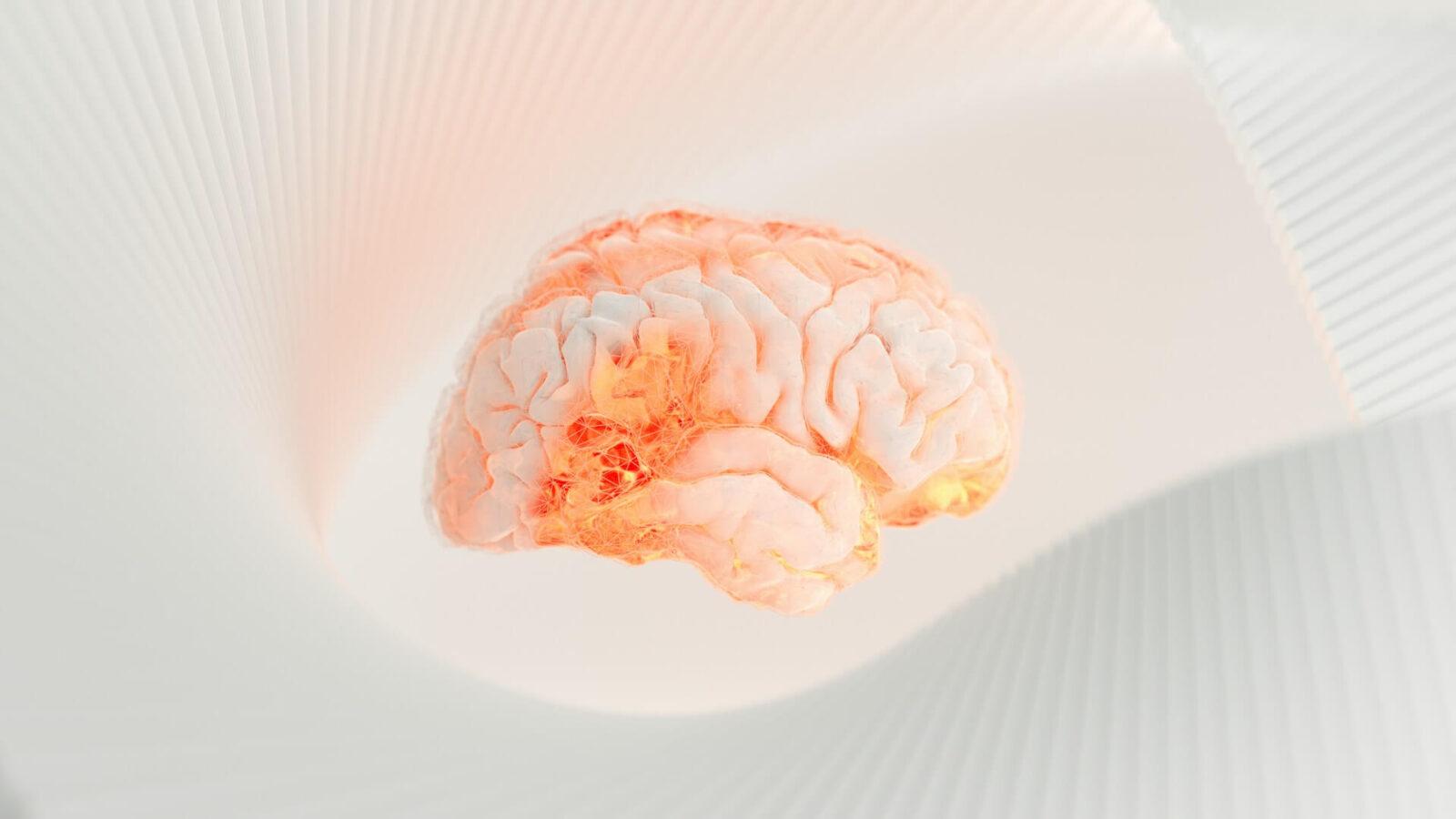
Why do some brains generate high-definition mental movies while others display a black screen? The answer lies deep within the neural architecture of the brain. Functional MRI (fMRI) brain imaging reveals a distinct neural dialogue between the prefrontal cortex (the brain’s executive control center located behind your forehead) and the primary visual cortex or V1 (the visual processing center located at the back of your head in the occipital lobe).

When analyzing aphantasia vs hyperphantasia through neurological scans, the difference lies in the brain’s top-down feedback loops. When a person with typical imagination (or hyperphantasia) voluntarily visualizes an object:
- The executive prefrontal cortex retrieves a concept from memory and sends a “top-down” signal back to the visual cortex.
- The visual cortex lights up, firing many of the exact same neural pathways that are used when physically looking at an object with open eyes (bottom-up processing).
- The brain essentially runs its visual software in reverse, projecting stored data onto the conscious mind’s eye.
In people with aphantasia, the prefrontal signal fires normally—they are actively trying to imagine the object—but the feedback loop to the visual cortex remains dormant. The visual cortex does not light up. The information is present in the brain’s memory servers, but the visual rendering graphics card fails to project the image onto the conscious screen.
This neurological difference explains the dream paradox mentioned earlier. Dreams are generated from the bottom-up, originating in the brainstem and visual cortex during REM sleep, bypassing the prefrontal cortex’s voluntary control. Because the visual cortex itself is perfectly healthy, aphantasics can experience vivid visual dreams. The block in aphantasia is purely in the voluntary, top-down retrieval process.
This neural transmission framework is closely related to how the visual cortex processes memory encoding under stress, altering how past events are retrieved and perceived over time.
5. Psychological Advantages: The Hidden Benefits of Aphantasia
While discovering that you have aphantasia might initially feel disappointing or isolating, cognitive psychologists have uncovered significant emotional and intellectual advantages to living with a blind mind’s eye. When weighing the benefits of aphantasia vs hyperphantasia, the lack of visual imagery can actually serve as a powerful emotional buffer and a catalyst for unique problem-solving skills.
Trauma Resilience and PTSD
One of the most documented advantages of aphantasia is its protective effect against trauma. People with aphantasia do not experience distressing visual flashbacks, which are a hallmark symptom of Post-Traumatic Stress Disorder (PTSD). While they still remember traumatic events perfectly well and can experience the emotional pain associated with them, they are spared the involuntary, highly distressing visual re-experiencing of the event. This lack of visual intrusion often makes emotional recovery faster and less paralyzing.
Reduced Phobia Triggers and Anxiety
Reading a scary story, listening to a disturbing true-crime podcast, or hearing a graphic news report does not evoke the same physical fear responses in aphantasics. Because no frightening visual images are generated, the brain’s amygdala (the fear center) is not triggered as intensely. Hyperphantasics, on the other hand, can literally scare themselves into a panic attack simply by vividly imagining a fearful scenario.
Superior Abstract Logic and Focus
Aphantasics frequently excel in fields that require high levels of abstract logic, such as computer programming, higher mathematics, physics, and structural engineering. Because their brains process abstract relationships, algorithms, and concepts without getting distracted by unnecessary visual details, they can often grasp complex systems faster. They think in pure logic, equations, and narrative structures.
This cognitive buffering helps explain how reducing visual overstimulation protects against brain fog, conserving prefrontal energy for demanding logical tasks rather than wasting metabolic energy rendering visual imagery.
6. Multi-Sensory Aphantasia: Sound, Taste, and Touch
Intriguingly, the mind’s eye is not the only sensory channel that can be blind. Mental imagery extends across all five physical senses. Just as aphantasia vs hyperphantasia dictates visual capability, other conditions dictate our internal auditory, tactile, olfactory, and gustatory worlds.
Cognitive surveys reveal distinct sub-types of sensory imagination deficits. Many people who have visual aphantasia also experience aphantasia in other senses, a condition sometimes referred to as global aphantasia or multi-sensory aphantasia.
- Anauralia (Silent Mind): This is the auditory equivalent of aphantasia. People with anauralia possess the inability to play an internal monologue, hear a loved one’s voice in their head, or replay a catchy song internally. Their thoughts are completely silent, consisting of concepts rather than spoken words.
- Tactile Aphantasia: The inability to mentally recall how sandpaper, velvet, or cold water feels on the skin. While they know what these things are, they cannot simulate the physical sensation internally.
- Gustatory & Olfactory Aphantasia: The inability to mentally imagine the taste of chocolate, the sourness of a lemon, or the smell of fresh rain on asphalt.
Conversely, people with multi-sensory hyperphantasia can literally taste the lemon when they think about it, causing them to physically salivate, or hear an entire symphony orchestra in their head with perfect clarity.
Famous Aphantasics
You might assume visual art requires visual imagination, but this is a myth! Ed Catmull (co-founder of Pixar and former president of Walt Disney Animation Studios) possesses total aphantasia. Glen Keane, the legendary Disney animator who created Ariel from The Little Mermaid, also has aphantasia. This proves that visual creativity can stem from conceptual and spatial awareness rather than internal mental pictures.
⚡ The Pupillary Response Test
Scientists can now objectively test for aphantasia without relying on self-reporting. By measuring pupil dilation, researchers found that when hyperphantasics imagine a bright sun, their pupils physically contract as if responding to real light. When aphantasics try to imagine the same bright sun, their pupils remain unchanged, proving the lack of visual feedback.
7. Memory, SDAM, and Face Blindness (Prosopagnosia)
Because visual imagery plays a massive role in how humans encode episodic memories, aphantasia frequently intersects with two other fascinating cognitive conditions: SDAM and Prosopagnosia.
Severely Deficient Autobiographical Memory (SDAM)
Many individuals with aphantasia report that their memory for past life events is incredibly poor. This condition is known as SDAM. While they can remember semantic facts about their life (e.g., “I went to Paris in 2018, we stayed near the Eiffel Tower, and it rained”), they cannot visually re-live the experience in their mind. Their memory feels more like reading a Wikipedia article about their own life rather than watching a home video. They live heavily in the present moment, untethered by visual nostalgia.
Prosopagnosia (Face Blindness)
Prosopagnosia is the inability to recognize faces. While aphantasia is the inability to imagine faces when the person is not there, prosopagnosia is the inability to recognize a face even when looking directly at it. Interestingly, there is a higher-than-average overlap between these two conditions, suggesting that the neural networks responsible for facial processing and visual imagery may be closely intertwined in the brain’s fusiform gyrus.
8. Navigating the World: Spatial Awareness Without Pictures
If you cannot visualize a map in your head, how do you navigate to a friend’s house or drive to work? This is a common question directed at people with aphantasia. The answer highlights the brilliance of the human brain’s redundancy systems.
The brain separates visual memory (what things look like) from spatial memory (where things are located). Spatial memory is processed heavily in the hippocampus and entorhinal cortex, using “grid cells” and “place cells” that act like an internal GPS. People with aphantasia rely entirely on this spatial awareness.
They can navigate a dark room without bumping into furniture because they have a spatial map, not a visual one. They “feel” where the couch is conceptually. Similarly, when drawing a picture, an aphantasic artist does not trace an image they see in their head; they use spatial relationships, logic, and muscle memory to construct the image on the paper, letting the artwork evolve as they physically see it taking shape.
9. Coping Strategies and Paradigm Shifts
Discovering that you process reality fundamentally differently from 96% of the population can trigger a minor existential crisis. Many people with aphantasia feel a sense of loss or grief when they realize that others can literally see the faces of deceased loved ones in their minds, while they cannot.
However, the psychological consensus is clear: aphantasia is a different way of experiencing the world, not a broken one. Here are ways people with aphantasia adapt:
- Externalizing Memory: Because internal visual memory is absent, many aphantasics rely heavily on taking photographs, keeping detailed journals, and saving sentimental items to serve as external hard drives for their autobiographical memories.
- Embracing the Present: Without the distraction of vivid visual memories or hyper-vivid anxieties about the future, many aphantasics find it naturally easier to practice mindfulness and remain anchored in the present moment.
- Conceptual Creativity: Aphantasic writers often excel at focusing on dialogue, plot structure, and emotional resonance rather than lengthy visual descriptions.
Summary and Frequently Asked Questions
The study of aphantasia vs hyperphantasia showcases the incredible, hidden diversity of human neuro-architecture. Whether your mind functions like a 4K cinema projector or a hyper-efficient, silent conceptual server, both modes of thinking offer unique cognitive strengths and challenges.
Can you cure or train aphantasia to see images?
While some fringe therapies and “image-streaming” exercises claim to improve visualization, there is currently no peer-reviewed scientific evidence that congenital aphantasia can be cured or trained away. It is a stable neural trait. Acquired aphantasia (from trauma or brain injury) may see changes over time, but for the vast majority, aphantasia is simply a lifelong cognitive style.
Are people with aphantasia less creative?
Absolutely not. Creativity is not solely visual. Some of the world’s greatest innovators, software developers, animators, and authors have aphantasia. They create using spatial reasoning, emotional intuition, and conceptual architecture.
Do people with aphantasia dream?
Yes. The majority of people with aphantasia report having visual dreams. Dreaming utilizes different neural pathways (bottom-up processing from the brainstem) than voluntary visualization (top-down processing from the prefrontal cortex).
Is aphantasia genetic?
Studies show a strong genetic link. If you have aphantasia, you are significantly more likely to have a parent or sibling with the same blind mind’s eye, pointing to inherited neurological development patterns.
Can psychedelics temporarily cure aphantasia?
Anecdotal reports suggest that some individuals with aphantasia experience vivid closed-eye visuals when using psychedelic substances (like psilocybin or LSD). However, this imagery is involuntary and hallucinatory, and the voluntary mind’s eye typically returns to blindness once the substance wears off. Research in this specific area is still in its infancy.
Where can I read more clinical research on visual imagination?
To explore peer-reviewed studies on mental imagery, consult the Zeman et al. (Cortex 2015) – Lives Without Imagery: Congenital Aphantasia as well as the extensive neuroscience papers and community forums available at the Aphantasia Network research hub.
References and Further Reading
- Zeman, A., Dewar, M., & Della Sala, S. (2015). Lives without imagery – Congenital aphantasia. Cortex, 73, 378-380. DOI: 10.1016/j.cortex.2015.05.019
- Keogh, R., & Pearson, J. (2018). The blind mind: No sensory visual imagery in aphantasia. Cortex, 105, 53-60. DOI: 10.1016/j.cortex.2017.10.012
- Dawes, A.J., Keogh, R., Andrillon, T., & Pearson, J. (2020). A cognitive profile of multi-sensory imagery, memory and dreaming in aphantasia. Scientific Reports, 10(1), 10022. DOI: 10.1038/s41598-020-65705-7
- Fulford, J., Milton, F., Salas, D., Smith, A., Simner, J., Winlove, C., & Zeman, A. (2018). The neural correlates of visual imagery vividness – An fMRI study and literature review. Cortex, 105, 26-40.
- Wicken, M., Keogh, R., & Pearson, J. (2021). The critical role of mental imagery in human emotion: insights from fear-based imagery and aphantasia. Proceedings of the Royal Society B, 288(1946), 20210267.


