



You are scrolling through your phone when a video of a tiny, fluffy puppy appears. Your heart melts, your pitch goes up, and suddenly, a bizarre thought crosses your mind: “It is so adorable, I want to squish it!” If you have ever felt the urge to bite, squeeze, or pinch something simply because it is uncontrollably adorable, you are experiencing cute aggression. Do not worry — you are not a psychopath. This is a perfectly normal, widely documented psychological phenomenon that affects nearly half of all adults.
Cute aggression is a neurological balancing mechanism. When you see something overwhelmingly adorable, your brain is flooded with positive emotion. To prevent a complete emotional overload, the brain aggressively balances it out by triggering an opposing negative emotion — like the urge to squeeze, bite, or crush the cute thing. It is your brain’s way of forcing you to calm down.
Here is the exact neuroscience behind why your brain forces you to feel hostile when faced with extreme cuteness — and why this biological glitch might actually be one of evolution’s cleverest survival tools.
1. What Exactly Is Cute Aggression?
Cute aggression is formally defined in cognitive psychology as a superficial, non-hostile aggressive urge triggered by seeing something extremely adorable, such as a newborn baby or a young animal. Unlike true violence, it occurs without any actual intent to inflict harm or distress. The term was first coined by researchers at Yale University who observed that people frequently displayed aggressive facial expressions and verbal outbursts (like growling or clenching their fists) immediately after viewing adorable stimuli.
In 2015, psychological researchers at Yale University, led by Dr. Oriana Aragón, conducted the first major scientific investigation into this phenomenon. They discovered that when humans observe a baby with chubby cheeks or a kitten with oversized eyes, the brain recognizes these physical traits as “baby schema” (known in German as Kindchenschema).
This evolutionary recognition triggers a massive, instantaneous surge of dopamine — the chemical associated with reward and pleasure — in the brain’s neurological reward centers. For many individuals, this sudden explosion of positive emotion is so intense that the nervous system experiences severe emotional overload, triggering cute aggression as an automated protective valve.

Dr. Aragón’s research revealed a critical finding: people who showed stronger cute aggression responses actually experienced faster emotional recovery after viewing adorable stimuli. This means the urge to squeeze or bite is not a flaw in your brain — it is a sophisticated emotional regulation tool that prevents you from being completely incapacitated by joy. The physical response of squishing or squeezing acts as a natural “emotional reset button,” bringing you back to baseline so you can continue functioning normally.
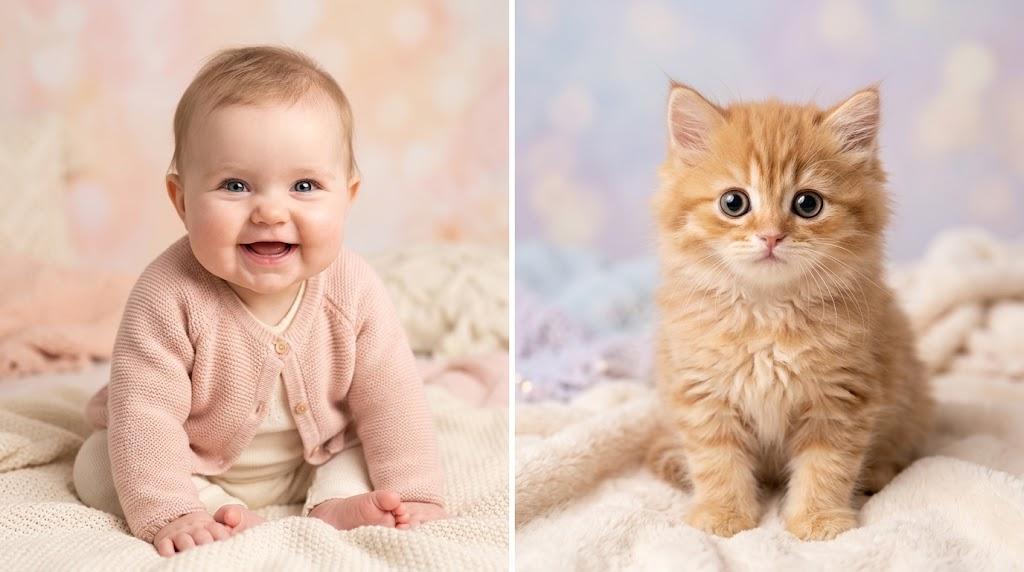
When looking at an impossibly tiny, fluffy puppy or kitten, what is your immediate physical impulse?
2. Emotional Overload and Dimorphous Expressions
To understand cute aggression, we must explore a fundamental psychological mechanism known as a dimorphous expression. A dimorphous expression occurs when a person displays an external physical or emotional reaction that is the exact opposite of what they are internalizing.
Think of it this way: your brain has two emotional dials — a “joy” dial and a “tension” dial. When the joy dial is cranked to maximum, the brain panics and cranks the tension dial to compensate, preventing the system from overheating. The result is a confusing mix of extreme happiness and sudden aggression.

Common real-world examples of dimorphous expressions include:
- Crying tears of intense sorrow during moments of peak happiness, such as weddings or reunions — similar to why we cry when experiencing overwhelming relief.
- Laughing uncontrollably during inappropriate, highly stressful events like funerals or emergency situations.
- Clenching fists or gritting teeth when looking at something impossibly adorable.
When the prefrontal cortex is overwhelmed by an unchecked surge of positive emotion, it struggles to maintain emotional balance. To prevent psychological burnout, the brain forcibly injects a counter-balancing emotion — in this case, pseudo-hostility — to throw a bucket of cold water on an overheating engine of joy.
Brain imaging studies have shown that viewing extremely cute images activates the nucleus accumbens — the same region involved in addiction and reward processing. Simultaneously, the brain’s conflict monitoring system (the anterior cingulate cortex) becomes active, recognizing that the emotional response is becoming excessive. The aggressive impulse appears to be the brain’s attempt to resolve this conflict by introducing a competing emotion that brings the overall emotional intensity back to a manageable level.

3. Why Does the Brain Choose Pseudo-Hostility?
When you become temporarily paralyzed by how adorable a creature is, your brain perceives this emotional state as a dangerous vulnerability. If a predator approached while you were completely entranced by a puppy, you would be unable to defend yourself or your offspring.
By generating a sudden, sharp urge to squeeze, bite, or pinch, the brain snaps you out of your emotional trance, grounding you back in physical reality. The sudden physical tension in your jaw and hands creates a neurological “pattern interrupt” that breaks the cycle of passive adoration.
Neurological scans using electroencephalography (EEG) reveal fascinating brain activity during these moments:

- Participants experiencing the strongest aggressive urges show massive electrical spikes in both the brain’s emotional network (the limbic system) and the reward system simultaneously.
- The physical urge to grit teeth or squeeze acts as a rapid neurological reset button.
Psychological studies confirm that individuals who experience these aggressive urges stabilize from intense joy significantly faster than those who do not. The superficial physical impulse acts as a highly efficient emotional regulator — essentially, your brain is deploying an emergency brake before the roller coaster of joy goes off the tracks.
This is the same principle behind why people sometimes slap themselves when they receive shocking good news. The body is desperately trying to create a competing physical sensation to prevent the nervous system from crashing under the weight of pure happiness. This connects directly to why your brain replays embarrassing moments at night — both are attempts to regulate overwhelming internal states that threaten to destabilize your emotional equilibrium.
4. The Evolutionary Purpose of Caregiver Regulation
Like most complex neurological quirks, this behavior is rooted deeply in human evolutionary history. Thousands of years ago, human survival depended entirely on the immediate, active care of vulnerable infants.
If an ancient parent became so overwhelmed by how cute their infant was that they remained frozen in a state of passive adoration, they would fail to perform essential caregiving duties — such as feeding, protecting, or monitoring the child for danger.
The sudden urge to squeeze or gently bite the infant serves as a biological alarm clock. It forces the caregiver to transition rapidly from passive emotional intoxication to active, physical caretaking. This ensures that the parent remains alert, functional, and capable of protecting the child.
This evolutionary mechanism also explains why cute aggression is more intense in people who score higher on empathy and caregiving scales. The stronger your nurturing instincts, the more aggressive your brain’s “reset switch” needs to be to prevent you from becoming completely useless in a survival situation. Your brain is essentially saying: “You care too much — now move.”
The instinctual urge to gently bite cute things is tied to mammalian social evolution. Primates and canine species frequently use soft “mouthing” — gently placing their teeth on one another without biting down — as a primary signal of intense affection, safety, and social bonding. What feels like aggression to us is, in the animal kingdom, a universal language of love. This mechanism operates entirely without your conscious permission — a perfect example of how the brain manages complex emotional situations behind the scenes.

5. Does Experiencing This Mean You Have Violent Tendencies?
Many people feel intense guilt or shame when these violent-sounding thoughts flash through their minds, worrying that their urge to bite a kitten indicates hidden dark personality traits. Psychological science confirms that this concern is entirely unfounded.
Empirical studies show zero statistical correlation between cute aggression and actual violent behavior or animal cruelty:
- Individuals who report strong urges to squish adorable items score significantly higher on tests measuring empathy, compassion, and emotional sensitivity.
- The brain is not seeking to harm the creature; it is simply trying to manage its internal neurological stress responses.
- People with the strongest cute aggression responses are statistically more likely to volunteer at animal shelters, adopt pets, and care for children — the exact opposite of violent behavior.
In fact, researchers at the University of California, Riverside found that cute aggression correlates strongly with prosocial behavior — the tendency to help, cooperate, and nurture others. The aggressive urge is not a sign of darkness; it is a sign that your brain’s emotional regulation system is working overtime to keep you functional.
If you feel the urge to bite a puppy, it means your brain cares deeply about that puppy and is desperately trying to prevent you from becoming emotionally paralyzed — the same way your brain overthinks at night to process unresolved emotional threats.
6. How the Brain Restores Emotional Homeostasis
If you pay close attention the next time you feel the urge to bite or squeeze something cute, you will notice a distinct physiological pattern. The moment you grit your teeth or clench your hands, the intense wave of adoration reaches its peak and immediately begins to subside.
Without this neuro-regulatory valve, humans would remain emotionally incapacitated whenever exposed to adorable stimuli. The brain uses these pseudo-aggressive physical responses to quickly return your nervous system to emotional homeostasis — your baseline state of psychological equilibrium.
Here is the step-by-step process your brain follows during a cute aggression episode:
- Dopamine surge: The nucleus accumbens floods the brain with reward chemicals after recognizing baby schema features.
- Emotional overload: The prefrontal cortex detects that the positive emotion has exceeded safe operational limits.
- Counter-emotion injection: The anterior cingulate cortex triggers a competing aggressive impulse to balance the system.
- Physical release: Jaw clenching, fist squeezing, or verbal growling creates a physical pattern interrupt.
- Homeostasis restored: The nervous system returns to baseline, allowing normal cognitive function to resume.
This entire sequence happens in milliseconds — faster than your conscious mind can even register what occurred. By the time you think “Why do I want to bite this puppy?”, your brain has already completed the full emotional regulation cycle. This same neural circuitry is responsible for the psychological cost of constant mental stimulation — your brain is constantly running background regulation processes to keep you functioning.
7. The Broader Spectrum of Emotional Expressiveness
If you frequently experience cute aggression, you are also significantly more likely to experience other dimorphous expressions, such as crying during happy movie endings or laughing uncontrollably when receiving shocking bad news.
Rather than feeling disturbed by these sudden urges to squish cute things, recognize them as evidence of a healthy, highly responsive nervous system. Your brain is simply executing a complex neuro-chemical maneuver to protect you from emotional exhaustion.
Research suggests that people who suppress their dimorphous expressions — who try to hold back the urge to squeeze or bite — actually experience longer periods of emotional instability than those who allow the physical response to happen naturally. The urge is your brain’s safety valve. Ignoring it is like ignoring the pressure release on a boiling pot — it only makes the overflow worse.
The next time you see a baby with impossibly round cheeks and feel your fists clenching involuntarily, smile. You are not losing control. Your brain is doing exactly what it was designed to do: keeping you sane, functional, and ready to protect the things you love most.
Summary and Frequently Asked Questions
Cute aggression is a fascinating biological demonstration of how the brain manages intense emotion. By counteracting extreme joy with pseudo-hostility, your nervous system keeps you grounded, alert, and capable of caring for those around you.
What is the formal scientific name for cute aggression?
Psychologists refer to it as a “dimorphous expression” triggered by baby schema (Kindchenschema). It describes situations where the brain displays an aggressive expression to regulate an excess of positive emotion.
Why do people want to bite babies or pets?
Gentle biting urges are caused by a rapid spike in dopamine and emotional arousal. The physical act of gritting teeth helps the brain release tension and cool down its emotional circuits. The brain is not trying to cause harm — it is deploying an emergency brake to prevent emotional overload.
Is cute aggression more common in women or men?
Research shows that cute aggression is experienced across all genders roughly equally. However, people who score higher on empathy and caregiving scales tend to experience it more intensely, regardless of gender.
Can cute aggression be dangerous?
No. Studies show zero correlation between cute aggression and actual violent behavior. People with the strongest cute aggression responses are statistically more likely to exhibit prosocial, nurturing behavior.
Where can I read more about the neuroscience of cuteness?
To explore the scientific research behind this phenomenon, read NPR’s analysis of cute aggression research as well as the original neuroimaging study published in Frontiers in Behavioral Neuroscience.
References
- Stellar, J.E. et al. (2015). Overwhelmed by love: Dimorphous expressions as a regulatory response to positive emotions. Emotion, 15(5), 637-653. DOI: 10.1037/emo0000063
- Riem, M.M.E. et al. (2017). Dimorphous expressions of positive emotion: Displays of both care and aggression in response to cute stimuli. Psychological Science, 28(8), 1057-1067. DOI: 10.1177/0956797617703184
- Aragón, O.R. et al. (2015). When we hurt the ones we love: Exploring cute aggression and its relation to the regulation of positive affect. Emotion, 15(5), 637-653.
- Sherman, G.D. et al. (2016). The experience of antipathy toward the cute and the beginning of aggression. Psychological Science, 27(7), 1014-1021.
📚 You Might Also Like
Hand-picked articles for you


