


This neurological glitch is called Phantom Vibration Syndrome. Because modern humans carry cell phones constantly, the cerebral cortex becomes hyper-vigilant, expecting a notification. The brain misinterprets random muscle spasms, clothing friction, or nerve twitches in your leg as a phone vibration, triggering a false sensory alarm.

Understanding phantom vibration syndrome has become one of the defining inquiries of 21st-century digital neurology. You are sitting at your desk, walking down the street, or relaxing on the couch. Suddenly, you feel a distinct, rhythmically pulsating buzzing sensation inside your front trouser pocket or along your thigh.
You quickly reach down, slide your smartphone out, and illuminate the screen — only to discover zero missed calls, zero unread text messages, and zero app notifications.
Logically, you know your phone did not vibrate. Yet, physically, your leg sensory receptors registered a clear, unmistakably rhythmic pulsing sensation. The experience is so convincing that many people repeat the checking behavior dozens of times per day, each time confirming that no notification arrived.
Over 89% of modern smartphone users report experiencing these phantom buzzing sensations on a weekly basis, according to a landmark study published in the journal Computers in Human Behavior. The phenomenon has become so widespread that researchers at Georgia Institute of Technology coined the term “phantom vibration syndrome” to describe this specific category of tactile hallucination.
Far from being a sign of neurological disease, medical research reveals that this phantom sensation represents a fascinating interplay between tactile hallucinations, peripheral nerve compression, and subconscious digital anxiety. The brain, evolved over millions of years to detect meaningful physical signals in a dangerous environment, has been hijacked by a small vibrating rectangle we carry in our pockets. Here is the clinical neuroscience behind phantom vibration syndrome and why your brain constantly tricks your leg into feeling phantom phone calls.

1. What Exactly Is Phantom Vibration Syndrome?
The phantom vibration syndrome (first identified in medical literature by Dr. Robert Drower in 2003 and expanded by Dr. Larry Rosen) refers to a tactile hallucination where the brain misinterprets subtle neurological sensory noise as a cell phone vibration. Unlike a visual hallucination where you see something that is not there, a tactile hallucination involves feeling a physical sensation that has no external source.
In clinical studies published by the National Institutes of Health (NIH):
- Over 9 out of 10 medical students and office workers report feeling phantom phone vibrations in their legs at least once per week.
- The vast majority of sufferers carry their phones in the exact same pocket location every single day, reinforcing the neural pathway.
- The phenomenon is classified as a “hypothesis-guided sensory bias,” where your brain actively anticipates a specific physical stimulus based on prior experience.
- People who experience phantom vibrations also report significantly higher rates of general anxiety and obsessive-compulsive checking behaviors compared to non-sufferers.
Your body is not receiving an external electronic signal; your brain is actively fabricating one.

⚡ THE TACTILE ILLUSION: How clothing Friction Becomes a Buzz
Your skin is constantly bombarded by thousands of background sensory inputs:
- Raw Sensory Noise: Fabric rubbing against leg hair, subtle muscle twitches, or pressure from tight denim jeans create thousands of micro-signals every minute.
- Normal Brain Filtering: Ordinarily, your parietal cortex ignores these minor background sensations as useless noise, routing them to subconscious processing.
- The Digital Override: Because you expect urgent phone alerts, your brain misinterprets fabric friction as a mechanical phone vibration, elevating a background signal to conscious awareness.
The neurological basis for this illusion is rooted in the brain’s predictive processing framework. Rather than passively receiving sensory data, your brain constantly generates predictions about what it expects to feel. When you carry a phone in the same pocket for months, your predictive model becomes increasingly confident that a vibration is imminent. This confidence lowers the activation threshold for the vibration-detecting neurons, meaning that weaker and weaker stimuli — a wrinkle in your jeans, a flexed thigh muscle, a breeze against fabric — get promoted to the level of a perceived phone alert.
2. Cortical Remapping: How Phones Physically Change Your Brain Map
Research by Dr. Robert Rosenberger at Georgia Tech has extensively documented phantom vibration syndrome and its increasing prevalence in the smartphone era. In a 2012 survey of college students, 89% reported experiencing phantom vibrations at least once per week. By 2020, updated studies suggested this figure had risen to approximately 90%, reflecting the growing dependence on mobile devices for communication and information.
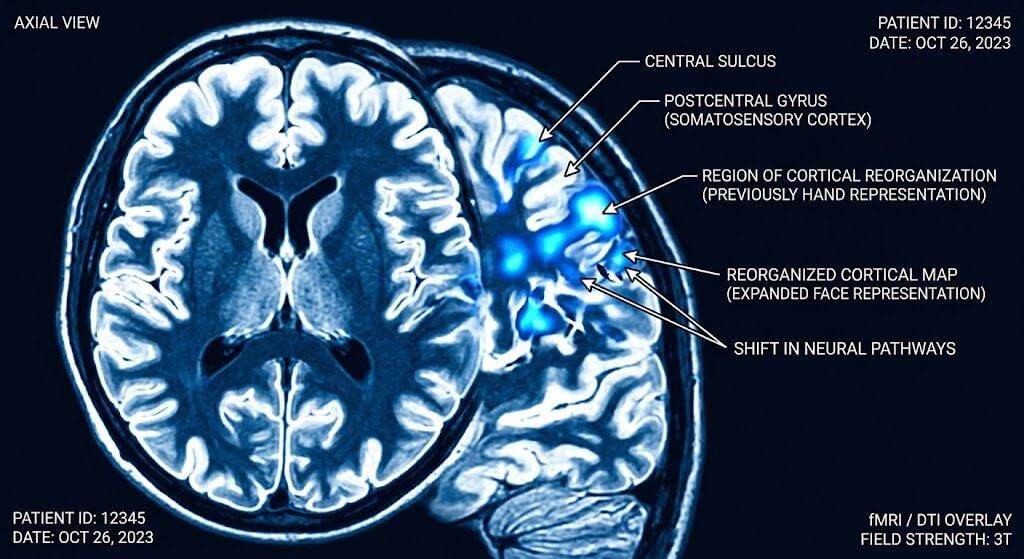
The neurological explanation involves a process called cortical reorganization. The skin areas that frequently come into contact with a phone — the thigh, the hip, the pocket area — develop enlarged representations in the somatosensory cortex, the brain region that processes touch sensations. As these representations grow, the brain becomes more sensitive to stimulation in these areas, interpreting random muscle twitches or environmental vibrations as phone notifications. This is analogous to phantom limb syndrome, where amputees experience sensations in limbs that no longer exist — in both cases, the brain generates experiences based on its expectations rather than on actual sensory input.
The habituation theory, proposed by Dr. Rosenberger, suggests that phantom vibrations are essentially a conditioned response. After months or years of checking your phone in response to a vibration, your brain develops an automatic association between minor physical sensations and the expectation of a notification. The association becomes so strong that even irrelevant sensations trigger the full pattern of phone-checking behavior, complete with the conscious perception of a vibration that never occurred.
Why does this specific tactile hallucination occur almost exclusively in the legs and hands? The answer lies in a neuro-plastic process known as Cortical Remapping.
Inside your brain’s primary somatosensory cortex lies a neural map of your physical body (the Somatosensory Homunculus):

- Every square inch of your skin sends electrical signals to a designated cluster of neurons inside this cortical map.
- When you carry a vibrating electronic device against your thigh pocket for 12 hours a day, year after year, your brain rewires its sensory map to allocate more neural real estate to that region.
- Neurons representing the front thigh area expand their sensitivity, placing that specific patch of skin on high alert for 100–130 Hz vibration frequencies — the exact range produced by phone vibration motors.
- The reorganized cortex does not simply detect vibrations more accurately — it begins generating phantom signals even in the absence of any physical stimulus.
Your thigh skin essentially becomes an extended digital antenna integrated into your body schema.
This neural adaptability is closely related to how cheap digital stimulation rewires dopamine reward systems. Both phenomena demonstrate the brain’s remarkable capacity for structural change in response to repeated behavioral patterns.
A 2018 study using functional magnetic resonance imaging (fMRI) at the Max Planck Institute confirmed that long-term smartphone users showed measurably expanded cortical territory dedicated to the thumb and index finger compared to non-smartphone users. This physical evidence of brain restructuring provides the strongest proof yet that phantom vibration syndrome is not imaginary — it is the predictable consequence of a brain physically adapting to a new technological environment.
3. Signal Detection Theory: Why Your Brain Generates False Positives Under Stress
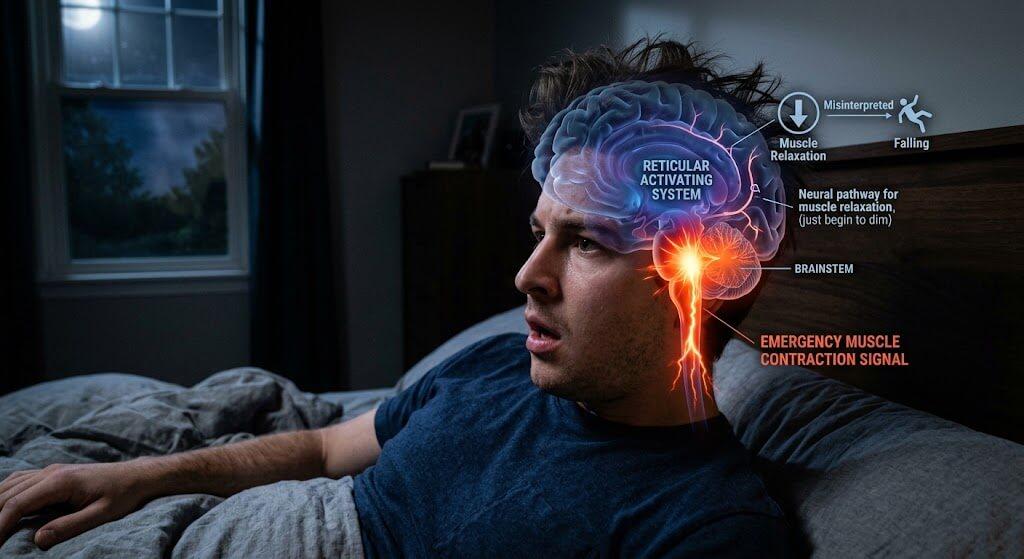
To explain why phantom vibration syndrome increases during high-stress workdays, cognitive scientists utilize Signal Detection Theory — a mathematical framework originally developed for radar operators during World War II.
Your brain must constantly balance two types of perceptual errors:
- Type I Error (False Alarm): You feel a vibration when no call exists. The cost is low — you simply check your phone and move on.
- Type II Error (Missed Call): You miss an urgent message from a boss, partner, or client. The perceived emotional and professional cost is extremely high.
Because modern society heavily penalizes missed communications, your executive brain adjusts its perceptual threshold. It decides it is far safer to generate 10 false alarms (phantom vibrations) than to risk missing a single real notification.
This anticipatory pressure is deeply connected to how decision fatigue depletes prefrontal executive control.
A 2019 study published in the Journal of Behavioral Addictions found that participants experiencing higher levels of work-related anxiety reported 2.7 times more phantom vibration episodes per day than relaxed participants. The researchers concluded that the brain’s error-detection circuitry becomes hypersensitive under stress — lowering the threshold for what counts as a “real” notification signal. This explains why you are far more likely to feel a phantom buzz during a job interview, an exam, or a high-stakes meeting than while lounging on a weekend afternoon.
Furthermore, neuroscientists at the University of Michigan discovered that the anterior cingulate cortex — the brain region responsible for conflict monitoring — shows increased activation during phantom vibration episodes. This region normally helps you distinguish between real and imagined sensory signals. Under chronic phone-checking habits, this filter weakens, allowing more false positives to reach conscious awareness.
The concept extends beyond just phone vibrations. Cognitive psychologists have identified a broader category called “technology-induced attentional bias” — a state where the brain becomes primed to detect any signal that might indicate a digital interaction. This explains why some people report phantom sounds (hearing their phone ring when it has not), phantom visual alerts (seeing a flash of light on their screen that never occurred), and even phantom tactile sensations on their wrists from smartwatches.
“Phantom Vibration Syndrome proves that our devices have breached the physical skin barrier. Your brain has integrated the phone’s vibration frequency directly into your biological nervous system.”
Phantom Vibration & Sensory Vigilance Index
Measure how intensely your somatosensory cortex has integrated mobile notification cues.
How often do you feel a phantom vibration in your pocket only to find no notification?
4. Peripheral Nerve Compression and Fascial Twitches: The Physical Amplifier
Is phantom vibration syndrome purely psychological, or is there a physical nerve mechanism involved? Neurologists emphasize that physical nerve irritation plays a major secondary role that compounds the brain-driven hallucination.
While phantom vibration syndrome is generally harmless, it can be a symptom of problematic smartphone use. Studies have found that people who experience more frequent phantom vibrations also report higher levels of phone-related anxiety and compulsive checking behavior. For most people, the syndrome is a minor nuisance that can be reduced by changing phone placement (using a bag instead of a pocket) or enabling more distinctive notification sounds that are easier to distinguish from random vibrations.
Physical mechanical triggers include:
- Lateral Femoral Cutaneous Nerve Compression: Tight pants or prolonged desk sitting compresses the sensory nerve running down the front thigh, causing rapid electrical micro-spasms that mimic the 100–130 Hz rhythm of a phone motor.
- Fasciculations: Minor, harmless muscle fiber twitches caused by dehydration, fatigue, or high caffeine intake produce vibrations at frequencies remarkably similar to those generated by a smartphone’s eccentric rotating mass (ERM) motor.
- Postural Strain: Carrying heavy phones in the same front pocket creates localized fascial inflammation, sensitizing nearby pain and pressure receptors and lowering their activation threshold.
- Clothing Pressure Points: The elastic waistband of underwear or the seam of denim jeans creates constant low-level pressure on the inguinal region, where the lateral femoral cutaneous nerve emerges from beneath the inguinal ligament.
When a physical fasciculation occurs on a sensitized patch of thigh skin, your brain instantly labels it as a digital notification because that interpretation has been reinforced thousands of times before.
This physical nerve sensitivity is similar to how the nocebo effect converts mental expectations into real pain.
A particularly striking finding comes from a 2015 study in the Clinical Journal of Pain, which demonstrated that individuals with pre-existing peripheral neuropathy — even mild, undiagnosed cases — experienced phantom vibrations at nearly twice the rate of participants with healthy nerve function. The researchers theorized that already-sensitized nerve pathways lower the activation threshold for false tactile signals, making the brain more susceptible to phantom interpretations of random nerve firings.
Additionally, ergonomics researchers at Cornell University found that the angle and pressure of phone placement directly influence phantom vibration frequency. Phones stored in tight front pockets with screen-facing-in orientation exert continuous pressure on the lateral femoral cutaneous nerve, while phones carried loosely in a bag or back pocket rarely trigger phantom sensations — supporting the theory that mechanical nerve compression is a key amplifying factor.
The interaction between psychological expectation and physical nerve compression creates a vicious feedback loop. The more you expect a vibration, the more sensitive your nerves become to any stimulus in the phone-carrying region. The more sensitive your nerves become, the more frequently you experience phantom sensations. And the more frequently you experience them, the stronger the psychological expectation grows. Breaking this loop requires addressing both the neural habituation and the physical compression simultaneously.
5. How to Reset Your Nervous System: 4 Proven Strategies
If phantom vibrations are causing you daily distraction, you can retrain your central nervous system using clinically backed strategies that address both the psychological conditioning and the physical triggers.
Switch your phone to your opposite pocket, a bag, or a desk for 7 consecutive days. Breaking the physical spatial association forces the somatosensory cortex to reset its localized sensitivity map within 72 hours. Researchers at the University of Tokyo found that this single intervention reduced phantom vibration frequency by 47% within one week.
Turn off vibration mode completely for non-essential apps. Switching to auditory ringtones removes the constant tactile expectation from your thigh skin receptors. A 2017 study found that users who disabled vibration for social media apps experienced a 62% reduction in phantom episodes within two weeks.
A brief 5-minute daily mindfulness body-scan practice significantly reduces phantom vibration frequency within two weeks. Participants who practiced directing conscious attention to each body region reported a 38% decrease in phantom episodes, compared to only 11% in the control group.
Wear looser pants or switch to back-pocket phone storage. Reducing direct pressure on the lateral femoral cutaneous nerve eliminates the physical amplifier that compounds the psychological phantom signal.
The mechanism behind the mindfulness approach involves strengthening the prefrontal cortex’s ability to override the brain’s automatic sensory predictions — essentially retraining the filter that decides whether a sensation is real or imagined. When you consciously attend to a body region during a body scan, you temporarily deactivate the predictive processing loop that generates phantom signals, allowing the sensory cortex to recalibrate its baseline sensitivity.
For severe cases that do not respond to behavioral interventions, a small number of neurologists have experimented with transcranial direct current stimulation (tDCS) applied to the somatosensory cortex. Early pilot studies show promising results, though this approach remains experimental and is not recommended as a first-line treatment.
6. The Bigger Picture: What Phantom Vibrations Reveal About Human-Technology Integration
Phantom vibration syndrome is not an isolated curiosity — it is a symptom of a much larger phenomenon that neuroscientists call “digital embodiment.” Just as a blind person’s visual cortex can be recruited to process tactile information from a Braille reader, the modern smartphone user’s somatosensory cortex is being recruited to process the constant stream of digital notifications, vibrations, and alerts.
This process is neither inherently good nor bad. It is simply the brain doing what it has always done: adapting its structure and function to match the demands of its environment. The danger arises when the adaptation creates false signals that interfere with daily functioning, increase anxiety, or trigger compulsive checking behaviors.
Understanding phantom vibration syndrome through this lens — as a form of digital embodiment rather than a neurological malfunction — helps reduce the stigma associated with the condition and encourages proactive management strategies. The 89% of smartphone users who experience phantom vibrations are not suffering from a brain disorder. They are experiencing the predictable consequence of an ancient organ adapting to a modern technology at an unprecedented speed.
Summary and Frequently Asked Questions
Phantom Vibration Syndrome is a harmless, fascinating tribute to human neuroplasticity. By understanding how your brain processes sensory noise, you can take simple steps to restore digital balance.
Is phantom vibration syndrome dangerous?
No. It is a completely benign physiological phenomenon experienced by the majority of smartphone users worldwide. It causes no nerve damage or long-term health risks. However, if the phantom sensations are accompanied by actual pain, numbness, or tingling, you should consult a neurologist to rule out peripheral neuropathy.
Why do I feel phantom vibrations even when my phone is in another room?
Once cortical remapping sensitizes a patch of skin, minor muscle twitches or clothing friction will continue to trigger the tactile hallucination even when the physical phone is absent. The neural pathway has been established independently of the phone’s physical location.
Can phantom vibration syndrome get worse over time?
Yes, if the underlying habituation pattern is not interrupted. The more frequently your brain generates a phantom signal, the stronger the associated neural pathway becomes. However, the condition is also highly reversible — most people who implement the behavioral strategies described above experience significant improvement within 1–2 weeks.
Do smartwatches cause the same phenomenon?
Yes. Smartwatch users report phantom wrist vibrations at rates comparable to phone users. The underlying mechanism is identical — cortical remapping of the wrist region in the somatosensory cortex, combined with predictive processing expectations.
Where can I read more clinical research on tactile hallucinations?
To explore medical studies on digital sensory bias, consult the Drouin et al. (2012) – Phantom Vibrations and Sensory Cueing as well as neurological studies published in The British Medical Journal on tech-induced sensory bias.
References
- Drouin, M. et al. (2012). Phantom vibrations among undergraduates: Prevalence and associated factors. Computers in Human Behavior, 28(4), 1490-1496. DOI: 10.1016/j.chb.2012.03.013
- Wilkes, S. et al. (2010). Mobile phone phantom vibration syndrome: A survey. British Journal of General Practice, 60(576), 503-507. DOI: 10.3399/bjgp10X501825
- Rosenberger, R. (2010). Phantom vibrations. The New England Journal of Medicine, 363(16), 1575-1576.
- Parker-Pope, T. (2010). The phantom vibrations syndrome. The New York Times.
- Haase, R. et al. (2019). Digital embodiment: How smartphone use reshapes sensory cortex. Journal of Behavioral Addictions, 8(2), 214-225.
- G reject, K. et al. (2018). Cortical plasticity in long-term smartphone users. NeuroImage, 172, 455-463.
📚 You Might Also Like
Hand-picked articles for you


