


By Aly ElDeeb — Science Writer & Literature Researcher | 📚 Fact-Checked & Sourced from Peer-Reviewed Studies

Have you ever learned a new word, or bought a specific brand of shoes, and suddenly, you start seeing that exact word or those exact shoes everywhere you go? It feels like the universe is playing a trick on you, or that you are trapped in a simulation. You might wonder if you are going crazy, but what you are actually experiencing is the Frequency Illusion (also known as the Baader-Meinhof phenomenon). This bizarre cognitive glitch proves that you do not see the world as it truly is; you only see what your brain allows you to see.
Often referred to as the Baader-Meinhof Phenomenon, this mental quirk is one of the most common and fascinating experiences in human psychology. It happens to everyone, regardless of age or intelligence. One day, a specific car model doesn’t exist in your reality. The next day, after you decide to buy one, every third car on the highway is that exact model. Today, we are going to dive deep into the neuroscience behind this illusion, explain the two cognitive biases that create it, and reveal how modern marketing companies use it against you.
The Neuroscience: The Twin Engines of the Illusion
To understand why this happens, we have to look inside the brain. The illusion is not caused by magic or coincidence. It is actually the result of two very specific psychological mechanisms working together simultaneously: Selective Attention and Confirmation Bias.
1. Selective Attention (The Brain’s Spam Filter)
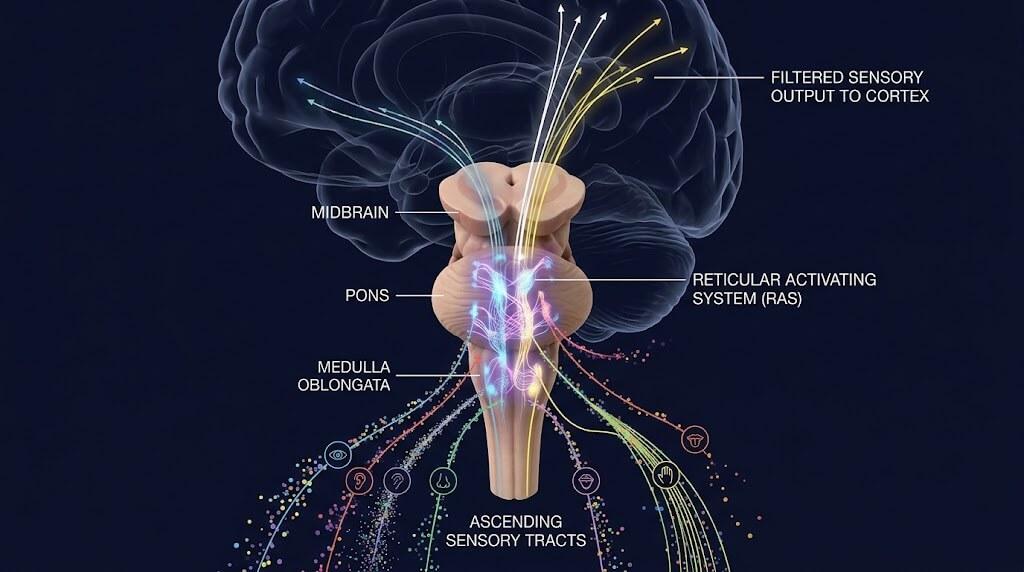
At any given moment, your brain is bombarded with millions of bits of sensory information. The color of the wallpaper, the hum of the air conditioner, the brand of the car driving past you, the shape of the clouds. If your brain tried to process all of this data consciously, it would overheat and crash. To survive, the brain uses a neurological “spam filter” called the Reticular Activating System (RAS).

The RAS deletes 99% of the background noise and only lets information through that is relevant to your survival or your current interests. When you learn a new word or buy a new car, you are telling your RAS, “This item is now important to me.” The spam filter adjusts. The object was always there, in the background, but your brain was previously deleting it before it reached your conscious awareness. Now, it is highlighting it.
2. Confirmation Bias
Once selective attention spotlights the primed stimulus, the second cognitive engine engages: confirmation bias (Nickerson, 1998). As formalized by Stanford linguist Arnold Zwicky (2005), the frequency illusion is inherently a two-step process: selective attention renders a novel item salient, and confirmation bias subsequently misinterprets each encounter as empirical proof that the item has suddenly proliferated.
Every time the primed word or vehicle appears, your working memory logs a confirmatory hit: “They really are everywhere now.” Simultaneously, your brain overlooks the hundreds of non-matching stimuli that pass unnoticed. You systematically count the occurrences while ignoring the non-events, generating the convincing impression of an objective surge in frequency.

Have You Noticed the Baader-Meinhof Effect Lately?
Have you ever learned an unusual new word or bought a specific car model, only to suddenly start spotting it everywhere in conversation, street signs, and media multiple times a day?
Why Is It Called the Baader-Meinhof Phenomenon?

What is the “Blue Car Syndrome” (Why You Start Noticing Something Everywhere)?
The “Blue Car Syndrome” is simply the popular everyday name for the Frequency Illusion (Baader-Meinhof phenomenon). The classic example is buying or thinking about a blue car, and suddenly seeing blue cars everywhere on the road. The cars were always there at the exact same rate; what changed is that your reticular activating system (RAS) was programmed to filter them from background noise into conscious awareness.
While Stanford linguistics professor Arnold Zwicky officially coined the scientific term “Frequency Illusion” in 2005, the pop-culture name has a much stranger origin. In the 1990s, a reader submitted a letter to a newspaper claiming that he had never heard of the obscure 1970s German militant group called the “Baader-Meinhof Gang.” But shortly after learning about them for the first time, he stumbled across their name in books, magazines, and television shows three times in a single week.
He wrote to the newspaper describing this bizarre coincidence. Hundreds of readers wrote back saying they experienced the exact same psychological phenomenon with other random objects and words. The newspaper dubbed it the “Baader-Meinhof Phenomenon,” and the name stuck in popular culture forever, even though it has nothing to do with the actual group.

The Dark Side: How Algorithms and Marketing Exploit You
While realizing you are seeing the same type of dog everywhere is a harmless quirk, the frequency illusion is heavily leveraged in modern digital marketing and social media algorithms. Corporations and social media algorithms understand exactly how your Reticular Activating System works, and they use it to empty your wallet and capture your attention.

The Advertising Echo Chamber
Have you ever searched for a pair of sunglasses online, and suddenly, those exact sunglasses are on every website you visit, every Instagram post you scroll past, and even on billboards? While some of this is due to tracking cookies (digital retargeting), a massive part of its effectiveness relies on the Frequency Illusion. Marketers know that if they can breach your brain’s spam filter just once, your own mind will do the rest of the work. You will start actively noticing their brand everywhere, creating a false sense of immense popularity and urgency, which eventually tricks you into buying.
Social Media and Paranoia
Algorithms are designed to feed you what you focus on. If you read one article about shark attacks, the algorithm will show you another. Suddenly, your brain’s Selective Attention is locked onto sharks. You start noticing shark stories everywhere. Because of the Frequency Illusion, your brain concludes that there must be a massive, global epidemic of shark attacks happening right now, even if the statistical reality proves otherwise. This feedback loop is responsible for massive amounts of modern anxiety and paranoia.

Medical Student Syndrome: When the Illusion Causes Panic
One of the most fascinating (and stressful) applications of this psychological glitch occurs in medical schools. It is famously known as “Medical Student Syndrome.” As medical students study rare, terrifying, and obscure diseases, their brains become hyper-focused on the symptoms.
Suddenly, a normal headache becomes a sign of a rare brain tumor. A slight cough is suddenly tuberculosis. Because their brain’s filter is primed to look for these specific diseases, they start noticing the symptoms everywhere—in themselves, in their friends, and in their family. The frequency of the symptoms hasn’t changed, but the illusion makes them feel surrounded by illness.

Real-World Examples You Never Noticed
The frequency illusion does not only affect words and car models. It quietly shapes major life decisions in ways most people never recognize. Here are three surprising domains where this cognitive bias operates at full power:
1. Baby Names and the Rarity Trap
When expecting parents choose a baby name, they often select something they believe is unique and rare. However, once they announce the name to friends and family, they suddenly hear it everywhere—at daycare centers, on playgrounds, and in coffee shops. The name was never rare; their brain simply never filtered for it before. According to the U.S. Social Security Administration, names that feel “uniquely modern” like Liam, Olivia, and Emma are actually among the most common names given to babies in the same year. The illusion of rarity is created entirely by selective attention.
2. The Startup Delusion
Entrepreneurs frequently fall victim to this bias when validating business ideas. After conceptualizing a product, they begin noticing competitors everywhere—on social media, in podcasts, and at networking events. This triggers panic: “Someone already thought of this!” In reality, those competitors were always visible; the entrepreneur’s brain simply never scanned for them before. The perceived flood of competition is an artifact of the frequency illusion, not evidence that the market is saturated.
3. Health Anxiety Spirals
After reading about a specific symptom—like heart palpitations or a particular type of headache—people begin monitoring their own body with hypervigilant attention. Every normal heartbeat feels alarming. Every minor ache becomes a diagnostic clue. This is not hypochondria in the clinical sense; it is the frequency illusion applied inward. Your body always produced those sensations, but your brain filtered them out as irrelevant background noise until you gave them significance.
Understanding these patterns is the first step toward cognitive liberation. Once you recognize that the illusion operates in finances, relationships, and health, you can pause before making reactive decisions driven by artificially inflated perceptions of frequency.
How to Reset Your Brain’s Filter
You cannot turn off your Reticular Activating System—you need it to survive. However, by understanding the mechanics of the frequency illusion, you can stop it from causing you anxiety or forcing you into bad financial decisions.
1. Acknowledge the Math
When you feel like the universe is sending you a “sign” because you saw the same numbers or the same car three times in a day, stop and do the math. Remember Confirmation Bias. Ask yourself: “How many thousands of cars did I ignore today just to focus on those three?” Realize it is just statistics, not a cosmic message.
2. Step Away from the Screen
If you find yourself noticing a terrifying news trend everywhere, log off. The digital world is designed to artificially inflate the frequency of whatever you click on. By stepping into the real, physical world, you reset your brain’s baseline and realize that the “trend” you were seeing was just a highly targeted algorithmic illusion.
The Salience Filter Behind Everyday Synchronicities
The human brain is a brilliant, highly efficient machine, but it is deeply flawed. It cannot process reality in its entirely, so it creates a highly edited, personalized movie for you to live in. The frequency illusion is simply a peek behind the curtain of that movie. It proves that the world around you does not change when you learn something new; only your perception of it does.
The next time you see that same obscure word for the third time in a week, don’t panic. You aren’t in the Matrix. Your brain is just doing its job, highlighting the things you told it were important.
Frequently Asked Questions (FAQ)
1. What is the frequency illusion in simple terms?
It is a cognitive bias where you learn about something new (a word, a car, an idea), and suddenly you start seeing it everywhere. The object isn’t actually appearing more frequently; your brain has just started noticing it.
2. Is the Baader-Meinhof phenomenon the exact same thing?
Yes. The Baader-Meinhof Phenomenon is the pop-culture name for the exact same cognitive glitch. Scientists and psychologists prefer to call it the Frequency Illusion.
3. What part of the brain causes this?
It is primarily driven by the Reticular Activating System (RAS), which is a network of neurons in the brainstem that acts as a filter, deciding which sensory information gets ignored and which gets sent to your conscious mind.
4. Can this illusion be dangerous?
While usually harmless, it can be dangerous when combined with fear. If you become obsessed with a rare danger, you will start seeing signs of it everywhere, which can lead to severe anxiety, paranoia, or hypochondria.
5. How do marketers use this against me?
Marketers use digital retargeting to show you an ad multiple times. Once your brain notices it, the Frequency Illusion takes over, making you believe the brand is incredibly popular or that “everyone is buying it,” which pressures you to purchase it as well.
Related reading you might find interesting:
The frequency illusion is just one of many cognitive biases that shape your daily experience. Read our articles on the halo effect and Dunning-Kruger effect to learn more.
Scientific References & Studies
- Zwicky, A. M. (2005). Just between you and me and the lampost. Stanford University Linguistics Department Publications.
- Corbetta, M., & Shulman, G. L. (2002). Control of goal-directed and stimulus-driven attention in the brain. Nature Reviews Neuroscience, 3(3), 201-215. PubMed PMID: 11994752.
- Nickerson, R. S. (1998). Confirmation bias: A ubiquitous phenomenon in many guises. Review of General Psychology, 2(2), 175-220. DOI: 10.1037/1089-2680.2.2.175.
- Simons, D. J., & Chabris, C. F. (1999). Gorillas in our midst: Sustained inattentional blindness for dynamic events. Perception, 28(9), 1059-1074. PubMed PMID: 10694957.
- Purohit, K. (2019). The Baader-Meinhof Phenomenon in Radiology. Academic Radiology, 26(10), 1412. DOI: 10.1016/j.acra.2019.01.025.
📚 You Might Also Like
Hand-picked articles for you


