Imagine waking up in the dead of night. Your eyes flutter open, adjusting to the darkness of your bedroom. You feel a strange, heavy presence in the corner of the room. Panic sets in, and you command your body to sit up, to turn on the lamp, to scream for help. But nothing happens. Your limbs are made of lead. Your vocal cords refuse to vibrate. You are entirely conscious, wide awake, and yet, completely trapped inside a frozen body. If you have experienced this terrifying phenomenon, you are not alone. Understanding the neurobiology of sleep paralysis is often the first and most important step in demystifying the experience and reducing the anxiety it causes.
For centuries, cultures around the world blamed this terrifying experience on demons, ghosts, and supernatural entities. In folklore, it was known as the “Old Hag” sitting on your chest. Today, however, modern sleep neuroscience has identified the core neural circuits mediating this transient dissociation between motor control and conscious awareness. In this comprehensive guide, we examine the neurobiology of sleep paralysis by analyzing the brain circuits and spinal neurotransmitters involved, explaining why the conscious mind experiences such vivid hallucinations while you lie frozen in bed.
The Biological Lockdown: What is REM Atonia?

To understand the physical mechanics of sleep paralysis, you first have to examine how standard sleep architecture functions. When you drift off to sleep, your brain cycles through several stages, eventually reaching Rapid Eye Movement (REM) sleep. This is the stage where the vast majority of our vivid, story-like dreams occur.
During REM sleep, your brain is incredibly active. If you are dreaming about running a marathon or fighting off a wild animal, your motor cortex is actually firing the exact signals required to move your legs and swing your arms. If these electrical signals were allowed to reach your muscles, you would literally jump out of bed and act out your dreams, potentially injuring yourself or your partner.
To prevent this, evolution equipped the human body with a brilliant defense mechanism called REM atonia. When you enter REM sleep, specialized cholinergic neurons in the pedunculopontine tegmental (PPT) and laterodorsal tegmental (LDT) nuclei activate the sublaterodorsal nucleus (SLD) in the pons. Projections from the SLD excite inhibitory premotor neurons in the ventromedial medulla and spinal cord. As established by Brooks and Peever (2012), these pathways release GABA (gamma-aminobutyric acid) and glycine onto somatic lower motor neurons, causing profound postsynaptic hyperpolarization. This physiological barrier prevents voluntary muscle movement (REM atonia) while preserving vital autonomic control (such as the diaphragm and heart) and extraocular muscle movements.
In simple terms, your brain chemically disconnects from your muscles. Your heart beats, and your lungs breathe, but your arms, legs, and vocal cords are temporarily paralyzed. This is a perfectly healthy, necessary function of human sleep.
The brainstem acts as a chemical switchboard, releasing GABA and glycine to block motor signals from reaching the voluntary muscles during REM sleep.
⚕️ This article on sleep paralysis is for educational purposes only. If you experience frequent episodes of sleep paralysis with intense fear or hallucinations, consult a sleep medicine specialist.
🔬 Scientific Distinction: Established Sleep Physiology vs. Subjective Experience
What Is Scientifically Established: Sleep paralysis is a benign parasomnia characterized by a transient overlap of REM motor atonia and waking consciousness. It is mediated by pontine-driven GABAergic and glycinergic inhibition of lower motor neurons, accompanied by hypnagogic or hypnopompic hallucinatory imagery.
What Remains Exploratory / Individual Variation: The exact neural threshold governing state transitions varies across individuals. While circadian misalignment, sleep deprivation, stress, and supine positioning correlate with episode frequency, the precise neurochemical triggers precipitating an isolated episode remain an active area of investigation.
The Glitch in the Matrix: When Waking and Dreaming Collide

So, where does the intense alarm come from? When examining why this neural transition fails, researchers look at the delicate boundary between sleep states. Sleep paralysis happens when the seamless transition between sleeping and waking suffers a brief neurological glitch.
Recommended Reading
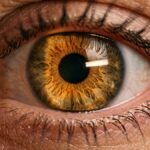
Normally, when you wake up, the brainstem stops releasing the paralyzing neurotransmitters a fraction of a second before your conscious mind turns on. You open your eyes, and your motor control is already fully restored. However, during an episode of sleep paralysis, the timing is slightly off. Your conscious mind (the prefrontal cortex) wakes up first, but the brainstem has not yet flipped the switch to restore muscle control. The REM atonia is still actively locking down your spinal cord.
You are caught in a biological waiting room. Your mind is awake, but your body is still asleep. This disconnect usually lasts anywhere from a few seconds to a couple of minutes, though to the person experiencing it, the panic can make it feel like an eternity.
Why Do You Hallucinate?
Because your brain is still partially in REM sleep, the “dream engine” is still running. When you open your eyes, your brain attempts to project the dream imagery directly onto the real-world environment of your bedroom. You are essentially experiencing an augmented reality dream while awake.
The Chest Pressure Illusion
Many report feeling a heavy weight on their chest. This is not a demon; it is biology. During REM sleep, your breathing is shallow and autonomic. When you wake up panicked, you instinctively try to take a deep, voluntary breath. Because the voluntary chest muscles are still paralyzed, you feel intense resistance, which the panicked brain interprets as a physical weight.
The REM Sleep Dissociation: Cortical Awakening vs. Pontine Motor Lock
Thalamocortical Awakening (The Mind Awake)
Primary Function: Conscious Vigilance: Ascending reticular activating system wakes the cortex, restoring full sensory perception and cognition.
Neural Substrate: Prefrontal and sensory cortices fire at wakeful frequencies; extraocular muscles and diaphragm remain active.
Subcoeruleus Motor Inhibition (The Body Locked)
Primary Function: REM Atonia Lock: Brainstem subcoeruleus nucleus continuously fires inhibitory neurotransmitters to motor neurons.
Neural Substrate: Glycine and GABA flood postsynaptic spinal alpha motor neurons, blocking voluntary skeletal movement.
The Role of the Amygdala and the Fight-or-Flight Response
Understanding the mechanical paralysis is only half the battle. To fully understand the psychological experience, we must examine why an acute sense of dread so consistently accompanies the condition.
When you wake up and realize you cannot move, your brain instantly perceives a massive threat to your survival. The amygdala—the brain’s emotional threat-detection center—goes into overdrive. It floods your system with adrenaline, triggering a severe fight-or-flight response. But because you cannot fight and you cannot flee, the brain is trapped in a feedback loop of escalating panic.
This hyper-aroused state causes the brain to search the environment for a reason to be afraid. Because the dream engine is still running, the brain obliges by constructing a terrifying hallucination—a dark shadow, an intruder, or an alien presence—to justify the massive spike in fear chemicals. In sleep paralysis, two neurobiological states momentarily overlap. While executive monitoring in the prefrontal cortex awakens, the pontine atonia circuitry remains engaged. Realizing you cannot move triggers acute activation of the amygdala and sympathetic fight-or-flight signaling. Because the cortical visual and dream-generating networks of REM sleep remain partially active, the brain synthesizes dream-like threat imagery (hypnagogic or hypnopompic hallucinations) that matches this internal dread. You can explore more about how the amygdala processes fear during sleep anomalies in studies published by the American Psychological Association.
What Triggers Sleep Paralysis?
While an episode can happen to anyone at least once in their lifetime, sleep researchers have identified several lifestyle factors that significantly increase the likelihood of experiencing this neurological glitch:
- Severe Sleep Deprivation: The most common trigger. When you are exhausted, the brain transitions between sleep stages erratically, increasing the chance of waking up during a REM cycle.
- Erratic Sleep Schedules: Shift workers, students pulling all-nighters, and frequent travelers suffering from jet lag are highly susceptible because their circadian rhythms are disrupted.
- Sleeping on Your Back: Clinical studies have shown a strong correlation between the supine position (sleeping face up) and sleep paralysis episodes, likely due to how gravity affects the soft palate and minor airway resistance, which can trigger micro-awakenings.
- High Stress and Anxiety: Chronic elevated cortisol levels make the nervous system hyper-vigilant, preventing smooth transitions into deep sleep.
How to Break Free: Practical Neuroscience
Understanding that sleep paralysis is a transient desynchronization between REM motor atonia and cortical arousal allows patients to remain calm until motor control returns. Once you understand the underlying physiology, you can apply cognitive grounding to downregulate autonomic arousal and calmly await full motor recovery. Here is what sleep scientists recommend:
1. Do Not Fight It: The harder you try to force your arms or legs to move, the more panicked you will become. Fighting the paralysis sends distress signals to the amygdala, which only intensifies the terrifying hallucinations. Instead, accept the state. Remind yourself: “My body is just asleep. This is REM atonia. I am completely safe.”
2. Focus on Micro-Movements: While the large voluntary muscles are locked down, the extremities are often easier to wake up. Focus all your mental energy on wiggling a single toe or twitching one finger. While somatic motor neurons remain under active glycinergic and GABAergic inhibition, attempting deliberate distal movements (such as blinking or twitching a single toe) recruits cortical motor drive that can help prompt the ascending reticular activating system to complete the state shift.
3. Control Your Breathing: Because the diaphragm is not paralyzed, you can control your breath. Focus entirely on breathing slowly and deeply. This signals the parasympathetic nervous system to calm down, reducing the adrenaline spike and causing the scary hallucinations to fade.
The Surprising Connection to Dream Control
Interestingly, the exact same neurological mechanism that causes the terror of sleep paralysis is the gateway to one of the most incredible experiences the human brain can generate. When the mind is awake and the body is asleep, you are standing directly on the threshold of a conscious dream. This neurochemical perspective fundamentally alters how researchers and clinicians view the phenomenon.
Many advanced practitioners actually trigger sleep paralysis on purpose. Instead of panicking when the hallucinations begin, they remain calm, close their eyes, and allow the dream imagery to fully engulf them while maintaining their waking awareness. If you are curious about how this specific biological state can be harnessed rather than feared, diving into what science says about initiating a lucid dream can transform a nightmare into a fascinating exploration of your own subconscious mind.
Want to explore more sleep science? Read our articles on lucid dreaming and why you wake up before your alarm to learn more.
References
- Brooks, P. L., & Peever, J. H. (2012). Identification of the transmitter and receptor mechanisms responsible for REM sleep paralysis. The Journal of Neuroscience, 32(29), 9785-9795. PubMed PMID: 22815493.
- Sharpless, B. A., & Barber, J. P. (2011). Lifetime prevalence rates of sleep paralysis: A systematic review. Sleep Medicine Reviews, 15(5), 311-315. PubMed PMID: 21571556.
- Denis, D., French, C. C., & Gregory, A. M. (2018). A systematic review of variables associated with sleep paralysis. Sleep Medicine Reviews, 42, 182-194. PubMed PMID: 28735779.
- Wills, L., & Garcia, J. (2022). Parasomnia: REM sleep behavior disorder. Continuum (Minneap Minn), 28(1), 174-188. DOI: 10.1212/CON.0000000000001066.
📚 You Might Also Like
Hand-picked articles for you