




You stand up from your desk with a clear, urgent purpose: you need to grab a specific document from the kitchen. You walk down the hallway, step through the doorway, and suddenly stop dead in your tracks. Your mind goes completely blank. You look around, utterly confused, asking yourself: “Wait… what did I come in here for?”
You have just experienced one of the most universal and well-documented quirks of human cognition — the doorway effect.
What makes this event-boundary phenomenon so revealing is that it reveals something profound about how everyday recall actually works. Your brain does not store memories like a continuous video stream. Instead, human cognition naturally organizes experience into distinct, context-specific episodes. When you cross an environmental threshold, executive networks update your active situational model, which can temporarily reduce the immediate retrieval strength of intentions formulated in the prior room. Here is how spatial event segmentation partitions working memory across rooms, and why laboratory follow-ups show the effect depends heavily on mental load.
Why Stepping Across a Doorframe Flushes Your Mental Notepad
This threshold-induced memory lapse is not an isolated glitch. It is the most recognizable quirk of a broader cognitive system called event segmentation — the brain’s method of dividing continuous experience into discrete, manageable episodes.
Think of your day as a long film reel. Your brain does not watch it as one unbroken sequence. Instead, it automatically cuts the film at “event boundaries”, moments where the environment, activity, or context changes significantly. Each cut creates a new cognitive episode—conceptually analogous to creating a new situational model, rather than an active file folder—helping the brain organize ongoing perception.
Doorways are among the most powerful event boundaries because they combine multiple sensory changes simultaneously:
- Visual shift, different lighting, different objects, different spatial layout.
- Acoustic change, different room acoustics, background noise, echo patterns.
- Spatial reorientation; your brain must construct a new mental map of the surrounding environment.
When all three sensory dimensions change at once, perceptual systems interpret this as an event boundary. The brain updates its active situational model for the new room, causing goals formulated in the prior room to become less immediately accessible to working memory retrieval.
In 2011, cognitive psychologist Dr. Gabriel Radvansky and his team at the University of Notre Dame conducted landmark experiments to investigate this event-boundary phenomenon.
Subsequent research emphasizes that the doorway effect is not an invariant law of everyday recall. A comprehensive 2021 investigation by Jessica McFadyen and colleagues (BMC Psychology) tested the phenomenon across four experiments and found no significant forgetting effect caused by simply passing through doors; memory decrements occurred only when participants performed tasks under substantial concurrent working memory load.
In Radvansky’s original experiments, participants moved through virtual and physical environments, picking up objects from a table, carrying them across a room, and exchanging them at another table.
The findings were striking:
- When participants walked across a large single room to complete a task, their memory remained sharp and accurate.
- However, when participants walked the exact same physical distance (but passed through a door into an adjacent room) their error rate doubled. They consistently forgot what object they were carrying or what task they were supposed to execute.
The simple act of walking through a door caused a measurable drop in retrieval accuracy, demonstrating that spatial thresholds serve as cognitive event boundaries that partition mental context (Radvansky & Copeland, 2006).

Why Walking Back to the First Room Rarely Brings the Thought Straight Back
Understanding how environmental cues interact with retrieval provides important insight into context-dependent memory.
When you realize you have forgotten why you walked into a room, a common instinct is to retrace your steps.
Returning to the original environment may provide familiar contextual cues that sometimes help retrieval. However, this effect does not always occur, and experimental research does not establish that retracing one’s steps reliably restores forgotten intentions.
In cognitive psychology, the relationship between surroundings and retrieval is guided by principles of encoding specificity:
- Contextual Cues. When an intention is formed, the brain associates the goal representation with the background sensory features of that environment, including lighting, acoustic properties, and spatial layout.
- Sensory Re-exposure — Returning to the initial room re-exposes perceptual networks to some of the environmental cues present during initial encoding, which can sometimes facilitate memory access.
- Variability of Recall – Because working memory is heavily influenced by immediate attention, walking back into the original room does not guarantee recall if attention remains occupied by frustration or new visual distractions.
This sensitivity to environmental cues also helps explain why your brain replays past events at night, where the absence of external sensory stimulation allows spontaneous, context-linked memories to surface into conscious awareness.
Why Carrying Three Quick Errands at Once Makes Doorways Worse
A common misconception is that the doorway effect gets worse with age. Adult spatial-boundary experiments (Radvansky & Copeland, 2006) indicate the underlying event-segmentation mechanism operates consistently across adulthood rather than suddenly appearing in older age.
However, two factors can make the threshold forgetting feel more pronounced as you get older:
- Reduced working memory capacity. Working memory naturally declines with age. Since event segmentation partitions working memory, a smaller active memory budget means each contextual shift has a larger proportional impact on retrieval.
- Fatigue — A tired brain struggles to maintain active executive control across transitions. When you are exhausted, attentional maintenance in the prefrontal cortex weakens, meaning threshold-induced retrieval lapses occur more readily.
This connects directly to how uninterrupted deep cycles shape morning clarity, fragmented sleep reduces working memory capacity the following day, making you more susceptible to this event-boundary phenomenon throughout the morning.
What Virtual-Room Experiments Proved About Doorframes
Stepping across a threshold drops recent intentions so abruptly because of the architecture of working memory and how the brain structures continuous experience.
Human working memory has a strictly limited capacity: at any single moment, executive control networks can only actively maintain a handful of discrete items. If your brain attempted to hold every detail of every room you walked through simultaneously, cognitive processing would quickly grind to a halt under sheer perceptual overload.
According to Event Segmentation Theory (EST) (Zacks et al., 2007; Radvansky & Zacks, 2014), the brain manages this capacity limit by constructing temporary mental representations called situation models (or event files):
- Constructing a Local Situation Model – When you enter a room, your brain builds an active situational model containing objects, goals, and perceptual cues relevant to that specific space.
- Detecting an Event Boundary. As you pass through a doorway, sensory inputs change markedly (visual angles, lighting, background acoustic properties). The brain’s perceptual systems interpret these rapid shifts as an “event boundary”, a transition between two distinct behavioral contexts.
- Updating Prior Information — At the event boundary, the active situation model for the previous room is updated, making information associated with the earlier context temporarily less accessible. Because immediate working memory resources are redirected toward navigating the incoming room, access to your preceding intention drops sharply.
- McFadyen, J., Nolan, C., Pinocy, E., Buteri, D., & Baumann, O. (2021). Doorways do not always cause forgetting: a multimodal investigation. BMC Psychology, 9, 41. DOI: 10.1186/s40359-021-00536-3
Your brain has not permanently deleted your goal, the goal representation has simply become temporarily less accessible as attention engages with the new environment. While retracing your steps can sometimes provide helpful contextual cues, research by Radvansky and colleagues suggests that memory access is not automatically restored simply by returning to the earlier room.
Event-segmentation circuits treat stepping from a hallway into a kitchen as an automatic context-updating boundary. This continuity (where spatial-memory updating operates inside multi-room buildings) connects closely with other conserved nervous-system transitions, such as why your body jerks when falling asleep.

Context Switching and Digital Distraction: A Conceptual Analogy
Do you frequently open a new browser tab or unlock your smartphone, only to immediately forget what you intended to look up? You reach for your phone to check an email and find yourself aimlessly checking notifications with no memory of your original intention.
While people often describe this frustrating experience as a “digital doorway effect,” cognitive psychologists note that the underlying mechanisms are distinct. In controlled laboratory experiments (such as Radvansky et al., 2011), the doorway effect specifically refers to spatial event segmentation, where physical movement across an environmental threshold (or navigating through 3D virtual rooms) causes the brain to segment continuous spatial experience into discrete event files.
Switching between 2D desktop windows, browser tabs, or smartphone apps operates primarily through attentional distraction and goal interference, rather than literal spatial event segmentation:
- Visual Salience Overload – Modern operating systems and web applications present dense arrays of visual stimuli, vibrant notifications, colorful app icons, and dynamic feeds, that immediately capture bottom-up attention, displacing the fragile verbal rehearsal of your original goal.
- Rapid Context Swapping. Switching between tasks forces executive control networks to swap task-sets, creating cognitive interference. When the incoming page contains unrelated information, the prior intention decays rapidly from working memory.
- The Fragility of Working Memory — Because working memory holds only a limited amount of information, any momentary attentional interruption is sufficient to allow an unanchored intention to fade before execution.
Rather than your brain undergoing a physical spatial event boundary transition with every screen tap, modern digital environments create continuous attentional friction that fragments sustained focus and accelerates cognitive fatigue.
Rushing Between Rooms: Why Hurrying Wipes Short-Term Plans Faster
This event-boundary phenomenon does not strike equally on all days. Cognitive load studies (Pettijohn & Radvansky, 2016) show that predictable versus disrupted event expectations, stress, and competing working-memory load amplify boundary-related forgetting.
When your brain is under immediate stress, elevated catecholamines and cortisol disrupt sustained prefrontal network firing, the neural basis for holding goal representations active in working memory. Under high cognitive load or stress, attentional maintenance falters, making you more vulnerable to forgetting your initial goal when navigating between environments.
This explains why you experience spatial boundary lapses more frequently during high-pressure periods, exam weeks, work deadlines, or when juggling multiple responsibilities. Your working memory capacity is already strained by stress, leaving fewer attentional resources to bridge environmental transitions.
The connection between stress and memory fragmentation is also why stress alters your memories without you noticing, prolonged cortisol exposure reshapes how your brain encodes, stores, and retrieves information.
Why Carrying a Mug Survives a Doorway Better Than Carrying a Thought
Everyday slips reveal a sharp split between physical errands and purely verbal ones. People almost never walk into the kitchen carrying a rinsed coffee mug and suddenly wonder what is in their hand. Threshold blanks happen overwhelmingly when the errand exists only as an unanchored verbal phrase in inner speech (“grab the charger from the bedroom”) while another train of thought keeps running in the background.
A physical object stays visible and tactile in the new room regardless of how the situational model updates, whereas an unspoken verbal plan has no sensory anchor once lighting and room geometry change.
Why Walking Through a Doorway Wipes Your Short-Term Memory
Is threshold forgetting a sign of long-term memory impairment?
Occasional brief lapses around changes in context are common and do not, by themselves, indicate progressive memory loss or neurological decline. They are typically caused by event segmentation, a normal feature of how the brain updates active situational models across physical thresholds. However, persistent, progressive, or otherwise concerning memory problems should not automatically be attributed to the doorway effect.
Why do physical doors affect memory more than walking across an open room?
Physical doors create simultaneous changes in lighting, acoustics, and spatial layout. This triple sensory shift is interpreted by the brain as a definitive event boundary, prompting an update to your active situational model. Walking across an open room does not produce these abrupt multisensory shifts, so the current situational model remains active.
Can threshold-induced event boundary forgetting be completely eliminated?
Because event segmentation is a built-in feature of how perception separates one episode from the next, occasional threshold slips happen to healthy adults everywhere, especially when hurrying or juggling two thoughts at once.
Are threshold-related retrieval lapses worse in open-plan offices?
Yes. Open-plan offices have fewer physical doorways, but they present constant visual and auditory interruptions. In these settings, frequent digital task-switching and unexpected ambient distractions continually disrupt working memory, causing intentions to fade rapidly before they can be fulfilled. Noise and visual distractions further tax the prefrontal cortex, reducing the cognitive capacity available to maintain intentions across tasks.
Does the spatial boundary lapse get worse with age?
Experimental comparisons across age groups suggest the underlying segmentation mechanism remains similar throughout adulthood. However, age-related changes in working memory capacity may make the resulting blanks feel more pronounced. The doorway effect hits hardest when you are already tired or stressed, regardless of age.
Where can I read more about the scientific research on memory boundaries?
Explore Radvansky et al. (2011) – Walking Through Doorways Causes Forgetting and Radvansky and Zacks’s broader synthesis of event horizon cognition.
Filing Memories by Room: Why This Mental Reset Is Actually Useful
The spatial boundary lapse is more than an inconvenient everyday lapse; it provides a valuable window into how the human cognitive system manages finite resources.
Working memory does not function as an unedited, continuous data recorder. It is a dynamic cognitive mechanism designed to prioritize information relevant to your immediate surroundings and ongoing tasks. When you pass through a doorway, the nervous system actively partitions experience, updating your mental model to prepare you for the next physical space.
Understanding this mechanism provides helpful perspective on everyday absentmindedness. Forgetting an intention moments after entering a new room reflects an ordinary byproduct of how the brain efficiently parses continuous sensory reality into structured, manageable episodes.
In tracking everyday working-memory slips across a week of work, the “doorway effect” rarely happens when carrying a physical object (like taking a mug to the kitchen sink). It happens almost exclusively when carrying an abstract verbal intention (“go to the other room and grab the charger”) while a background thought is still running. Holding a physical cue (or even holding your fingers in a specific gesture until the task is done) bridges the event boundary that a doorway normally introduces.
What Virtual-Headset and Return-Room Follow-Ups Revealed
Two clever follow-up experiments pushed Gabriel Radvansky’s original doorframe findings in unexpected directions, testing common folk assumptions that turned out to be wrong.
First, in 2011, Radvansky, Sabine Krawietz, and Andrea Tamplin tested the classic household move everyone tries after blanking in the kitchen: walking right back through the doorway into the first room to re-trigger the memory. Volunteers picked up an object, walked through a door into Room B, and then walked through a second door that looped straight back into the exact starting room before taking the memory quiz.
Returning to the original room gave no rescue bonus at all; once the doorway boundary updated the event model, stepping back onto the old carpet did not undo the drop in accuracy. Even shrinking the virtual rooms from a 66-inch wall display down to a small 17-inch monitor kept the doorway penalty intact.
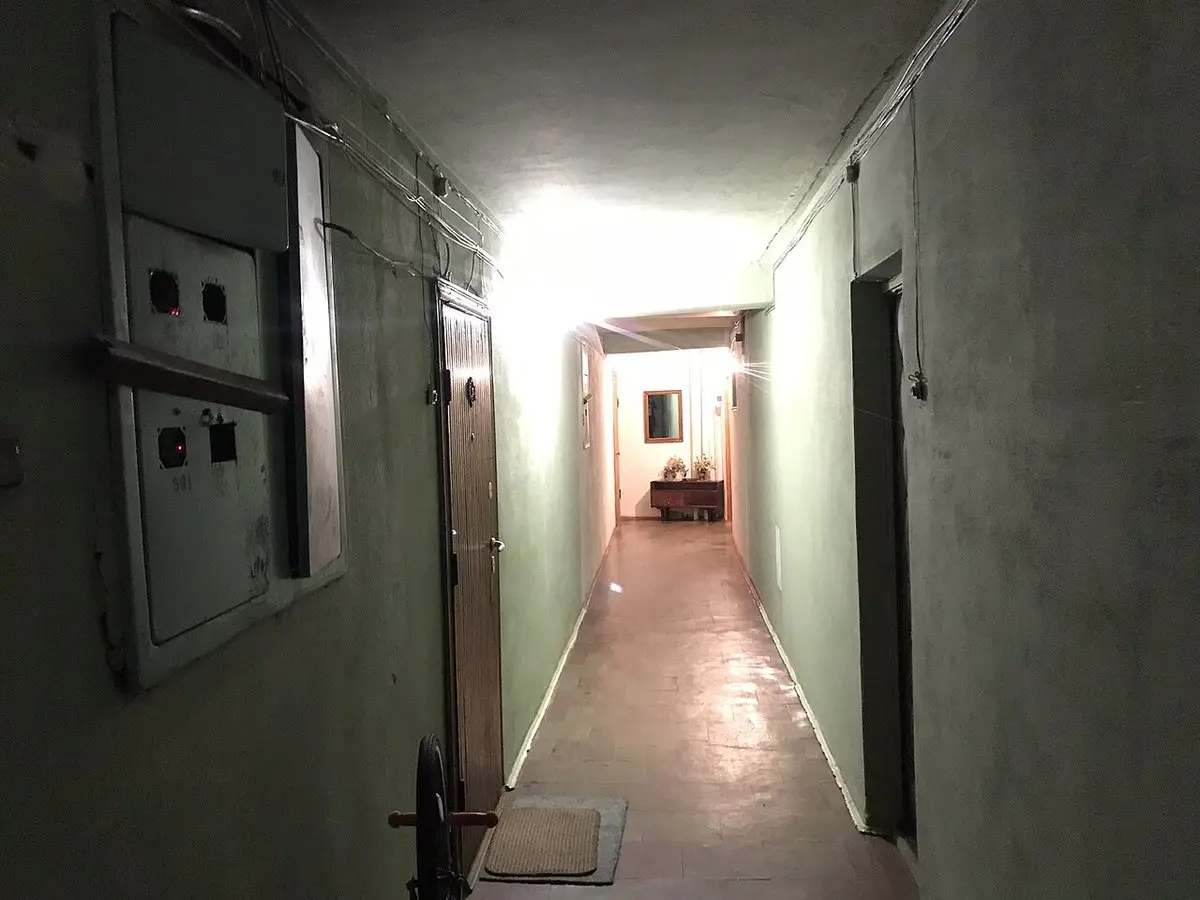
Second, a 2021 study by Jessica McFadyen and colleagues at Bond University and the University of Queensland equipped volunteers with immersive 3D virtual-reality headsets—and then walked another group through real physical curtains separating actual rooms.
When volunteers had only a single, simple job (carry one item next door), doorways caused virtually zero extra forgetting. The moment researchers added a simultaneous backward-counting chore on top of walking, doorway memory errors jumped right back up. A doorframe alone rarely wipes a quiet mind; it trips us up specifically when working memory is already stretched across two errands at once.
Similar automatic cognitive shifts explain why drivers frequently cover long stretches of road without conscious memory, a phenomenon analyzed in detail in Highway Hypnosis and Driving Autopilot.
Experimental Conditions Tested on the Doorway Event-Boundary Effect
| Study Condition | Working Memory Load | Observed Doorway Forgetting Rate |
|---|---|---|
| Radvansky et al. (2011) Virtual Rooms | Tracking geometric objects across doorways (17–66 in screens) | Consistent dip in recall accuracy immediately following room transition |
| Radvansky et al. (2011) Loop Back to Room A | Stepping through Door 2 straight back into starting room | No recall rescue; second threshold adds another event boundary |
| McFadyen et al. (2021) Single Item in VR/Curtains | Low load (single item with minimal distraction) | Minimal doorway penalty when capacity has spare headroom |
| McFadyen et al. (2021) Dual Counting Task | High concurrent distraction alongside crossing doorway | Doorway memory slips re-emerge sharply under split focus |
References
- Radvansky, G.A. & Copeland, D.E. (2006). Walking through doorways causes forgetting: Situation models and experienced space. Memory & Cognition, 34(5), 1150-1156. DOI: 10.3758/BF03193261
- Radvansky, G.A., Krawietz, S.A., & Tamplin, A.K. (2011). Walking through doorways causes forgetting: Further explorations. Quarterly Journal of Experimental Psychology, 64(8), 1632-1645. DOI: 10.1080/17470218.2011.571267
- Zacks, J. M., Speer, N. K., Swallow, K. M., Braver, T. S., & Reynolds, J. R. (2007). Event perception: A mind-brain perspective. Psychological Bulletin, 133(2), 273–293. DOI: 10.1037/0033-2909.133.2.273
- Pettijohn, K. A., & Radvansky, G. A. (2016). Walking through doorways causes forgetting: environmental effects. Journal of Cognitive Psychology, 28(3), 329–340. DOI: 10.1080/20445911.2015.1123712
- Pettijohn, K. A., & Radvansky, G. A. (2016). Narrative event boundaries, reading times, and expectation. Memory & Cognition, 44(7), 1064–1075. 10.3758/s13421-016-0619-6
- McFadyen, J., Nolan, C., Pinocy, E., Buteri, D., & Baumann, O. (2021). Doorways do not always cause forgetting: a multimodal investigation. BMC Psychology, 9, 41. DOI: 10.1186/s40359-021-00536-3