

When you look across a crowded room and spot your closest friend, your brain achieves an astonishing computational feat in less than one-fifth of a second. Long before you can consciously name their profession or recall your last conversation, two separate neural systems have already analyzed the incoming light, matched the spatial geometry of their eyes, nose, and mouth against hundreds of stored templates, and ignited a warm, unmistakable spark of emotional familiarity (Kanwisher et al., 1997).
For decades, cognitive neuroscientists assumed that face recognition was a single, unified stream of visual processing: light hits the retina, flows to the visual cortex, matches an internal file, and registers conscious recognition. However, modern functional neuroimaging (fMRI), electroencephalography (EEG), and neuropsychological investigations have revealed that facial recognition relies on two distinct, parallel neural pathways operating simultaneously: an overt ventral pathway dedicated to structural geometry and identity, and a covert dorsal pathway dedicated to autonomic emotional warmth and familiarity (Ellis & Young, 1990).

When these two systems communicate seamlessly, looking at someone you love feels fundamentally different from looking at a stranger. But when brain injury or temporary cognitive glitches separate visual identity from emotional feeling, the human mind reveals just how intricately wired our perception of other people truly is.
1. The Evolutionary Primacy of the Human Face
From the moment of birth, the human visual system is primed to seek out and prioritize facial configurations over almost every other visual stimulus. Infants just minutes old will track a simple paddle displaying three dots arranged like two eyes and a mouth far longer than an identical paddle with scrambled features (Johnson et al., 1991). This innate bias ensures that developing infants lock their attention onto primary caregivers, establishing vital social bonds before language or deliberate motor control develops.
In adult observers, electrophysiological recordings reveal a specialized electrical signature known as the N170 event-related potential. When electrodes are placed over the occipito-temporal scalp, a sharp negative voltage deflection peaks precisely 170 milliseconds after a face appears. This neural response is significantly larger and faster for faces than for cars, houses, furniture, or animals, demonstrating that the human brain treats faces as a biologically privileged category of visual information (Bentin et al., 1996).
This rapid processing occurs because human survival has always depended on instantaneous social classification: distinguishing a cooperative ally from a hostile intruder, detecting micro-expressions of fear or disgust, and assessing trustworthiness within milliseconds. To manage this massive computational demand, the primate brain evolved dedicated anatomical machinery nestled along the underside of the temporal lobe.
2. The Ventral Engine: The Fusiform Face Area (FFA)
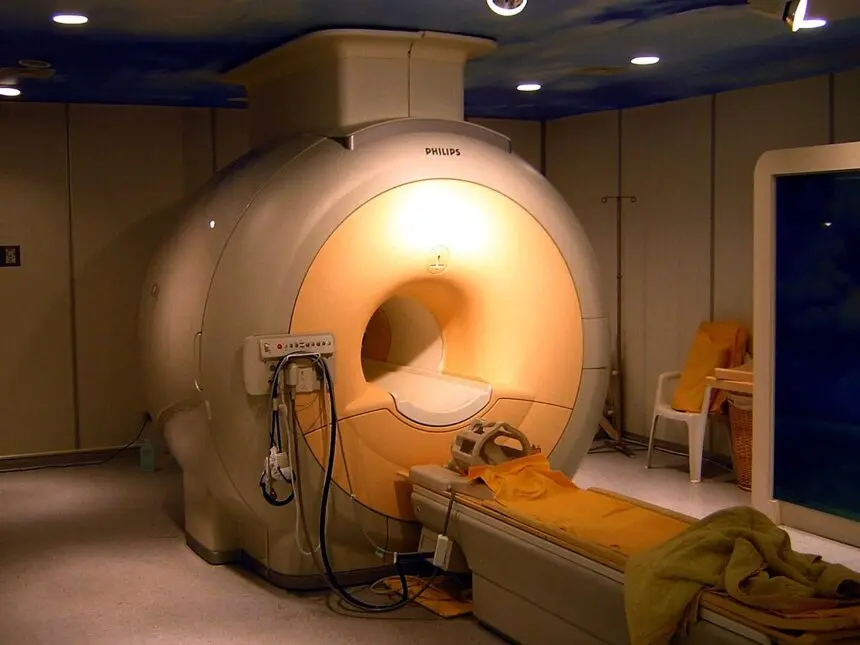
In 1997, cognitive neuroscientist Nancy Kanwisher and her colleagues at MIT published a landmark neuroimaging study in The Journal of Neuroscience that transformed our understanding of specialized cortical architecture. Using functional magnetic resonance imaging (fMRI), Kanwisher identified a specific patch of cortex on the lateral fusiform gyrus that responded twice as strongly to intact human faces as to scrambled faces, human hands, houses, or inanimate objects (Kanwisher, McDermott, & Chun, 1997).
Now universally known as the Fusiform Face Area (FFA), this structure acts as the primary visual engine for face detection and invariant identity recognition. Working in close coordination with two neighboring regions u2014 the Occipital Face Area (OFA), which analyzes individual face parts, and the Superior Temporal Sulcus (STS), which tracks dynamic facial movements and gaze direction u2014 the FFA constructs an invariant three-dimensional representation of a person’s facial architecture.
What makes FFA processing so remarkable is its holistic nature. When we view a common object, such as a chair or an automobile, our visual cortex readily parses it into constituent pieces: legs, cushions, wheels, and headlights. Faces, however, are processed as indivisible perceptual gestalts. The brain does not simply measure the width of a nose and the color of an iris in isolation; it measures the relational spacing between features u2014 the exact distance from the bridge of the nose to the upper lip, the subtle arch of the cheekbones, and the proportional geometry that makes a specific face unique.
3. The Inversion Effect and the Famous Thatcher Illusion
The clearest demonstration of holistic facial processing occurs when a face is turned upside down. Known in perceptual psychology as the face inversion effect, our ability to identify familiar faces drops dramatically when they are rotated 180 degrees u2014 far more than for any other object category (Yin, 1969).
In 1980, British psychologist Peter Thompson illustrated this cognitive vulnerability through the classic Thatcher Illusion. Thompson took a photograph of British Prime Minister Margaret Thatcher and inverted only her eyes and mouth, leaving the rest of the face upright. When the altered photograph is presented upside down, observers perceive it as entirely normal, pleasant, and recognizable. But the moment the image is rotated upright, the face transforms into a jarring, grotesque caricature (Thompson, 1980).
The explanation lies in how cortical pathways handle orientation. When a face is upright, the FFA automatically engages holistic, configural processing, immediately detecting the discordant geometry of the rotated eyes and mouth. But when a face is inverted, holistic processing collapses; the visual system falls back on piecemeal object-processing routines, inspecting individual features in isolation and failing to notice that the relational geometry is completely scrambled.
4. The Dual-Route Model: Bruce, Young, and Emotional Familiarity
While the Fusiform Face Area successfully answers the question “Who is that person?”, it does not answer the equally crucial question “What does that person mean to me?”
In 1986, cognitive psychologists Vicki Bruce and Andrew Young proposed the foundational dual-route model of face recognition, which was later expanded by Hadyn Ellis and Andrew Young in 1990 to incorporate autonomic physiology. Under this neurocognitive architecture, visual face processing bifurcates into two anatomically distinct streams:
- The Ventral “Cognitive” Route: Extends from the primary visual cortex (V1) through the OFA and FFA into the anterior temporal lobes. This pathway retrieves biographical facts, lexical names, and semantic knowledge (e.g., “That is Sarah, who attended college with me and works in architecture”).
- The Dorsal “Affective” Route: Branches off through superior temporal pathways into the limbic system, specifically engaging the amygdala and the anterior cingulate cortex. This pathway projects directly into the autonomic nervous system, generating an immediate, involuntary physiological response u2014 subtle micro-changes in skin conductance, heart rate, and emotional tone that register internally as the feeling of familiarity.
In healthy individuals, these two streams converge in parallel within 200 milliseconds. You recognize your sister’s face structurally, and simultaneously, your limbic system releases an autonomic resonance of warmth and safety. You do not consciously separate these two signals; they merge into a single seamless experience of recognized intimacy.
5. The Double Dissociation: When Recognition Separates From Feeling
The strongest evidence that facial identification and emotional familiarity rely on separate neural pathways comes from classic cognitive neuropsychology, where localized brain lesions produce a striking “double dissociation.”
Condition A: Prosopagnosia (Face Blindness)
When localized vascular damage or trauma impairs the fusiform gyrus while leaving limbic pathways intact, individuals develop prosopagnosia u2014 an inability to consciously recognize familiar faces. A person with severe prosopagnosia can look at a photograph of their spouse, their children, or even their own reflection in a mirror, and fail to identify who they are seeing. They rely instead on secondary cues such as voice, hairstyle, clothing, or distinctive gait.
Remarkably, pioneering experiments by P. Russell Bauer (1984) and Daniel Tranel and Antonio Damasio (1985) demonstrated that covert emotional recognition remains fully functional in prosopagnosic individuals. When researchers presented prosopagnosic patients with a sequence of photographs while monitoring their skin conductance response (SCR) u2014 minute changes in electrical resistance caused by autonomic sweat gland activation u2014 the patients’ bodies betrayed unconscious recognition. Their skin conductance flared reliably when viewing photographs of close family members compared to strangers, even though they insisted consciously that all the faces looked entirely unfamiliar (Tranel & Damasio, 1985).
Condition B: The Mirror Glitch (Familiarity Failure)
Conversely, what happens if the ventral FFA pathway remains in perfect working order, but the dorsal limbic pathway that generates autonomic familiarity is disrupted? In this mirror scenario, first described in detail by Ellis and Young (1990), an individual looks at a loved one and their FFA recognizes the structural identity flawlessly: the hair, the eye color, the smile, and the voice match precisely. Yet, because the autonomic familiarity spark fails to fire, the experience feels hollow, cold, and uncanny.
Because the human brain is a tireless prediction engine that demands logical coherence, the conscious mind struggles to reconcile this sensory mismatch: “This person looks exactly like my partner, but I feel zero emotional connection. How can both facts be true?” In rare neuropsychological presentations (such as the affective recognition disconnect anomaly), this dissonance leads the conscious mind to construct an elaborative explanation: concluding that the loved one must be an exact double or impostor (Ellis & Lewis, 2001).
6. Comparing the Dual Pathways of Facial Perception
| Feature | Ventral “Cognitive” Route | Dorsal “Affective” Route |
|---|---|---|
| Primary Neural Hubs | Fusiform Face Area (FFA), Occipital Face Area (OFA) | Superior Temporal Sulcus (STS), Amygdala, Limbic System |
| Primary Function | Structural feature geometry, holistic facial template matching | Autonomic emotional resonance, familiarity spark, threat assessment |
| Conscious Output | Semantic identification (“That is my colleague Alex”) | Somatic feeling (“I know and emotionally connect with this person”) |
| Processing Style | Holistic, orientation-sensitive, high spatial frequency | Subcortical, rapid, coarse low-spatial-frequency projection |
| Isolated Impairment | Prosopagnosia (intact autonomic SCR, lost conscious ID) | Familiarity disconnect (intact conscious ID, absent autonomic SCR) |
7. Subcortical Shortcuts: Why Emotional Faces Register Before You See Them
Neuroimaging work by Patrik Vuilleumier and colleagues (2001) revealed that the brain does not even wait for the primary visual cortex to fully render an image before assessing emotional salience. Visual signals travel along a rapid, primitive subcortical shortcut: from the retina directly to the superior colliculus and pulvinar nucleus of the thalamus, projecting straight into the amygdala within less than 80 milliseconds.
This evolutionary express route processes coarse, low-spatial-frequency information u2014 the broad outlines of wide eyes, flared nostrils, or an open mouth signaling fear or aggression. Long before your fusiform gyrus has determined the eye color or identified whose face you are looking at, your amygdala has already accelerated your pulse and sharpened your visual focus, preparing your motor system to react to potential social threats (Vuilleumier et al., 2001).
8. What Facial Recognition Glitches Teach Us About Daily Consciousness
Recognizing the people around us is one of the most effortless experiences in daily human life. Yet, as cognitive neuroscience demonstrates, every glance at a familiar face requires the flawless orchestration of specialized visual modules, holistic spatial computations, and autonomic emotional circuits working in tight synchronization.
When you see someone you recognize, you are not simply viewing a photograph in your mind’s eye; you are experiencing a synchronized neurological handshake between visual geometry and emotional memory. The fact that these two systems can be separated reveals that our conscious perception of reality is not a passive mirror of the external world, but an active, multi-layered construct synthesized by the brain every second of the day.
References & Scientific Sources
- Bauer, R. M. (1984). Autonomic recognition of names and faces in prosopagnosia: A neuropsychological application of the Guilty Knowledge Test. Neuropsychologia, 22(4), 457u2013469.
- Bentin, S., Allison, T., Puce, A., Perez, E., & McCarthy, G. (1996). Electrophysiological studies of face perception in humans. Journal of Cognitive Neuroscience, 8(6), 551u2013565.
- Bruce, V., & Young, A. (1986). Understanding face recognition. British Journal of Psychology, 77(3), 305u2013327.
- Ellis, H. D., & Young, A. W. (1990). Accounting for delusional misidentifications. The British Journal of Psychiatry, 157(2), 239u2013248.
- Ellis, H. D., & Lewis, M. B. (2001). Cognitive models of face familiarity disconnect. Cognitive Neuropsychiatry, 6(1), 32u201344.
- Haxby, J. V., Hoffman, E. A., & Gobbini, M. I. (2000). The distributed human neural system for face perception. Trends in Cognitive Sciences, 4(6), 223u2013233.
- Johnson, M. H., Dziurawiec, S., Ellis, H., & Morton, J. (1991). Newborns’ preferential tracking of face-like stimuli and its subsequent decline. Cognition, 40(1u20132), 1u201319.
- Kanwisher, N., McDermott, J., & Chun, M. M. (1997). The fusiform face area: a module in human extrastriate cortex specialized for face perception. The Journal of Neuroscience, 17(11), 4302u20134311.
- Thompson, P. (1980). Margaret Thatcher: a new illusion. Perception, 9(4), 483u2013484.
- Tranel, D., & Damasio, A. R. (1985). Knowledge without awareness: An autonomic index of facial recognition by prosopagnosics. Science, 228(4706), 1453u20131454.
- Vuilleumier, P., Armony, J. L., Driver, J., & Dolan, R. J. (2001). Effects of attention and emotion on face processing in the human brain: an event-related fMRI study. Neuron, 30(3), 829u2013841.
- Yin, R. K. (1969). Looking at upside-down faces. Journal of Experimental Psychology, 81(1), 141u2013145.